
Abstract
This study evaluates workforce transition readiness for green job transformation in the Indonesian construction sector using an integrated Importance–Performance Analysis (IPA) and triangulation framework. Data were collected from 55 construction-related professionals representing consultants, contractors, academics, government agencies, project owners, certification bodies, suppliers, and other construction stakeholders. Four dimensions were assessed: Digital and Technological Adaptability, Green Transition and Regulatory Readiness, Career Flexibility and Lifelong Learning, and Resilience and Crisis Adaptation. The results show that all dimensions were perceived as highly important, with mean importance scores ranging from 4.55 to 4.63, while mean performance scores ranged from 3.83 to 4.22. Career Flexibility and Lifelong Learning showed the strongest alignment, with a P/I ratio of 92.11% and a gap of 0.36, followed by Digital and Technological Adaptability with a P/I ratio of 91.14% and a gap of 0.41. In contrast, Green Transition and Regulatory Readiness recorded the lowest P/I ratio of 84.18% and the largest gap of 0.72, indicating the most substantial implementation deficiency. Resilience and Crisis Adaptation showed a moderate gap, with a P/I ratio of 87.85% and a gap of 0.56, and was positioned as a strategic improvement priority in the IPA quadrant due to its high perceived importance and relatively lower implementation performance. Triangulation through expert interviews, policy and document review, and literature synthesis confirmed that workforce development programs remain more focused on technical and regulatory competencies than resilience-oriented adaptive capacity. The study contributes an integrated IPA–triangulation framework for diagnosing workforce readiness gaps and highlights the need to strengthen regulatory readiness, resilience, crisis adaptation, and adaptive workforce development within green transition policies.
Keywords: Green construction workforce, Green job transformation, Importance–Performance Analysis, Resilience and crisis adaptation, Workforce transition readiness
Outline
1. Introduction
The global transition toward a sustainable and low-carbon economy has significantly reshaped the landscape of employment, giving rise to the concept of green jobs that integrate environmental responsibility with economic growth1). This transformation requires a workforce capable of adapting to technological changes, policy shifts, and sustainability-driven practices2). As organizations across engineering, construction, and manufacturing sectors embrace green innovation, workforce adaptability (refers to the ability of workers to adjust skills, behaviors, and competencies in response to technological, environmental, and organizational change) and transition readiness have become critical determinants of successful transformation3). However, despite the growing discourse on sustainability and green employment, the human dimension of adaptability—particularly resilience in facing crises and transitions—remains underexplored.
Previous studies on green workforce development have emphasized technical skills and policy alignment4), while fewer have addressed the behavioral adaptability and psychological readiness that enable employees to sustain performance amid uncertainty5). Research on digital adaptability and lifelong learning highlights the importance of upskilling6), yet limited attention has been paid to how resilience and crisis adaptation shape workforce readiness during volatile transitions, such as post-pandemic recovery or rapid green technology adoption. Furthermore, most existing models treat adaptability as a static competency rather than a dynamic, multi-dimensional construct influenced by technological, regulatory, and socio-environmental factors6).
This study aims not only to assess workforce adaptability and transition readiness for green job transformation but also to advance theoretical understanding of adaptability in sustainability transitions (describes long-term systemic shifts toward environmentally sustainable production, consumption, and institutional practices). The study examines how digital adaptability, regulatory readiness, career flexibility, and, particularly, resilience and crisis adaptation interact to determine sustainable workforce performance. The research seeks to identify strategic priority areas that strengthen adaptive capacity (refers to the ability of individuals or organizations to adjust, learn, and respond effectively to environmental, technological, and institutional changes), enhance transition readiness, and support policy formulation for resilient green employment systems.
Methodologically, this study integrates Importance–Performance Analysis (IPA) (is an evaluative method used to compare perceived importance and actual performance of specific attributes in order to identify priority areas for improvement) with a triangulation approach7) (refers to the use of multiple data sources or analytical methods to enhance the validity and interpretive depth of research findings) to develop a more comprehensive and validated assessment framework for workforce transition readiness (refers to the capacity of individuals and organizations to adapt skills, competencies, and institutional practices in response to emerging sustainability and green economy demands). This integration enables both quantitative gap identification and qualitative contextual interpretation, strengthening analytical rigor in evaluating sustainable workforce transformation. Four critical variables—Digital and Technological Adaptability Towards next generation cyber-physical systems8), Green Transition (refers to the systemic shift toward low-carbon, resource-efficient, and environmentally sustainable economic and industrial practices) and Regulatory Readiness9), Career Flexibility and Lifelong Learning10), and Resilience and Crisis Adaptation11)—were analyzed to identify strategic priorities for green job transformation.
The novelty of this study lies in extending existing workforce adaptability and sustainability transition literature by positioning resilience and crisis adaptation as a core enabling dimension of transition readiness rather than merely one complementary competency. While previous studies predominantly frame adaptability in terms of technical skills, digital readiness, or regulatory compliance, this research integrates psychological and institutional resilience into a unified assessment framework. In doing so, the study advances current theoretical perspectives by demonstrating that sustainable workforce transformation depends on resilience-centered adaptability capable of sustaining performance under uncertainty and systemic change.
From a practical perspective, the study provides policy-relevant insights by identifying strategic priority areas that can enhance adaptive capacity, institutional readiness, and resilience-oriented workforce development. By linking empirical findings to theoretical refinement and policy implications, this research contributes to the development of resilient, future-ready workforce systems that support sustainable, low-carbon transitions aligned with the Sustainable Development Goals (SDGs)12).
Based on the conceptual framework and research objectives, this study hypothesizes that workforce transition readiness for green job transformation is significantly influenced by multidimensional adaptability factors, with resilience and crisis adaptation functioning as a dominant enabling dimension. It is further hypothesized that gaps between perceived importance and actual performance across adaptability dimensions indicate priority areas for strategic intervention to strengthen sustainable workforce transformation. These hypotheses guide the empirical assessment using the integrated IPA–triangulation framework.
2. Methodology
2.1. Research Design
This research adopts a mixed-method design integrating quantitative Importance–Performance Analysis (IPA) with qualitative triangulation to comprehensively evaluate workforce adaptability and transition readiness toward green job transformation. The integration of Importance–Performance Analysis (IPA) with triangulation was selected to enhance methodological robustness in assessing workforce transition readiness. While IPA enables systematic identification of gaps between perceived importance and actual performance, triangulation provides contextual and explanatory insights that cannot be captured through quantitative analysis alone. This mixed-method design therefore allows both diagnostic evaluation and interpretive validation, strengthening the reliability and analytical depth of the findings within complex sustainability transition contexts.
2.2. Variables and Framework / Conceptual Framework
The study framework comprises four main dimensions representing workforce adaptability and transition readiness (see Table 1). Each variable (V1–V4) was rated for both importance and performance, and analyzed using the IPA method. Key refs. are presented to indicate the theoretical grounding of each construct.
The conceptual framework assumes that these variables collectively define Transition Readiness (TR), while Resilience and Crisis Adaptation act as dominant factors influencing sustainable workforce transformation. In this framework, workforce transition readiness is conceptualized as a multidimensional construct shaped by the interaction of technological, regulatory, professional, and behavioral adaptability. Digital and technological adaptability supports operational transformation, while regulatory readiness ensures institutional alignment with sustainability policies. Career flexibility and lifelong learning enable continuous competency adjustment in response to evolving green job demands.
Resilience and crisis adaptation are positioned as a foundational adaptive capacity that sustains the effectiveness of these dimensions under conditions of uncertainty, disruption, and rapid technological change. Drawing on resilience engineering (is an approach that focuses on the capacity of systems and individuals to anticipate, adapt, and recover from disruptions while maintaining functional performance) and adaptive capacity theory, the proposed framework assumes that sustainable workforce transformation depends not only on technical and regulatory preparedness but also on the workforce’s ability to maintain functionality, recover from disruptions, and adapt to systemic transitions.
This conceptual positioning strengthens the explanatory structure of the model by demonstrating that transition readiness emerges from the dynamic interaction among these variables, with resilience acting as an enabling mechanism that reinforces long-term sustainability performance.
A simplified relationship is expressed as Equation 1.
where
V1 = Digital & Technological Adaptability
V2 = Green Transition and Regulatory Readiness
V3 = Career Flexibility and Lifelong Learning
V4 = Resilience and Crisis Adaptation
This positioning is supported by resilience engineering and adaptive capacity theory, which emphasize that the sustainability of complex socio-technical systems depends primarily on their ability to withstand, recover from, and adapt to disruptions, thereby making resilience a central determinant of long-term transition readiness.
2.3. Data Collection and Respondent Profile
This study employed a survey-based data collection procedure supported by qualitative triangulation. The questionnaire was designed to assess perceived importance and actual performance across four workforce transition readiness dimensions: Digital and Technological Adaptability, Green Transition and Regulatory Readiness, Career Flexibility and Lifelong Learning, and Resilience and Crisis Adaptation. Each dimension was measured using a five-point Likert scale ranging from 1 (very low) to 5 (very high). Respondents were asked to evaluate each dimension from two perspectives: its strategic importance for green job transformation and its current level of implementation or performance in practice.
The target respondents were construction-related professionals in Indonesia who had relevant experience in construction, infrastructure, green transition, workforce development, or sustainability-related activities. The eligibility criteria required respondents to have at least three years of professional experience and a minimum diploma-level educational background. These criteria were applied to ensure that the respondents had sufficient practical exposure and professional understanding to evaluate workforce adaptability and transition readiness within the construction sector.
A purposive sampling approach was used to capture perspectives from multiple stakeholder groups within the construction ecosystem. The respondents included consultants, contractors, academics, government representatives, project owners, professional certification bodies, suppliers, concrete laboratory technicians, project management units, and education-related institutions. This diversity was intended to ensure that the assessment reflected not only technical and managerial perspectives but also regulatory, educational, and institutional viewpoints relevant to green job transformation.
The questionnaire was distributed online using Google Forms to reach respondents from different professional backgrounds and geographical locations. A total of 55 valid responses were collected and used for the quantitative analysis. The collected data were analyzed using Importance–Performance Analysis (IPA) to identify gaps between perceived importance and actual performance. Validity and reliability tests were also conducted to ensure the consistency and suitability of the survey instrument. The questionnaire instrument and statistical analysis results are provided in Appendix A and Appendix B, respectively.
To enrich and validate the survey findings, qualitative triangulation was conducted through semi-structured interviews with 10 key informants consisting of project managers, engineers, and policymakers. These interviews were used to obtain contextual explanations regarding
Table 1: Variables and indicators of transition readiness assessment
| Code | Variable | Concept Definition | Key Indicators | Supporting information from literature |
|---|---|---|---|---|
| V1 | Digital & Technological Adaptability | The ability to integrate digital tools, automation, and sustainable technologies into work practices. | Digital skill readiness, innovation adoption, and technical learning ability | Cyber-physical systems and digital twins are important enablers of digital transformation in construction work practices8). Net-zero transition and clean energy development create labour and skill implications that require workers to adapt to emerging technologies and new green work practices9). Digital empowerment also supports green supply chain management and provides a framework for technology-enabled sustainability transition13). Automation in construction requires education and workforce training to support technology adoption14). Low-carbon transition creates new job and skill requirements that affect workforce adaptability15). Whole-life-cycle ESG-based green construction demonstrates the need for integrating sustainable technologies into construction practices16). Building automation technology contributes to smart and sustainable built environments and requires adaptive digital competencies17) |
| V2 | Green Transition and Regulatory Readiness | The level of preparedness in responding to environmental policies and sustainability regulations. | Policy awareness, compliance capacity, and environmental standard implementation. | Digital twin adoption in facility management reflects the need for organizational and market readiness in managing future built-environment transformation18). Workforce-related challenges in Construction 4.0 indicate that technological transition requires institutional preparation and workforce readiness19). Industry 5.0 and off-site construction settings highlight emerging skill requirements associated with industrial and sustainability transition20). A healthier construction workforce is part of institutional readiness for sustainable industry transformation21). Just transition and circular economy perspectives emphasize labor protection, policy alignment, and institutional coordination in sustainability transition22). |
| V3 | Career Flexibility and Lifelong Learning | The capacity to adjust professional competencies through continuous learning. | Training participation, cross-skill adaptability, and willingness to reskill/upskill. | Career adaptability supports workers in adjusting to changing occupational environments10). Digital twin adoption in facility management also indicates changing professional roles and future competency requirements18). Career transition studies emphasize person-environment fit and flexibility in changing labor markets23). Safety and well-being factors among ageing construction workers show the need to adapt workforce development to different career stages24). Environmental engineering career pathways illustrate the importance of preparing early-career professionals for sustainability-related roles25). Training for sustainable and healthy buildings demonstrates the role of new learning methodologies in developing skills for future green building transitions26). Educational transformation through green building technologies supports lifelong learning and competency adaptation27). |
| V4 | Resilience and Crisis Adaptation | The capability to maintain performance and recover from disruptions or crises in the workplace. | Psychological endurance, adaptive coping strategies, and recovery effectiveness | Resilience is a protective factor for early-career construction professionals facing workplace pressures11). The COVID-19 pandemic demonstrates the need to transform construction worker health, safety, well-being, and crisis-response systems28). Education and training are important for improving positive mental health among young construction workers, particularly in the Global South29). |
workforce adaptability, crisis resilience, regulatory readiness, and institutional constraints affecting green transition implementation. In addition, document analysis was conducted by reviewing relevant sustainability reports, training materials, policy documents, and regulatory guidelines. The integration of survey data, expert interviews, and document review strengthened the validity and interpretive depth of the findings.
The detailed respondent profile is presented in Section 3.1 to clarify the distribution of professional sectors, work experience, educational background, and the relevance of respondents to workforce transition readiness assessment.
2.4. Importance–Performance Analysis (IPA)
The IPA method compares the perceived importance (I) and actual performance (P) for each factor. The average scores are calculated as Equation 2.
where:
= mean importance score for factor j
= mean performance score for factor j
n = number of respondents
The P/I ratio, which is a comparison of importance and performance, is defined as Equation 3
In the P/I ratio-based approach, the value of Gj can be interpreted through a direct comparison between the level of importance and performance. This ratio illustrates the extent to which performance meets expectations or its level of importance. A lower P/I ratio indicates a wider gap between perceived importance and actual performance, whereas a higher P/I ratio indicates stronger alignment between performance and importance. Conversely, if P/I < 1, performance is considered to exceed or meet the level of importance, indicating an area with relatively good performance. (as shown in Table 2—quadrant matrix).
The proposed thresholds and P/I classification labels can be explained as follows:
•≥ 92%: Strong alignment (Maintain): Performance is nearly commensurate with importance.
•90%–91%: Good alignment (Monitor & maintain): Well aligned; monitor to prevent deterioration.
•86%–89%: Moderate gap (Improve): Gaps exist that require attention/improvement.
•≤ 85%: Large gap (Priority for intervention): Significant implementation deficiencies; priority action is required.
Meanwhile, the interpretation of the results of the IPA quadrant analysis can use Table 2.
2.5. Validity and Reliability
The validity and reliability of the questionnaire were tested before conducting the Importance–Performance Analysis. The validity test was conducted by comparing the item correlation coefficient with the r-table value at N = 55 and α = 0.05. The r-table value was 0.2609. The results show that all item correlation coefficients exceeded the r-table value. For the importance scale, the item correlation coefficients ranged from 0.658256 to 0.865123. For the performance scale, the item correlation coefficients ranged from 0.741556 to 0.862172. Therefore, all questionnaire items were considered valid.
Reliability was assessed using Cronbach’s Alpha. The Cronbach’s Alpha value was 0.789 for the importance scale and 0.809 for the performance scale. Both values exceeded the commonly accepted minimum threshold of 0.70, indicating acceptable internal consistency. These results confirm that the questionnaire instrument was valid and reliable for assessing workforce transition readiness across the four dimensions analyzed in this study. The detailed validity and reliability results are presented in Appendix B.
2.6. Triangulation Validation
To validate and enrich the quantitative findings, triangulation was conducted through:
1)Expert interviews, capturing managerial perspectives on workforce adaptability and crisis resilience.
2)Document analysis, reviewing corporate sustainability reports, training modules, and regulatory guidelines.
3)Comparative synthesis, aligning IPA outcomes with qualitative insights to confirm or refine variable prioritization.
Table 2: The quadrant matrix
| Quadrant | Description | Strategic Action |
|---|---|---|
| I | High Importance, Low Performance | Concentrate here (priority improvement): Priority for improvement and capacity enhancement |
| II | High Importance, High Performance | Keep up the good work: Maintain current strategies and sustain best practices |
| III | Low Importance, Low Performance | Low priority: Resources can be optimized elsewhere |
| IV | Low Importance, High Performance | Possible over-investment: Potential resource reallocation |
Data triangulation followed the logic of convergent validation, where findings from different sources were compared to identify consistent patterns, discrepancies, or contextual explanations. This stage aimed to ensure construct validity and contextual robustness, enhancing the credibility of the overall interpretation.
In this study, triangulation serves a dual analytical function. First, it is used to validate the quantitative findings derived from the Importance–Performance Analysis (IPA) by confirming the consistency of identified gaps across expert perspectives, policy documents, and literature sources. Second, triangulation provides additional explanatory insights by revealing underlying institutional, behavioral, and organizational factors that cannot be captured through quantitative scores alone.
This approach enables the study not only to confirm the robustness of the IPA results but also to interpret the structural causes and strategic implications of identified gaps, thereby strengthening the overall analytical depth and contextual relevance of workforce transition readiness assessment.
The triangulation procedure was implemented through three complementary analytical streams: expert interviews, document analysis, and literature synthesis. Semi-structured interviews were conducted with selected industry practitioners and policymakers to capture experiential and managerial perspectives on workforce adaptability and crisis resilience. Document analysis focused on corporate sustainability reports, training frameworks, and relevant regulatory guidelines to identify institutional readiness patterns. A targeted literature review was undertaken to contextualize empirical findings within broader theoretical and global sustainability transition discussions.
Rather than assigning numerical weights to each source, the triangulation process followed a convergent qualitative validation logic in which findings from the three streams were systematically compared to identify consistent patterns, divergences, and explanatory insights. The IPA results served as the primary quantitative diagnostic framework, while triangulation provided interpretive depth by confirming priority gaps and revealing underlying institutional and behavioral factors influencing workforce transition readiness. This integrative approach ensured that each data source contributed complementary insights to the overall analysis.
2.7. Data Analysis Procedure
1)Calculate the mean importance and performance for each variable.
2)Plot the IPA quadrant matrix to visualize strategic priorities.
3)Conduct triangulation to interpret key findings and validate readiness indicators.
4)Synthesize quantitative and qualitative results to derive theoretical and policy implications.
This sequential analytical logic ensures that quantitative findings derived from IPA are not interpreted in isolation but are critically examined through qualitative triangulation to identify underlying causes, institutional constraints, and strategic implications. Such integration enhances the explanatory power of the study and supports more reliable formulation of workforce transition strategies.
The triangulation findings were interpreted in conjunction with IPA outcomes to ensure that strategic recommendations were grounded in both quantitative evidence and qualitative contextual understanding.
3. Results and Discussion
The collected survey questionnaires are processed through the Importance-Performance Analysis IPA method and verified through triangulation to determine the suitable strategy from research findings and in-depth interviews. The outcome of the analysis for each variable was then visually organized as a Cartesian diagram IPA graph to display the degree of expectation, level of importance, and performance. This part also interprets the map for each variable, examines gaps, as well as gives points of argument for acquired findings in providing material for formulating the best competency strategy.
3.1. Overview of Respondents
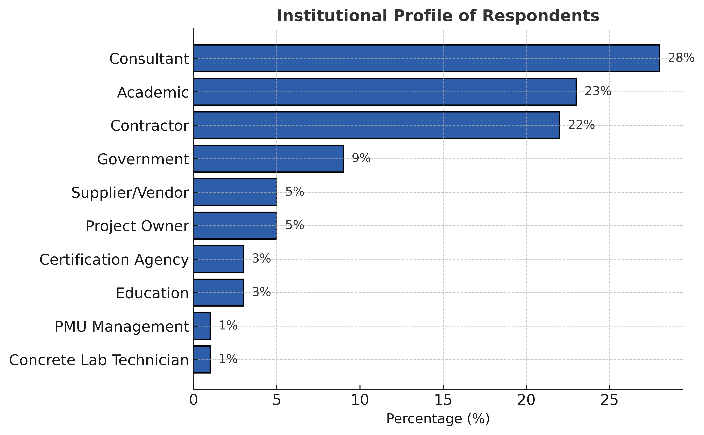
A total of 55 valid responses were obtained from construction-related professionals in Indonesia. The respondents were selected to represent diverse stakeholder groups involved in construction activities, workforce development, sustainability implementation, and green transition practices. The distribution of respondents is shown in Figure 1. This diversity was important because a single actor does not determine workforce transition readiness for green job transformation; rather, it is determined by the interaction among technical, managerial, regulatory, educational, and institutional stakeholders within the construction ecosystem.
Based on professional sector, the largest group of respondents came from consulting firms, accounting for 28% of the total sample. This indicates that the survey captured substantial input from professionals who are directly involved in planning, design, technical assessment,
and project advisory activities. Consultants are highly relevant to this study because they often translate sustainability requirements, digital tools, and regulatory standards into practical project implementation. The second largest group consisted of academics, representing 23% of respondents. Their involvement strengthened the educational and knowledge-development perspective of the study, particularly in relation to lifelong learning, curriculum adaptation, and workforce preparation for green jobs. Contractors represented 22% of respondents,
providing direct insights from construction implementation, site management, technology adoption, workforce capability, and operational challenges.
Other respondent groups included government representatives (9%), project owners (5%), professional certification bodies or LSPs (5%), suppliers (3%), concrete laboratory technicians (3%), project management unit representatives (1%), and education-related institutions (1%). Although these groups represented smaller proportions, their inclusion expanded the institutional coverage of the study. Government respondents contributed perspectives on policy direction and regulatory readiness, while project owners represented demand-side expectations regarding workforce competence and sustainability performance. Certification bodies provided insight into competency standards and professional recognition, while suppliers and laboratory-related respondents contributed perspectives on material supply chains, technical quality control, and industry support systems. Therefore, the respondent composition provided a multi-stakeholder basis for assessing workforce transition readiness in the construction sector.
In terms of work experience, most respondents had more than 10 years of professional experience, representing 54% of the sample. This indicates that the majority of respondents had substantial practical exposure to construction project delivery, organizational change, and sectoral development. Respondents with less than 5 years of experience accounted for 31%, while those with 5–10 years of experience represented 15%. The combination of senior and early-career respondents enabled the study to capture both experienced managerial perspectives and emerging workforce views. This is particularly relevant for green job transformation, as transition readiness requires alignment between established professional practices and the adaptive capacity of younger or developing workers.
Regarding educational background, most respondents held a bachelor’s degree, representing 50% of the sample, followed by master’s degree holders at 39%, doctoral degree holders at 6%, and diploma graduates at 5%. This educational profile indicates that the respondents had adequate academic and professional qualifications to assess workforce adaptability and transition readiness. The strong representation of bachelor’s and master’s degree holders also suggests that the responses were informed by both practical construction knowledge and analytical understanding of sustainability, regulation, and human resource development.
Overall, the respondent profile demonstrates sufficient diversity in professional sector, work experience, and educational background. The dominance of consultants, academics, and contractors ensured that the study captured the perspectives of key actors directly involved in project planning, knowledge development, and field implementation. Meanwhile, the inclusion of government, project owners, certification bodies, suppliers, and other supporting institutions strengthened the institutional and regulatory relevance of the findings. Therefore, the respondent composition provides an appropriate basis for evaluating workforce transition readiness for green job transformation using the integrated IPA–triangulation framework.
3.2. Descriptive Analysis of Respondents
The survey was handed over to professionals, along with managerial grades of staff from the construction sectors, who were requested to provide scores on importance as well as performance on four central variables on Adaptability, as well as Transition Readiness on green technologies:
1)Digital & Technological Adaptability (V1)
2)Green Transition and Regulatory Readiness (V2)
3)Career Flexibility and Lifelong Learning (V3)
4)Resilience and Crisis Adaptation (V4)
Descriptive analysis of importance scores showed that importance scores range between 4.55 and 4.63. This reveals that respondents rated all criteria assessed as being of high importance. On the other hand, analysis of performance scores indicated that the scores range between 3.83 and 4.22. The complete results of the respondents' responses can be seen in Table 3. This shows that while the level of implementation of the criteria was at a satisfactory level, there was a slightly lower performance than the importance level. This means that respondents acknowledge the importance of the criteria but feel that there is a level of deficiency in their fulfillment.
In general, the results indicate a strong awareness and level of priority by the respondents with regard to the assessed constructs, specifically with respect to domains that directly impact project quality and sustainability. On the other hand, the variance between importance and performance means can conversely point to domains that can benefit from improvement through policy and management changes to better align with project implementation expectations.
3.3. Quantitative Analysis of Gaps
The Performance–Importance Ratio (P/I Ratio) was calculated to determine the degree of conformity between perceived performance and its relative importance. A higher P/I ratio indicates a better level of satisfaction and alignment between workforce performance and strategic importance. The suitability level in the IPA framework was assessed using the Performance–Importance Ratio, where values above 1.0 denote strong alignment.
A paired t-test was carried out to compare the significance of the difference between each construct's average importance and performance scores. In cases where the normality of the variables was violated, a Wilcoxon signed-rank test was employed instead. The difference obtained for non-normal distributions can be interpreted by looking at Table 4 for its respective magnitudes and levels of significance.
Prior to conducting the significance tests, the normality of the paired importance–performance data was examined using standard distribution checks. Variables that satisfied normality assumptions were analyzed using paired t-tests, while variables that did not meet normality requirements were evaluated using the Wilcoxon signed-rank test as a non-parametric alternative. This dual-testing approach ensured the robustness of statistical interpretation across different data distributions.
The results consistently indicated statistically meaningful differences between perceived importance and performance across key adaptability dimensions, supporting the interpretation of alignment gaps identified through the IPA framework. The use of both parametric and non-parametric tests strengthens confidence in the reliability of the findings and confirms that the identified priority areas for improvement are not only descriptively observable but also statistically supported.
Table 3: Mean scores of importance and performance
| No. | Variable | Importance | Performance |
|---|---|---|---|
| 1 | Digital & Technological Adaptability (V1) | 4.63 | 4.22 |
| 2 | Green Transition and Regulatory Readiness (V2) | 4.55 | 3.83 |
| 3 | Career Flexibility and Lifelong Learning (V3) | 4.56 | 4.20 |
| 4 | Resilience and Crisis Adaptation (V4) | 4.61 | 4.05 |
Table 4: Gap and P/I ratio classification results
| Var. | Mean Importance | Mean Performance | Gap | (P/I) Ratio | Quadrant Classification |
|---|---|---|---|---|---|
| V1 | 4.63 | 4.22 | 0.41 | 91.14% | Good alignment: Monitor & maintain |
| V2 | 4.55 | 3.83 | 0.72 | 84.18% | Large gap: Priority for intervention |
| V3 | 4.56 | 4.20 | 0.36 | 92.11% | Strong alignment: Maintain |
| V4 | 4.61 | 4.05 | 0.56 | 87.85% | Moderate gap: Improve |
The performance-to-importance analysis of the ratios demonstrates differences in levels of alignment between the importance and performance of the four constructs that have been assessed. Table 4 indicates that the P/I ratios for all variables exceeded 80%, indicating alignment between implementation efforts and stakeholder expectations. Variations in the ratios indicate areas that need improvement.
V3 (Career Flexibility and Lifelong Learning) scored the highest P/I ratio of 92%, categorized under Strong alignment – Maintain, indicating that the industry has accomplished a good blend of learning and flexibility into its human resource development programs. Similarly, V1 (Digital and Technological Adaptability) scored a P/I ratio of 91%, categorized under Good alignment – Monitor & maintain. This finding indicates that the respondents believe digital adaptation is a top priority. At the same time, it has been adequately implemented to some extent, which means the industry has made some good progress concerning digitalization initiatives.
On the other hand, V4 (Resilience and Crisis Adaptation) achieved a P/I ratio of 88%, which belonged to the Moderate gap – Improve level of recognition for resilience as a concern. Despite the recognition of its importance on a global level, improvements should be made to its level of implementation. On the other hand, the lowest ratio was found for V2 (Green Transition and Regulatory Readiness), which was only 84%, which belonged to the Large gap – Priority for intervention level of importance. This reveals that, despite being recognized as paramount to a great extent, less importance appears to be given to its implementation.
Conclusions drawn from these findings indicate promising developments for the construction industry concerning digital and human capital adaptability, while lagging in readiness and resilience to environmental changes. Hence, intervention strategies can be needed to bridge the gaps between perceived importance and performance levels concerning all key aspects of adaptability.
Although the numerical differences between importance and performance scores appear relatively modest, their practical implications remain significant within high-importance sustainability contexts. All assessed adaptability dimensions received very high importance ratings, indicating strong stakeholder expectations regarding workforce readiness for green transition. Under such conditions, even small performance gaps represent structural misalignment between expected capabilities and actual implementation levels.
In sustainability-driven transitions, these misalignments may affect organizational responsiveness to regulatory change, technological disruption, and environmental uncertainty. Therefore, the interpretation of IPA results in this study emphasizes relative alignment rather than absolute numerical differences. Variables identified with moderate or large gaps should be interpreted as priority areas for strategic intervention, particularly when they relate to foundational capacities such as resilience and regulatory readiness that underpin long-term transition success.
3.4. Importance–Performance Mapping
Using the IPA tool, the average importance and performance measures of all the variables studied were graphed on a four-section Cartesian chart, as shown in Figure 2. The points where the lines intersect the x- and y-coordinates represent the average measure of performance and importance of the variables. This graphical representation enables one to establish the relative location of a variable according to its level of importance and performance.
This kind of graph enables a bird's-eye view of management's strategic planning priorities. Factors in Quadrant I (Concentrate Here) signify key areas of prime importance but are currently doing poorly. A need for improvement arises in such areas. Quadrant II (Keep Up the Good Work) signifies that importance and performance are equally high; hence, a continuing good performance must be achieved. On the other hand, Quadrant III (Low Priority) signifies that the importance and performance of factors are less critical. Lastly, Quadrant IV (Possible Overkill) indicates that performance outranks importance; hence, there may be a possibility of overkill or a need to shift the focus of allocation of management resources elsewhere.
As shown in Figure 2, the distribution of the four variables illustrates that Digital & Technological Adaptability (V1), Green Transition and Regulatory Readiness (V2), Career Flexibility and Lifelong Learning (V3), and Resilience and Crisis Adaptation (V4) occupy distinct positions that reveal their respective strategic priorities, providing a foundation for targeted managerial interventions and continuous improvement planning.
Quadrant I indicates high-importance but lower-performance dimensions requiring priority improvement; Quadrant II represents high-importance and high-
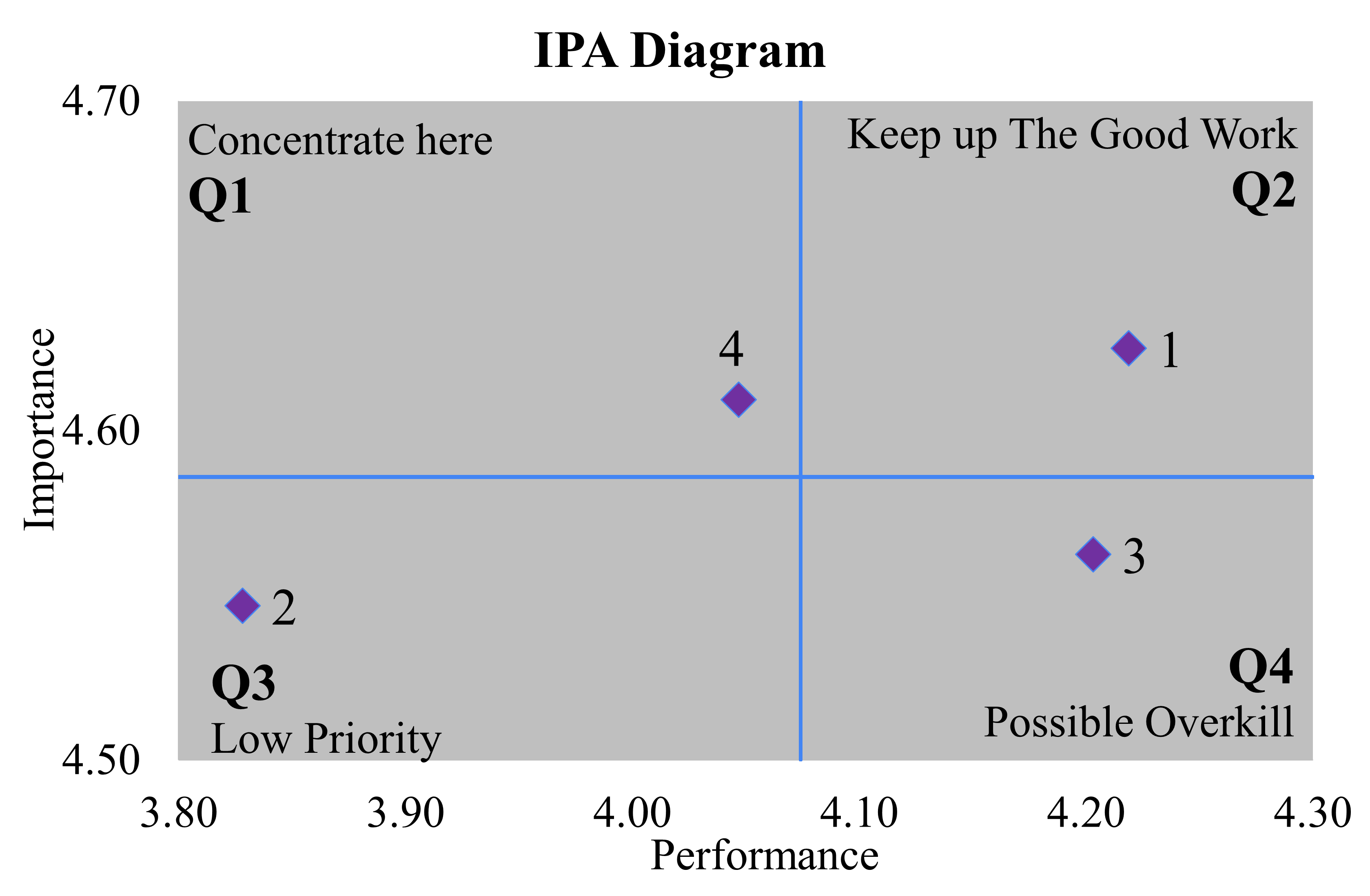
performance dimensions to be maintained; Quadrant III reflects lower-priority areas; and Quadrant IV indicates areas with relatively high performance but lower strategic importance.
3.5. Quadrant-Based Interpretation
Through the IPA Cartesian Diagram (Figure 2), differences in management strategy exist for each of the constructs. Resilience and Crisis Adaptation (V4) finds itself in Quadrant I ("Concentrate Here"), which identifies that while its importance was perceived to be high, its development was inadequate. This highlights that there was a pressing need to enhance the resilience of institutions and employees by means of well-structured support systems like mental readiness programs and crisis management structures.
Green Transition and Regulatory Readiness (V2) finds a place in Quadrant III ("Low Priority"), which indicates that while it may be recognized as a relevant factor, its current performance level and relative level of importance are not that high. This area may increase in significance with incremental integration and awareness targets.
On the other hand, Digital and Technological Adaptability (V1) lies in Quadrant II ("Keep Up the Good Work"), indicating that efforts on digital transformation and technology adaptation are doing well against their relative importance. This needs to continue for continued innovation and efficiency.
Finally, Career Flexibility and Lifelong Learning (V3) falls under Quadrant IV with the notion that the current level of performance slightly outperforms the level of importance. While past initiatives have been successful, consolidating resources to forestall overemphasis on a strength may be relevant to justify the initiative.
The analysis highlights resilience and crisis adaptation (V4) as the top strategic priorities for improvement, particularly in green job transformation and workforce sustainability.
3.6. Triangulation Analysis and Interpretation
Beyond validating quantitative results, the triangulation process provided explanatory insights into institutional readiness gaps, behavioral adaptability constraints, and policy implementation challenges affecting workforce transition readiness. This triangulation phase was implemented for IPA analysis validation and extension to bridge quantitative IPA analysis with a pool of insights collected by conducting expert interviews and exploring literature. This enables a higher level of credibility for the analysis with less reliance on IPA scores for importance and performance since it not only relies on internal analysis but also on external expert opinions and institutional perspectives. The triangulation analysis result can be seen in Table 5.
a)Expert Interview Insights
Through engagements with project managers, policymakers, and engineers, there was a strong indication that projects for adaptability in the green construction industry in Indonesia are still focused on technology. Training for working with technology has been well-developed; however, emotional resilience and crisis response training remain a rarity. Performance was impacted during a crisis, like a pandemic or material shortages, with a lack of psychological readiness being a performance issue since there was no crisis management plan. This supports the IPA finding that the relative importance rating and actual performance for Resilience and Crisis Adaptation (V4) were lower than those of others.
b)Documenting and Reviewing Policies
The document analysis of sustainability reports, government policy documents, and training curricula supports this perspective. Findings revealed that capacity-building programs are heavily weighted toward technical competencies, such as Building Information Modeling (BIM)30), energy efficiency systems, and digital construction, while behavioral adaptability and resilience frameworks are minimally integrated. Several corporate training modules under Indonesia’s Green Construction Roadmap prioritize compliance indicators (e.g., ISO 14001, carbon audit) over adaptive capability metrics. The review of Green Industry Regulation No. 13/2021 also identified compliance gaps in reporting adaptive readiness indicators, echoing the IPA results for Green Transition and Regulatory Readiness (V2), which recorded the lowest performance ratio (84%)
c)Integrated Interpretation
Triangulation techniques found that all sources uniformly pointed to Resilience and Crisis Adaptation (V4) as a key strategic issue with the highest level of urgency. Analysis of documents ensured that the blind spot for institutional measurement was ADASP’s Crisis Leadership Structure and Planning Framework. At the same time, however, a lack of inter-sectoral cooperation for Green Transition and Regulatory Readiness (V2) was a source of undervaluation. This triangulation procedure supports adaptability, which has a multidimensional character encompassing technology and psychology. Therefore, this IPA-Triangulation integration supports the idea that resilience acts as a basis of readiness for sustainability transition by filling the gaps between human adaptability and changes that can be achieved at a systemic level. This finding integration supports a strong empirical basis for stand development directed at resilience to fit with the sustainability of the Evergreen Journal’s engineering transition.
Table 5: Concise summary of triangulation analysis
| Evidence Source | Key Observations | Supported Variables (from IPA) | Interpretation & Strategic Implications |
|---|---|---|---|
| Expert Interviews | Adaptability programs in Indonesia’s green construction remain focused on technology; resilience and crisis management training are rare. Performance declines during crises indicate a lack of psychological preparedness and the absence of crisis response systems. | V4: Resilience & Crisis Adaptation | Confirms IPA gap: resilience is perceived as important but poorly implemented. Urgent need for institutionalized crisis leadership and adaptive workforce systems. |
| Policy and Document Review | Capacity building prioritizes technical competencies (BIM, energy efficiency) over behavioral adaptability. Green Industry Regulation No. 13/2021 reveals compliance and readiness reporting gaps. | V2: Green Transition & Regulatory Readiness | Aligns with IPA results showing low performance (84%). Policy execution and monitoring mechanisms must be strengthened to improve regulatory readiness. |
| Literature and Comparative Studies | Global studies highlight institutional lock-in, weak risk response, and limited behavioral adaptation. Resilience engineering theory suggests digital adaptability must evolve toward institutional learning and behavioral resilience. | V1: Digital & Technological Adaptability; V3 – Career Flexibility & Lifelong Learning | Supports high performance of V1 and V3 but notes overreliance on technical skills without adequate crisis and regulatory alignment. Calls for integration of institutional learning and behavioral resilience. |
| Integrated Interpretation | All data sources converge that Resilience & Crisis Adaptation (V4) represents the most urgent improvement domain; Green Transition & Regulatory Readiness (V2) remains undervalued due to limited inter-sectoral collaboration. | All Variables (V1–V4) | Confirms that adaptability is multidimensional (technical–psychological–institutional). Resilience serves as the foundation for transition readiness and sustainability-oriented workforce transformation. |
4. Discussion and Policy Implications
The preceding analysis and meta-analysis concerning descriptive assessment and IPA-related quantitative analysis culminate in a better understanding of workforce adaptability and readiness for transition, explicitly considering the concept of green construction. This discourse section aims to incorporate the insights into a higher theoretical discussion.
First of all, the discussion elaborately details the interaction of the studied variables to influence adaptability performance in the context of the emerging environment of the green economy (Section 4.1). Then, Section 4.2 presents the theoretical contribution of the study to the fields of resilience engineering and workforce transition analysis and their respective applications. Further, Section 4.3 presents the extension of the discussion to address policy considerations for a faster workforce transition to achieve sustainability for the nation. Lastly, Section 4.4 discusses the study's limitations for future research and its suggestions.
Through the integration of empirical observations with theoretical and policy insights, this discussion can place the study not only at the forefront of analysis on current readiness levels but also serve as a guide towards institutional reform and the development of human capital for the transition of the Indonesian construction industry into a sustainable and resilient construction sector.
4.1. Discussion
The results underscore that resilience is not merely a soft skill but a strategic competency underpinning successful green transitions. In the context of sustainable workforce development, resilience represents the capacity to maintain functionality, recover from disruptions, and adapt to evolving green standards and technologies.
The relatively modest numerical gaps identified through the IPA should not be interpreted as negligible differences. Given that all adaptability dimensions were rated at very high importance levels, even small discrepancies between importance and performance indicate strategic misalignment between expected workforce readiness and actual implementation capacity. In sustainability transition contexts characterized by rapid technological and regulatory change, such misalignments may influence organizational responsiveness and long-term transition success. Therefore, strengthening resilience and regulatory readiness should be interpreted as proactive strategic measures rather than corrective responses to large performance deficiencies.
These findings align with the adaptive capacity theory31) and resilience engineering principles32), which emphasizes that sustainable systems are defined not only by efficiency but by their ability to persist and transform under stress. The dominance of Resilience and Crisis Adaptation as the most critical variable reveals that sustainable transformation depends on a workforce’s ability to navigate uncertainty—particularly in sectors exposed to environmental, regulatory, and technological volatility.
Moreover, while Digital & Technological Adaptability and Career Flexibility are essential for operational efficiency, their effectiveness diminishes without a resilient foundation that enables consistent performance under crisis conditions. Therefore, fostering resilience should be viewed as a core dimension of green job readiness, integrated within training, certification, and organizational learning policies.
4.2. Theoretical and Practical Implications
This study contributes to the evolving theoretical discourse on green workforce adaptability and sustainability transition by highlighting resilience as an essential dimension of human adaptability. Previous models of transition readiness have predominantly emphasized technical preparedness and regulatory compliance; however, the findings demonstrate that Resilience and Crisis Adaptation operate as a core adaptive mechanism that sustains workforce performance under conditions of uncertainty and sustainability-driven transformation.
Theoretically, this research expands the understanding of workforce transition dynamics by integrating psychological resilience and adaptive behavior into the broader framework of green human capital theory. It bridges concepts from resilience engineering32) and adaptive capacity theory31) with the operational principles of Importance–Performance Analysis (IPA), creating a hybrid analytical model that not only quantifies adaptability gaps but also validates their institutional and behavioral dimensions through triangulation.
By applying an integrated IPA–triangulation approach, the study advances existing adaptability frameworks beyond descriptive assessment toward a more explanatory and validation-oriented perspective. This integration enables the identification of priority gaps while simultaneously revealing their structural and organizational causes, thereby strengthening the analytical robustness of workforce transition readiness assessment. Furthermore, the proposed framework conceptualizes adaptability as a multidimensional construct that integrates technical, regulatory, and resilience-based capacities within a unified structure, positioning resilience as a foundational mechanism that reinforces long-term sustainability performance.
This methodological and conceptual integration introduces a replicable and extensible framework that can be applied across sectors such as construction, energy, and manufacturing, thereby contributing to the advancement of empirical and theoretical research on sustainable and resilient labor systems in the context of global green transitions.
From a practical standpoint, the findings offer actionable insights for policymakers, industry leaders, and educational institutions seeking to accelerate green job transformation through human-centered strategies:
a)Workforce Development and Training:
Organizations should incorporate resilience-building modules into existing green skill development programs. This may include scenario-based crisis simulations, adaptive problem-solving workshops, and stress management systems designed to sustain performance during transitions.
b)Policy and Institutional Frameworks:
Policymakers should align green transition policies with workforce preparedness initiatives, ensuring that regulatory changes are supported by adaptive capacity programs. Establishing national guidelines for workforce resilience within green industries can strengthen institutional readiness and support SDG 8 (Decent Work and Economic Growth) and SDG 13 (Climate Action).
c)Organizational Adaptability Systems:
Companies can operationalize resilience metrics as part of their sustainability performance indicators. Embedding resilience assessment in human resource management systems will help organizations monitor transition readiness and reduce vulnerability to environmental or market disruptions.
d)Education and Lifelong Learning:
Academic institutions and professional training centers should emphasize lifelong adaptability by integrating resilience, sustainability ethics, and crisis management into engineering and vocational curricula, ensuring that graduates are not only technically competent but also emotionally adaptable and sustainability-minded.
By translating theoretical insights into actionable strategies, this study provides a comprehensive pathway for fostering resilient, future-ready, and sustainable workforces capable of thriving in the global green economy.
4.3. Policy and Practical Implications
The policy and managerial implications derived from this study are closely aligned with the quadrant positions and priority levels identified in the IPA results. Variables positioned in Quadrant I, particularly Resilience and Crisis Adaptation, represent high-importance dimensions with relatively lower performance and therefore require immediate strategic intervention through resilience-oriented training, crisis management systems, and adaptive leadership development.
Variables such as Digital and Technological Adaptability, located in Quadrant II, demonstrate strong alignment between importance and performance and should be maintained through continuous innovation and digital capacity-building initiatives. Meanwhile, Career Flexibility and Lifelong Learning, positioned in Quadrant IV, indicate relatively strong performance that may allow for strategic resource optimization without undermining workforce adaptability.
Green Transition and Regulatory Readiness, which exhibited the largest performance gap, should be addressed through stronger policy alignment, institutional coordination, and regulatory capacity-building to ensure that workforce preparedness keeps pace with sustainability policy developments. Linking these strategic actions to specific IPA outcomes ensures that policy and managerial recommendations remain evidence-based and aligned with empirically identified transition readiness priorities.
The results offer strategic guidance for policy and industry:
1)Integrate Resilience Training: Embed crisis adaptation and emotional resilience modules into green workforce capacity-building programs.
2)Regulatory Readiness Enhancement: Align environmental policy updates with workforce preparedness mechanisms, including adaptive leadership and scenario-based learning.
3)Adaptive Learning Frameworks: Promote lifelong learning models that balance technical competencies with socio-psychological adaptability.
4)Institutional Collaboration: Encourage partnerships between industry, academia, and government to co-develop resilient workforce ecosystems supporting SDG 8 (Decent Work and Economic Growth) and SDG 13 (Climate Action).
4.4. Limitations and Future Research
The findings of this study should be interpreted in light of the sectoral and national context in which the research was conducted. The assessment focuses primarily on the construction sector in Indonesia, where institutional maturity, regulatory enforcement, technological adoption, and workforce development structures may differ from those in other countries or industrial settings. These contextual characteristics may influence the relative importance of adaptability dimensions and the prioritization of resilience within workforce transition readiness frameworks.
Nevertheless, the conceptual framework and integrated IPA–triangulation approach proposed in this study offer analytical insights that may be transferable to other sectors and regions undergoing sustainability transitions. Future research is encouraged to apply and validate the framework across different industrial contexts and geographical settings to further examine its generalizability and comparative relevance.
Although this study provides significant insights into workforce adaptability and transition readiness toward green job transformation, several limitations should be acknowledged.
First, the data were collected from a specific sectoral context and geographical area, which may limit the generalizability of the findings. Variations in socio-economic conditions, industrial maturity, and policy enforcement across regions could produce different patterns of adaptability and resilience. Future studies are encouraged to apply this integrated IPA–Triangulation framework across multiple sectors or countries to validate its cross-contextual applicability.
Second, the study primarily relied on perceptual and self-reported data, which may introduce subjective bias. While triangulation helped to enhance reliability, future research could integrate objective performance metrics or longitudinal tracking to better capture dynamic changes in adaptability and transition behavior over time.
Third, although Resilience and Crisis Adaptation was identified as the most influential dimension, this research did not fully explore its interaction effects with Digital Adaptability or Career Flexibility. Future studies should employ system dynamics modeling or structural equation modeling (SEM) to map causal relationships among adaptability dimensions and assess their long-term impact on green labor productivity.
Finally, the current IPA-based approach provides a static snapshot of workforce perceptions. Future investigations may adopt dynamic assessment models, such as time-series IPA or agent-based simulations, to examine how adaptive behaviors evolve through policy interventions, digital transformation, and crisis events.
By addressing these limitations, future research can further refine the theoretical understanding of resilience-centered adaptability and strengthen the evidence base for designing inclusive, responsive, and future-ready green workforce systems.
5. Conclusion and Policy Recommendations
This study examined workforce adaptability and transition readiness in the context of green job transformation using an integrated IPA–triangulation approach across four key dimensions: Digital and Technological Adaptability, Green Transition and Regulatory Readiness, Career Flexibility and Lifelong Learning, and Resilience and Crisis Adaptation. The findings confirm that resilience and crisis adaptation represent the most critical enabling dimension for sustaining workforce performance amid sustainability-driven transitions and systemic uncertainty.
Beyond identifying priority gaps, this study advances the theoretical understanding of workforce adaptability by conceptualizing transition readiness as a multidimensional construct in which resilience functions as a foundational adaptive capacity supporting technological, regulatory, and professional transformation. The integration of Importance–Performance Analysis with triangulation provides a more comprehensive analytical framework that not only diagnoses performance gaps but also reveals underlying institutional and behavioral factors influencing sustainable workforce development.
From a policy and workforce development perspective, the findings highlight the importance of embedding resilience-oriented training, adaptive leadership, and regulatory alignment into green workforce strategies. Such integration is particularly relevant for countries in the Global South, where sustainability transitions often occur alongside institutional constraints, technological disparities, and labor market vulnerabilities. Strengthening resilience-centered adaptability can therefore enhance workforce readiness, support inclusive green growth, and improve long-term sustainability outcomes.
By linking empirical findings with theoretical refinement and policy relevance, this study offers a replicable framework for assessing and strengthening workforce transition readiness in sustainability-driven economies. Future research is encouraged to apply this integrated approach across sectors and regions to further refine resilience-centered workforce development models and support globally coordinated green transitions.
Acknowledgements
The authors would like to express their sincere gratitude to Universitas Jember, Indonesia, for the financial support and research funding that made this study possible. The institutional encouragement and resources provided through the university’s research grant program have been invaluable in facilitating data collection, analysis, and dissemination of findings. The authors also extend their appreciation to all participants and collaborators who contributed to the successful completion of this research.
Nomenclature
| Symbol | Description (Unit) |
|---|---|
| CV | Coefficient of Variation |
| Green Transition Readiness | The preparedness of the workforce and institutions to shift toward sustainable and environmentally responsible practices |
| Mean importance score of each variable | |
| IPA | Importance–Performance Analysis |
| Number of respondents | |
| Mean performance score of each variable | |
| P/I Ratio | Performance–Importance Ratio, representing the degree of conformity between actual performance and perceived importance |
| Quadrant position of variable i in the IPA matrix | |
| Correlation coefficient between importance and performance | |
| Resilience & Crisis Adaptation | The ability of individuals or organizations to maintain functionality and adaptability under environmental or economic stressors |
| SD | Standard Deviation |
| Triangulation | A combination of quantitative (IPA) and qualitative validation methods is used to enhance result credibility |
| Overall average of importance values | |
| Overall average of performance values |
Appendix A. Questionnaire Instrument
The questionnaire was designed to assess each dimension from two perspectives: perceived importance and actual performance (See Table A1). The importance scale reflects the perceived strategic relevance of each dimension for supporting workforce transition readiness toward green job transformation, while the performance scale reflects the current level of implementation or practice observed by respondents (See Tabel A2).
This scoring structure was used to ensure consistent interpretation of responses and to distinguish between the perceived importance of each dimension and its actual implementation performance.
| Code | Dimension | Indicator Statement | Scale | |
|---|---|---|---|---|
| Impor-tance | Perfor-mance | |||
| V1 | Digital and Technological Adaptability | The workforce is able to adapt to digital tools, automation, and sustainable construction technologies. | 1-5 | 1–5 |
| V2 | Green Transition and Regulatory Readiness | The workforce and institutions are prepared to respond to environmental regulations, sustainability standards, and green transition requirements. | 1–5 | 1–5 |
| V3 | Career Flexibility and Lifelong Learning | The workforce is willing and able to reskill, upskill, and adjust professional competencies in response to green job transformation. | 1–5 | 1–5 |
| V4 | Resilience and Crisis Adaptation | The workforce is able to maintain performance, recover from disruptions, and adapt to crisis conditions during sustainability-driven transitions. | 1–5 | 1–5 |
| Score | Importance Assessment | Performance Assessment |
|---|---|---|
| 1 | Very low importance: the dimension is considered not relevant or has minimal strategic relevance for green job transformation. | Very low performance: the dimension is not implemented or is almost absent in current practice. |
| 2 | Low importance: the dimension has limited relevance and is not considered a major priority. | Low performance: the dimension is weakly implemented and only partially observed in practice. |
| 3 | Moderate importance: the dimension is relevant but not yet considered a critical priority. | Moderate performance: the dimension is implemented at a basic or inconsistent level. |
| 4 | High importance: the dimension is considered important and should be prioritized in workforce transition readiness. | High performance: the dimension is generally implemented and visible in current practice. |
| 5 | Very high importance: the dimension is considered essential and highly strategic for successful green job transformation. | Very high performance: the dimension is strongly implemented, consistently practiced, and well institutionalized. |
Appendix B. Validity and Reliability Tests of the Importance and Performance Scale
Validity and reliability tests were conducted to ensure that the questionnaire items used to measure workforce transition readiness were suitable for further analysis. The questionnaire consisted of four main dimensions: Digital and Technological Adaptability, Green Transition and Regulatory Readiness, Career Flexibility and Lifelong Learning, and Resilience and Crisis Adaptation. Each item was assessed from two perspectives: perceived importance and actual performance.
The validity test was conducted by comparing the item correlation coefficient with the r-table value at N = 55 and α = 0.05. The r-table value was 0.2609. An item was considered valid when its correlation coefficient exceeded the r-table value.
The validity test results show that all item correlation coefficients for both the importance and performance scales were higher than the r-table value of 0.2609. Therefore, all questionnaire items were considered valid and suitable for further analysis.
Reliability testing was conducted using Cronbach’s Alpha to evaluate the internal consistency of the questionnaire items. The calculation was based on the item variance and total variance values for both the importance and performance scales.
The Cronbach’s Alpha values were 0.789 for the importance scale and 0.809 for the performance scale. Both values exceed the commonly accepted minimum threshold of 0.70, indicating that the questionnaire had acceptable internal consistency. These results confirm that the instrument was valid and reliable for evaluating workforce transition readiness using the Importance–Performance Analysis framework.
| Code | Dimension | Item Correlation | r-table | Decision |
|---|---|---|---|---|
| V1 | Digital and Technological Adaptability | 0.760870 | 0.2609 | Valid |
| V2 | Green Transition and Regulatory Readiness | 0.835450 | 0.2609 | Valid |
| V3 | Career Flexibility and Lifelong Learning | 0.865123 | 0.2609 | Valid |
| V4 | Resilience and Crisis Adaptation | 0.658256 | 0.2609 | Valid |
| Code | Dimension | Item Correlation | r-table | Decision |
|---|---|---|---|---|
| V1 | Digital and Technological Adaptability | 0.829673 | 0.2609 | Valid |
| V2 | Green Transition and Regulatory Readiness | 0.773272 | 0.2609 | Valid |
| V3 | Career Flexibility and Lifelong Learning | 0.862172 | 0.2609 | Valid |
| V4 | Resilience and Crisis Adaptation | 0.741556 | 0.2609 | Valid |
| Code | Dimension | Item Variance |
|---|---|---|
| V1 | Digital and Technological Adaptability | 0.252432 |
| V2 | Green Transition and Regulatory Readiness | 0.281106 |
| V3 | Career Flexibility and Lifelong Learning | 0.343062 |
| V4 | Resilience and Crisis Adaptation | 0.239631 |
| Sum of item variances | 1.116231 | |
| Total variance | 2.736303 | |
| Number of items | 4 | |
| Cronbach’s Alpha | 0.789421 | |
| Reliability decision | Reliable |
| Code | Dimension | Item Variance |
|---|---|---|
| V1 | Digital and Technological Adaptability | 0.568868 |
| V2 | Green Transition and Regulatory Readiness | 0.951357 |
| V3 | Career Flexibility and Lifelong Learning | 0.834101 |
| V4 | Resilience and Crisis Adaptation | 0.764977 |
| Sum of item variances | 3.119304 | |
| Total variance | 7.929852 | |
| Number of items | 4 | |
| Cronbach’s Alpha | 0.808850 | |
| Reliability decision | Reliable |
References
- J. Pinkse, “Green and greening jobs,” Nat. Sustain., 7 (5) 510–511 (2024). doi:10.1038/s41893-024-01340-8.
- A. Alakbarov, M. Guliyev, B. Razakova, M. Dadashova, and G. Ismayilova, “Transformation of production systems in azerbaijan through green economy principles,” Evergreen, 12 (2) 1167–1176 (2025). doi:10.5109/7363501.
- B. Jagadeesh, and R. Kumar, “Sustainable and resilient manufacturing in the age of digitalization: analysis of challenges,” Evergreen, 11 (4) 2926–2938 (2024). doi:10.5109/7326934.
- Organisation for Economic Co-operation and Development, “Iinternational lessons for local workforce development in the United States,” Paris, 2024. https://www.oecd.org/en/publications/future-proofing-workforces-for-the-green-transition-international-lessons-for-local-workforce-development-in-the-u-s_0032844e-en.html.
- R. Archer, R. Lewis, J. Yarker, L. Zernerova, and P.E. Flaxman, “Increasing workforce psychological flexibility through organization-wide training: influence on stress resilience, job burnout, and performance,” J. Contextual Behav. Sci., 33 100799 (2024). doi:10.1016/j.jcbs.2024.100799.
- M. Håkansson Lindqvist, P. Mozelius, J. Jaldemark, and M. Cleveland Innes, “Higher education transformation towards lifelong learning in a digital era–a scoping literature review,” International Journal of Lifelong Education, 43 (1) 24–38 (2024). doi:10.1080/02601370.2023.2279047.
- L. Xie, Y. Chen, B. Xia, and C. Hua, “Importance‐Performance analysis of prefabricated building sustainability: a case study of guangzhou,” Advances in Civil Engineering, 2020 (1) 1–17 (2020). doi:10.1155/2020/8839118.
- A.A. Akanmu, C.J. Anumba, and O.O. Ogunseiju, “Towards next generation cyber-physical systems and digital twins for construction,” Journal of Information Technology in Construction, 26 505–525 (2021). doi:10.36680/j.itcon.2021.027.
- J. McCoy, D. Davis, E. Mayfield, and M.J. Brear, “Labour implications of the net-zero transition and clean energy exports in australia,” Energy Res. Soc. Sci., 112 (103506) (2024). doi:10.1016/j.erss.2024.103506.
- J. Oh, “Leaving the military to work in civilian society: career adaptability by south korean short- and mid-term veterans,” Career Development International, 26 (3) 415–434 (2021). doi:10.1108/CDI-09-2020-0227.
- M. Turner, “Developing resilience: examining the protective factors of early career construction professionals,” Construction Management and Economics, 41 (10) 805–819 (2023). doi:10.1080/01446193.2023.2208238.
- United Nations, “The Sustainable Development Goals Report 2024,” New York, 2024. https://unstats.un.org/sdgs/report/2024/The-Sustainable-Development-Goals-Report-2024.pdf.
- L. XU, “Green supply chain management under digital empowerment: literature review, framework construction, and future research agenda,” (2025). doi:10.37766/inplasy2025.1.0033.
- M. Ilbeigi, and X. Chen, “Automation in construction: education and training for workforce development,” Proceedings of International Structural Engineering and Construction, 11 (1) (2024). doi:10.14455/isec.2024.11(1).con-12.
- C.F. Calvillo, “Jobs, skills and regional implications of the low carbon residential heat transition in the uk,” Energy Policy, 202 (2025). doi:10.1016/j.enpol.2025.114579.
- J. Zhang, Y. Qi, and Z. Dai, “Green construction of expressways based on the whole life cycle esg concepts: a case study of the construction of the xingyi ring expressway,” ICCREM 2024, 1828–1839 (2025). doi:10.1061/9780784485910.175.
- D. Singh, and A. Singh, “Role of building automation technology in creating a smart and sustainable built environment,” Evergreen, 10 (1) 412–420 (2023). doi:10.5109/6781101.
- M. Signorini, and A.P. Pome, “Shaping the future of facility management. market and literature insights on digital twin adoption,” Facilities, 43 (11–12) 818–834 (2025). doi:10.1108/F-02-2025-0029.
- E. Safapour, and A. Silwal, “Workforce-related challenges of construction 4.0 technologies in the architectural, engineering, and construction industry,” Computing in Civil Engineering 2023, 622–629 (2024). doi:10.1061/9780784485231.074.
- L. Jørsfeldt, “Towards industry 5.0 skills - off-site construction settings in denmark,” IOP Conf. Ser. Earth Environ. Sci., 1389 (1) (2024). doi:10.1088/1755-1315/1389/1/012017.
- T.L. Nkosi, F.A. Emuze, and A. Windapo, “Towards a healthier workforce in the construction industry,” CIB Conferences, 1 (1) (2025). doi:10.7771/3067-4883.1701.
- P. Fairbrother, “A just transition for labour: the challenges of moves to a circular economy,” Relations Industrielles, 78 (2) (2023). doi:10.7202/1109482ar.
- K. Becker, “Supporting australian veteran transition: career construction through a person-environment fit perspective,” International Journal of Human Resource Management, 36 (5) 799–823 (2025). doi:10.1080/09585192.2022.2077127.
- L. Tang, U. Ranasinghe, W. Li, C. Harris, J. Montayre, A. de A. Neto, and M. Antoniou, “Analysis of safety and well-being factors related to the ageing construction workforce,” Lecture Notes in Civil Engineering, 41–52 (2025). doi:10.1007/978-981-96-2802-5_4.
- S.K. Gilmartin, “Who will lead us out of climate crisis? gender, race, and early career pathways in environmental engineering,” ASEE Annual Conference and Exposition Conference Proceedings, (2021). https://www.scopus.com/inward/record.uri?partnerID=HzOxMe3b&scp=85124561978&origin=inward.
- M.K. Koukou, “Training for sustainable and healthy building for 2050: new methodologies for an integrated and transnational education approach targeting skills development for the transition toward zeb and peb buildings,” Buildings, 15 (1) (2025). doi:10.3390/buildings15010067.
- Z. Vranayova, and D. Kaposztasova, “Educational transformation: the influence of green building technologies,” Lecture Notes in Civil Engineering, 604 589–601 (2024). doi:10.1007/978-3-031-67576-8_55.
- F. Sherratt, “The power of a pandemic: how covid-19 should transform uk construction worker health, safety and wellbeing,” Construction Management and Economics, 41 (5) 379–386 (2023). doi:10.1080/01446193.2022.2104890.
- S. Frimpong, “THE role of education and training to achieve positive mental health among young construction workers from the global south,” Proceedings of the 39th Annual Arcom Conference Constructing for the Future Arcom 2023, 257–266 (2023). https://www.scopus.com/inward/record.uri?partnerID=HzOxMe3b&scp=85204788620&origin=inward.
- U. Bharadwaj, and A. Singh, “Sustainable green construction practices using griha parameters and bim tools implementation on building design,” Evergreen, 11 (3) 1641–1654 (2024). doi:10.5109/7236818.
- S. Adams, “The pragmatic holism of social–ecological systems theory: explaining adaptive capacity in a changing climate,” Prog. Hum. Geogr., 45 (6) 1580–1600 (2021). doi:10.1177/03091325211016072.
- E. Hollnagel, “Systemic Potentials for Resilient Performance,” in: F. Matos, P.M. Selig, E. Henriqson (Eds.), Resilience in a Digital Age: Global Challenges in Organisations and Society, Springer International Publishing, Cham, 2022: pp. 7–17. doi:10.1007/978-3-030-85954-1_2.