
Abstract
Sustainable rice production is critical, especially in flood-prone areas, as it addresses food security while minimizing environmental impacts. The soil's elevated salt content is one of the primary cultivation issues in rice fields along the coast, which can lead to a decrease in yield and can even result in crop failure. The study aimed to integrate green manufacturing practices, which can significantly reduce flood risk and increase resilience in rice farming. The on-farm research was on the north coast of Semarang, a stretch of rice fields affected by floods, covering an area of 50 hectares. The multi-aspect sustainability analysis methodology complements the assessment results to obtain a production system with a sustainability index. The average value of total sustainability was 67.65, which means that rice farming in Semarang has a fairly sustainable status. Factors prioritized for improvement to improve the sustainability status of rice cultivation were environmental aspects (gap 9.67), economic aspects (gap 8.33), and social institutions (gap 6.54). The leverage factors of rice farming in the socio-institutional aspect were farmer age (sensitivity max 0.33 and sensitivity value 0.67) and rice farming experience (sensitivity max 0.20 and sensitivity value 0.60). Demonstration plot of high-salinity-resistant rice varieties using Biosalin1 and Biosalin2. Planting salinity-tolerant varieties was the most efficient way to reduce the negative impact of flooding caused by seawater rising to the ground level. Green manufacturing practices include low-external-input and sustainable agriculture, which utilize organic fertilizers and integrated pest management. The practice of using agricultural equipment that uses alternative fuels from plastic waste can save energy and lower emissions to minimize the carbon footprint of sustainable rice production.
Keywords: coastal, flood, green manufacturing, rice, Sustainable
Outline
1. Introduction
Sustainable agriculture is an agricultural system designed and managed by considering the balance between land productivity, environmental sustainability, and social and economic sustainability. Sustainable agriculture offers numerous advantages, including stable yearly production, prevention of environmental damage, affordable and healthier products, and ecological preservation1,2). Rice is the main food crop in the World3). Indonesia is the third-largest rice producer in the World, with double harvests per year. Rice production for population consumption was estimated at around 32.07 million tons. The national average was 5.2 tonnes per hectare per year. Rice, as the primary commodity, needs to increase production by 60% in the next decade. The development of technological innovation is a strategic step to answer this challenge.
Sustainable development integrates social, economic, and environmental aspects4,5). Currently, the trend of sustainable agriculture is the main focus. The World's sustainable agricultural management faces climate change, which can affect food security. Increased inundation and saltwater intrusion reduce farm production and the livelihoods of coastal communities6). Climate change vulnerability is linked to temperature parameters, rainfall variability, ocean acidification, and flooding, which in turn are associated with food insecurity and damage to the food system.
Global agricultural development, including Indonesia, faces threats related to the widespread influence of salinity on agricultural land resources. The FAO predicts that an excess of 800 million hectares of farmland worldwide has been affected by salinity7). Around 20% of agricultural land is estimated to be saline because of global climate change. The area of saline land in Indonesia reaches more than a million hectares.
Agricultural land affected by salinity in Semarang City is mainly located in the Tugu District. In 2021, there was a crop failure covering an area of 50 hectares in Tugu District caused by tidal waves or seawater runoff to rice fields. As a result, for two years, the rice fields affected by the storm became abandoned and could not be planted.
Tugu District, Semarang City, has an area of around 28.13 km² according to data from the Central Statistics Agency in 2020. This area is divided into 7 urban villages, including Tugurejo, Mangunharjo, and Mangkangkulon, which are known to have large coastal and saline potential. The coast of Tugu District, especially Mangunharjo Village, presents a great challenge for conventional agriculture. This area is often hit by robbery and abrasion, causing seawater intrusion that makes the soil contain high salinity levels. For many years, the sleeping land was sprawled, untouched by agricultural activities because it was considered unproductive. But since 2024, Mangunharjo's face has begun to change. The innovation in the form of biosaline rice varieties 1 and 2 was introduced through the collaboration of the National Research and Innovation Agency (BRIN) and the Semarang City Government.
The rice fields affected by salinity in the coastal area of the north coast of Semarang City in 2020 reached around 400 hectares. Sustainable agriculture involves using eco-friendly technologies, such as the use of organic pesticides and fertilizers, proper tillage techniques, selection of suitable seeds, and efficient water management8,9). The quantity of agricultural land available does not match the rising market demand for farm products. Agricultural land was decreasing due to urbanization, land conversion, and land degradation due to unsustainable agricultural practices. The reduction of agricultural land was caused by an increase in population, increasing food needs, land conversion, and land degradation due to unsustainable agricultural practices10).
One of the efforts to overcome the above problems was to utilize coastal land, one of the marginal lands that needed to be adequately managed. Marginal land is land of low quality with several limitations that cause constraints for certain purposes11). Low-nutrient soil characteristics predominate in the marginal agricultural land sector12). One of the coastal land areas that has the potential to be utilized optimally is the dry land in Tugu Semarang, where there are about 100 ha of sloping coastal land.
Since the introduction of genetic resources in the form of seeds that were resistant to saline conditions on the coast of Semarang city, the Biosalin 1 and Biosalin 2 varieties, as well as environmentally friendly agricultural practices by the National Research and Innovation Agency, farmers in coastal farmland in Tugu District have used many of these varieties for plant cultivation, especially paddy. The Semarang City Government welcomes the farmers' wishes by helping to build rainwater reservoirs so that rice fields on the coast are not flooded when it rains. Water availability through the utilization of embung can increase productivity, water use efficiency on dry land, and maintain the sustainability of agricultural productivity13,14).
As a national strategic commodity that has the potential to be developed on coastal land, the demand for rice as a staple food is increasing as the population increases. The general rice consumption in Semarang City is 957,133 for a population of around 1,708,830 people. Tugu District, situated in the western part of Semarang City, serves as a strategic hub for supporting urban food security. Although Semarang City is not a major rice-producing area, Tugu contributes approximately 454 hectares of actively producing rice fields, making it an important local agricultural enclave.
Rice is widely cultivated by farmers both in the lowlands and highlands. Based on the results of the KSA Survey in 2021, the rice harvest area in Semarang City was estimated at 4.29 thousand hectares, or an increase of 199.28 hectares (4.88 percent) compared to 2020. Meanwhile, rice production in Semarang City in 2021 was estimated at 20.29 thousand tons of GKG (Dry Milled Grain). If converted to rice, rice production in 2021 will reach around 11.67 thousand tons, or a decrease of 1.47 thousand tons (11.23 percent) compared to rice production in 202015).
Research on sustainable rice production with a green manufacturing approach to reduce flood risk presents several interesting novelties, especially in the context of climate adaptation and production system efficiency. The research was carried out in collaboration with the local government and BRIN because the main problem on the coast of Semarang City is tidal flooding (sea level rise to enter the rice field area on the coast). The study proposes strategies such as watershed rehabilitation, irrigation canal repairs, and crop rotation adjustments to reduce the impact of flooding on crop yields16).
The integration of Green Manufacturing in Agriculture combines energy efficiency, waste reduction, and the selection of low-emission raw materials in the rice production process. This is not just a matter of cultivation, but also includes milling, packaging, and distribution17).
Research such as the Low Carbon Rice Project in Java shows that the rice sector accounts for up to 12% of global methane emissions. The initiative develops more efficient anaerobic cultivation practices and encourages policy dialogue to reduce carbon footprints. Green manufacturing helps reduce costs through resource efficiency and waste treatment, while increasing the competitiveness of sustainable rice products. This is in accordance with the Sustainable Development Mandate, which prioritizes contributions to the 17 pillars of the Sustainable Development Goals (SDGs) and Global Climate Mitigation. Sustainable rice production plays a role in achieving SDG 2 (Zero Hunger), SDG 13 (Climate Action), and SDG 12 (Responsible Consumption and Production).
Rice cultivation in Mangunharjo Village, Tugu Semarang District, was mainly carried out on sloping coastal land, which was often affected by tidal floods, and utilizes river water flowing from upstream (Mijen district) to downstream. The establishment of rainwater reservoirs for irrigation sources has not been sought. In addition, the application of environmentally friendly technology has not been properly socialized, limited to the use of organic fertilizers and also resistant rice varieties. The use of inundation-resistant rice varieties, water-saving irrigation systems, and agroforestry techniques to maintain productivity in the midst of extreme weather is one of the Climate-Smart Agriculture Technology Innovations, which needs to be disseminated with a Participatory and Multi-Stakeholder Approach. The need to produce rice, encourage the use of unused land, or optimize land in coastal areas for agriculture, especially rice. Land use needs to be carried out with commodities that have high economic value18).
The objective of the evaluation of the sustainability of rice farming on Tugu's coastal land is to ascertain its current state, pinpoint elements and motivating factors that allow for future advancements, and act as a guide for decision-makers to preserve rice farming's sustainability.
Specific objectives were optimizing the use of natural resources, including water, energy, and raw materials, to ensure that production processes do not worsen the surrounding environment. Developing production models that are adaptive to climate change, including planting and post-harvest systems that are resilient to extreme weather and flooding. Increasing the added value of rice through green certification and access to premium markets, encouraging local economic transformation with highly competitive products, and providing policy recommendations for sustainable agricultural industrialization, including incentives for farmers and industry players who implement green manufacturing principles.
2. Materials and methods
2.1. Study Area and Research Design
This study was conducted from May to November 2024 in the coastal rice-farming area of Tugu District, Semarang City, Central Java, Indonesia. The research employed a mixed-methods design, integrating quantitative and qualitative approaches to evaluate the sustainability of rice farming systems under saline and flood-prone conditions. This design was selected to capture both measurable performance indicators and the contextual socio-institutional dynamics that influence sustainability outcomes.
A comprehensive explanation has been added for the methodology used, namely, utilizing the Multi-Aspect Sustainability Analysis (MSA) tool on the Exsimpro website. The method used to collect data for this research was a survey approach, combining both quantitative and qualitative elements. Quantitative research was a systematic investigation of a phenomenon by collecting data that can be measured using statistical, mathematical, or computational techniques19). Qualitative research was used to understand the meaning behind certain phenomena, so that researchers can explore an object. The Survey Method is a type of research that is carried out to obtain facts or data in the field. The purpose of this research was to provide accurate and reliable information20).
2.2. Sampling Technique and Data Collection
Primary data were collected through structured questionnaires and in-depth interviews. A total of 40 rice farmers were selected using purposive sampling, ensuring that respondents were actively engaged in rice cultivation on saline-affected coastal land and had direct experience with biosaline rice varieties and green manufacturing-related practices. Secondary data were obtained from government reports, institutional databases, and relevant scientific literature.
The questionnaire was developed to operationalize three sustainability dimensions: environmental, economic, and social-institutional aspects. Each dimension consisted of multiple indicators measured using a Likert scale (1–5) to facilitate quantitative assessment. Qualitative interviews were conducted to enrich the interpretation of quantitative findings and to explore farmers’ adaptive strategies, perceptions of risk, and institutional support mechanisms.
Data were collected through a mixed-method survey, combining structured questionnaires with in-depth interviews. A cohort of 40 respondents was selected using a purposive sampling technique, ensuring that all participants were active rice farmers who met pre-determined criteria relevant to the sustainability assessment. The questionnaire was meticulously designed to operationalize the three core aspects of sustainability: the environmental aspect (water usage, pesticide/fertilizer application, and soil health), the economic aspect (profitability, production costs, and market access), and the social aspect (community knowledge sharing, land tenure, and labor practices). Respondent answers were captured using a Likert-scale format to facilitate quantitative analysis.
2.3. Sustainability Assessment Framework
The collected data were processed using the Multi-Aspect Sustainability Analysis (MSA) software, a rapid assessment tool designed to evaluate sustainability status and performance indices. The analytical procedure began with the normalization of indicator scores, which were then aggregated to calculate a single Sustainability Index (Y) using the formula Y = (y1 + y2 + y3)/n, where 'y represents the score for each sustainability aspect and 'n' is the total number of aspects (n=3). This index, ranging from 0 to 100, was interpreted against set criteria: 75-100 (Very Sustainable), 50-75 (Sustainable), 25-50 (Low Sustainability), and 0-25 (Unsustainable). To identify key intervention points, a leverage analysis was performed. This involved calculating a leverage factor (L) for each indicator by assessing the disparity between its current performance (Mofn) and the ideal benchmark (Gfn). The indicators with the highest leverage values were identified as the critical driving factors, thereby pinpointing the most sensitive areas for targeted policy and management actions to enhance the overall sustainability of the rice farming system.
Sustainability performance was evaluated using Multi-Aspect Sustainability Analysis (MSA) implemented through the Exsimpro platform. Indicator scores were normalized and aggregated to calculate a composite Sustainability Index (SI) on a scale of 0–100, expressed as:
[ SI = \frac{\sum_{i=1}^{n} y_i}{n} ]
Where (y_i) represents the score of each sustainability aspect and (n = 3) denotes the number of aspects assessed. Sustainability categories were defined as: 0–25 (Unsustainable), 25–50 (Low sustainability), 50–75 (Fairly sustainable), and 75–100 (Highly sustainable).
2.4. Leverage and Sensitivity Analysis
To identify priority intervention points, a leverage analysis was conducted by calculating sensitivity values for each indicator based on deviations between existing conditions and ideal benchmarks. Indicators with the highest sensitivity were identified as driving factors, providing a scientific basis for policy formulation and targeted management strategies aimed at improving system sustainability.
3. Results and discussion
Research on sustainable rice production in Semarang City that integrates green manufacturing to reduce flood risk is an innovative approach that combines sustainable agriculture with environmentally friendly industrial practices. The government's expansion of rice production areas is accompanied by a concerning trend of agricultural land conversion, particularly in Java, which is the primary center of rice production in Indonesia21). This integrated approach to sustainable agriculture and Green Manufacturing combines environmentally friendly agricultural practices with manufacturing processes that have minimal carbon emissions. In Central Java, the government encourages farmers to produce low-carbon rice through organic farming and electric-fueled rice milling machines. Effective environmental management relies on responsible behavior from human actors, enabling green human resource practices to foster environmental training and motivate appreciation for nature preservation22).
The Semarang City Government seeks to reduce flood risk through Agricultural Green Manufacturing Practices. Organic agriculture and land management can increase soil water absorption, reducing the risk of flooding. Previous studies have shown that rice fields in Semarang are vulnerable to flooding due to high rainfall and frequent flooding. A separate study employed diatom stratigraphy to reconstruct historical flood events in the Tuntang Hilir River, enhancing the understanding of past flood occurrences and informing flood risk assessments in the region23).
Table 1: The Aspects and factors for assessing rice farming's sustainability
| Environmental Aspects | Economic Aspects | Institutional Social Aspects |
|---|---|---|
| 1. Pest management with crop rotation | 1. Use of seeds/variety | 1. Age |
| 2. Use of organic fertiliser | 2. Use of organic fertiliser | 2. Education |
| 3. Use of chemical fertiliser | 3. Use of chemical fertiliser | 3. Rice farming experience |
| 4. Use of chemical pesticides | 4. Use of labour | 4. Access to agricultural inputs |
| 5. Water usage | 5. Total production cost | 5. Frequency of accessing information sources |
| 6. Soil cultivation | 6. Profit | 6. Intensity of farmer group meetings |
| 7. Number of family members who work as farmers | ||
| 8. Access to market | ||
| 9. Access to capital |
The first and most important step that influences seed selection, crop selection, crop yields, land preparation, and fertilizer/manure selection is the prediction of soil properties (Table 1). Since soil characteristics are closely linked to the topography and climate of the land being used, they should be taken into account. Predicting the soil's nutrients, surface moisture, and weather during the plant life cycle are the main components of soil property prediction24).
By combining organic farming methods with good land management, the soil's capacity to absorb water can be improved, lowering the risk of flooding. The soil's ability to absorb water is increased when organic farming improves the soil's structure and health. By maintaining soil quality, biodiversity, and forest resources, organic farming practices also help to slow down environmental degradation. This is especially true when contrasted with intensive agricultural methods that have been demonstrated to have negative environmental effects25). Additionally, organically managed soils have higher microbial activity, which improves water retention and lessens surface runoff26). Rice fields in Semarang were especially susceptible to flooding, according to earlier research, mainly because of the heavy rainfall.
Respondents came from farmers in Tugu with an average age of 54 years, which was categorized as the productive age category based on Labour Law No. 13 of 2003 (productive age 15 - 64 years). The percentage of respondents aged less than 35 years was 9%, 36-45 years was 36%, 46-60 years was 39%, and above 60 years was 16%. The average respondent's education was classified as a low education category, elementary school. The average education of rice farmers in the location was 84%, which was classified as low, namely, six years of education27).
Low-level education of farmers indicates that farmers run rice farming based on experience and non-formal education activities, such as sharing with fellow farmers and knowledge derived from older generations.
Similar trends were seen in Ghana, where partnerships with important stakeholders, such as governmental organizations and non-governmental organizations (NGOs), enabled farmers to share informal knowledge to improve rice production quality and sustainable agricultural practices28).
The average land ownership was 2500 with either self-owned or rented land ownership status from the local government, and having an average rice farming experience of 18 years (Table 2).
3.1. Overall Sustainability Status of Rice Farming
The aggregated sustainability index of rice farming in Tugu District reached 67.65, indicating a fairly sustainable system. However, the results reveal imbalances among sustainability dimensions, with environmental performance exceeding economic and social-institutional dimensions. This asymmetry underscores that technological and ecological innovations alone are insufficient without parallel socio-economic reinforcement.
The use of MSA in sustainability index analysis was important for several reasons:
1)Multidimensional Approach: MSA allows for evaluating sustainability from various aspects, such as ecology, economy, socio-cultural, institutional, technology, and infrastructure. This method offers a thorough summary of all the variables influencing sustainability.
2)Identification of Sensitive Variables: MSAs can identify the key variables that most affect sustainability by analyzing various aspects. This information was crucial to formulate effective intervention strategies.
3)Flexibility and Data Updates: MSA allows for periodic analytics updates as new data becomes available or conditions change, without needing to build a new model from scratch. This ensures that sustainability assessments are always relevant and up-to-date.
4)Ease of Use: As a rapid assessment tool, MSA was designed to make it easier for users to process and analyze data, thereby accelerating the decision-making process related to sustainability.
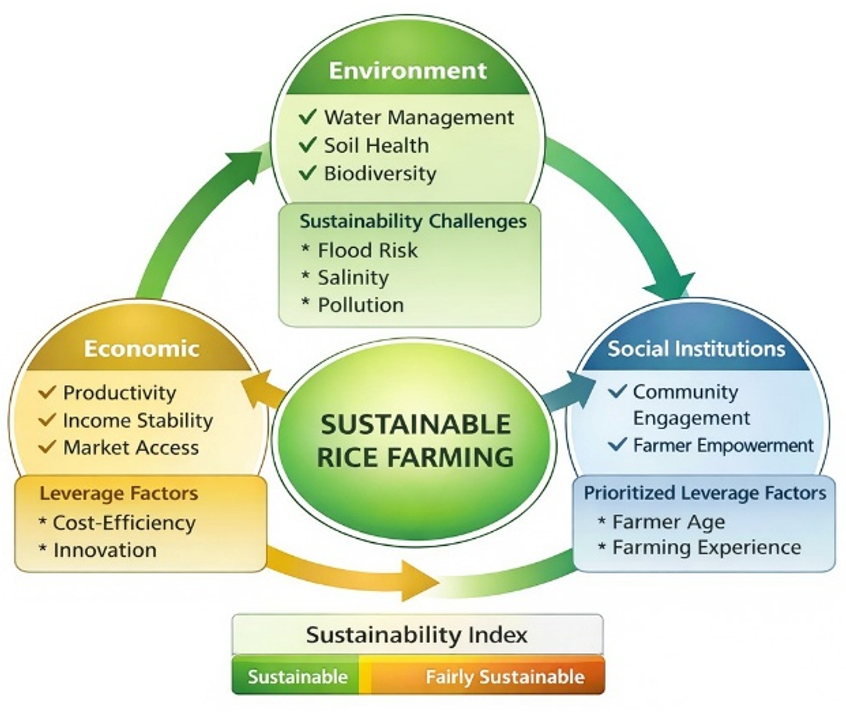
Thus, using MSA software in sustainability index analysis helps policymakers and practitioners gain a deep and thorough understanding and formulate the right strategies to achieve sustainability goals. The sustainability status of rice farming in Tugu Semarang was determined based on several indicators from a combination of three specified aspects, namely environmental, economic, and social institutions. The average value of total sustainability was 67.65, which means that rice farming in Tugu Semarang has a fairly sustainable status based on the specified category (50-75). The environmental aspect occupies the highest level of sustainability (72.33), followed by the economic aspect (69.50) and the social institutional aspect (61.65) (Table 3).
Improvement scenarios were predictions of improvements that can be made in each aspect assessed. Scenario sustainability scores were obtained by adding one level of sustainability score to the two most influential factors in each aspect assessed.
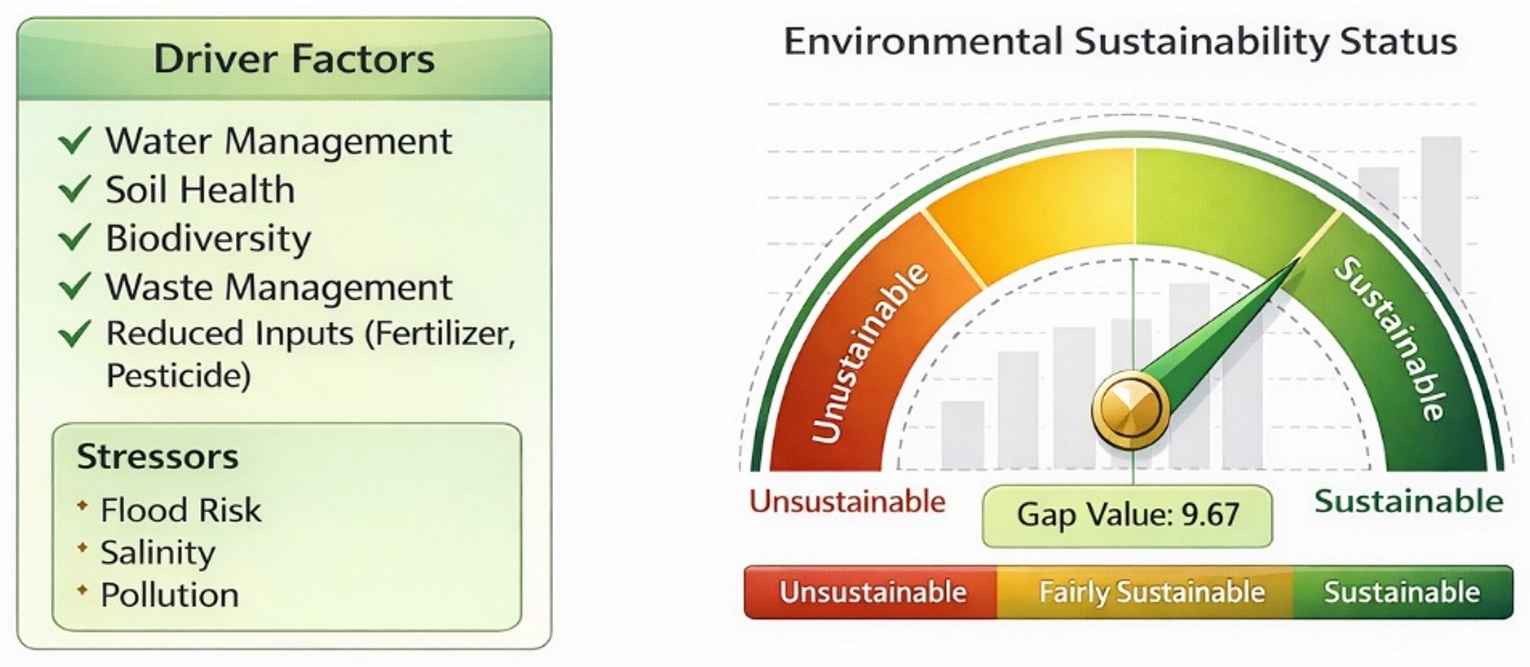
The level of sensitivity (width of the distance in the Figure) of sustainability in each aspect. Improvement efforts were selected on aspects with a high sensitivity level (the large gap between existing conditions and scenarios). Factors that were prioritized for improvement to improve the sustainability status of rice cultivation in Tugu were environmental aspects (gap 9.67), economic aspects (gap 8.33), and social institutions (gap 6.54) (Figure 1).
Table 2: Characteristics of rice farmers in Tugu Semarang, Central Java
| Description | Caption | Description | Caption |
|---|---|---|---|
| A. Average farmer age | : 54 years | C. Average land ownership size | : 1500 m² |
| > 60 years | : 16 % | <= 500 m² | : 10 % |
| 46 - 60 years | : 39 % | 501-1000 m² | : 42 % |
| 36 - 45 years | : 36 % | 1001-1500 m² | : 9 % |
| <= 35 years | : 9 % | 1501-2000 m² | : 13 % |
| > 2000 m² | : 25 % | ||
| B. Average education | : | D. Average Rice farming experience | : 18 years |
| Not graduated from elementary school | : 2 % | Less than 2 years | : 0 % |
| Elementary School | : 36 % | 2-5 years | : 18 % |
| Junior High School | : 26 % | 5-10 years | : 27 % |
| Senior High School | : 32 % | 10-15 years | : 14 % |
| University | : 3 % | 15-20 years | : 21 % |
| More than 20 years | : 19 % |
Table 3: Agricultural sustainability's values and state
| No | Aspect | Existing | Scenario 1 | Sustainability criteria |
|---|---|---|---|---|
| 1 | Environmental | 72.33 | 82 | 0 - 25 : Unsustainable |
| 2 | Economic | 69.5 | 77.83 | 25 - 50 : Low Sustainable |
| 3 | Social Institutional | 61.11 | 67.11 | 50 - 75 : Sustainable |
| Total Average | 67.65 | 75.65 | 75 - 100 : Very Sustainable | |
| Status Sustainability | Sustainable | Very Sustainable |
3.2. Environmental Sustainability Dimension: Adaptation and Ecological Resilience
The environmental aspect achieved the highest score (72.33), primarily driven by the adoption of Biosalin 1 and Biosalin 2 rice varieties and increased use of organic inputs. These practices improved soil structure, enhanced water retention capacity, and reduced surface runoff, thereby mitigating flood impacts. The findings align with climate-smart agriculture principles, emphasizing adaptation to salinity and hydrological stress.
Despite this positive outcome, leverage analysis identified excessive reliance on chemical fertilizers and suboptimal soil tillage as critical constraints. The average fertilizer application (860 kg/ha) exceeded recommended thresholds, posing risks to soil health, water quality, and greenhouse gas emissions. Transitioning toward integrated nutrient management, combining organic amendments with optimized chemical inputs, is therefore essential to strengthen long-term ecological resilience (Figure 1).
The development of saline land on the north coast of Java, including Semarang, focuses on adapting local plants to high salinity. The existence of a superior variety of Biosalin, which has been issued by the Agriculture Ministry since 2020, and was made available to the public domain for any Indonesian citizen, was the future for farmers on the coast of Java, who were often affected by floods.
The Research Collaboration for Agricultural Sustainability with a Green Manufacturing Approach is a collaboration between the National Research and Innovation Agency and the Semarang City Government in 2024, by raising research on sustainability index assessment, to create sustainable and environmentally friendly agricultural practices, especially in rice fields in coastal areas of brackish water saline land. This research will then be directed to the use of the Geographical Information System (GIS) in 2025. The use of GIS in analyzing flood potential in Semarang City industrial estates helps in spatial planning that considers flood risks, thus supporting the development of green manufacturing.
The Semarang City Government, which was faced with coastal abrasion and seawater intrusion, answered the challenge with innovation. The Biosalin program, with its desalination technology and salinity-resistant plant varieties, was a smart solution. The Mayor of Semarang enthusiastically stated, With Biosalin technology, we turn challenges into opportunities. This innovation not only utilizes sleeping land but also builds a more independent and sustainable future.
The ecological engineering of degraded ecosystems poses great challenges, and the application of complex biological, mechanical, and engineering measures is complex, expensive, uneconomical, and practically unfeasible to improve. Nevertheless, the proposed nature-based solutions mimic the process of natural reparations and provide sustainable interventions for the reclamation of damaged landscapes, in addition to improving ecological integrity and providing many additional benefits to ecosystems and human societies29).
The Biosalin program has been a success in Mangunharjo Village, Tugu District. On formerly thought-to-be unproductive land, the first harvest of salinity-resistant rice, Biosalin 1 and 2, produced 3.8 tonnes of grain for certified seeds per hectare. The 7th President, Joko Widodo, also witnessed this success. Jokowi witnessed the Transformation of Copeland in Semarang. Former President Joko Widodo's working visit to the Biosaline location in Kampung Panggung, Mangunharjo Village, Tugu District on January 18, 2025, became a historic moment. The former President witnessed firsthand the process of planting salinity-resistant rice, reviewed the land that has been successfully managed, and had a dialogue with farmers.
The success of the Biosalin program was the fruit of the collaboration of the government, academics, business actors, the community, and the media. Semarang has become an example of sustainable saline land management in Indonesia. Semarang proves that hope can grow on even the toughest land by inheriting global innovations and combining them with local wisdom. Biosaline symbolizes resilience, adaptation, and sustainability, an important milestone in realizing Indonesia's food security.
There is a great chance to improve agricultural sustainability, especially on marginal lands, by combining unique rice seeds with cutting-edge fertilizer technologies. This strategy supports the objectives of global food security by increasing rice productivity while reducing negative environmental effects. Important facets of this sustainable farming approach are described in the sections that follow. By improving soil health and lowering dependency on artificial inputs, the use of organic fertilizers supports ecological balance30).
Stress-tolerant rice varieties that increase productivity in difficult circumstances have been developed as a result of advancements in rice breeding, such as CRISPR and marker-assisted selection31). The study offers solutions for agricultural development initiatives that emphasize sustainability.
In addition to increasing crop yields, sustainable agricultural methods promote long-term environmental stewardship by making sure that current land use does not jeopardize the land's viability in the future32). These innovations are crucial in tackling food security issues because they increase productivity on marginal lands, especially in areas where rice is a staple crop.
The combination of fertilizer technology and special rice seeds will produce benefits on marginal land, becoming the main pillar of achieving sustainable agriculture. The combination of innovative technologies not only increases rice productivity but also minimizes negative impacts on the environment. The research presents solutions in agricultural development programs that focus on sustainability aspects.
The environmental aspects of rice farming's sustainability at the research site were 72.33 (sustainable). This value measures several factors studied, namely pest management through crop rotation, the use of organic fertilizers, chemical fertilizers, and pesticides, water use, and soil management. The factors above were then selected as driving factors. The driving factor is the factor that most influences the sustainability status. The sensitivity value plus the factor's maximum sensitivity value was used to determine which factor had the highest sensitivity and was selected as the driving factor. From Figure 2, the driving factors of sustainability in the environmental aspect selected for improvement were the use of chemical fertilizers, the use of chemical pesticides, and soil cultivation. The maximum sensitivity and sensitivity value of chemical fertilizer use were 0.25 and 0.75, respectively, while chemical pesticide use and tillage have the same values of 0.33 (maximum sensitivity) and 0.33 (sensitivity value). The crop rotation factor and the use of organic matter were already in good condition (sensitivity max), so no further improvement was needed.
The Random Iteration value was used as a differentiator because two or more aspects—chemical pesticide use and soil cultivation factors—have the same sensitivity value and the maximum sensitivity value. The difference between the simulated value of the random value and the factor's mode value was referred to as random iteration. The difference in mode value increases with diversity. A maximum difference of 0.5 was allowed, and the random iteration value described the comparison of each factor.
Random iteration was shown in Figure 2 (right column). The random iteration value was 0.37 (<0.5; eligible), and it can be seen that the tillage factor was denser than the chemical pesticide use factor, so the tillage factor was prioritized for improvement.
The use of chemical fertilizers in rice cultivation at the research site was high, averaging 860 kg/ha, while the maximum recommended dose was around 700 kg/ha33). Excessive use of chemical fertilizers can cause many environmental impacts, such as decreased water quality, decreased soil fertility and degradation, decreased soil moisture and nutrient availability, decreased biodiversity, and increased greenhouse gas emissions34,35).
Therefore, farmers need to be encouraged to reduce chemical fertilizers and increase the use of organic fertilizers. The use of organic fertilizers has positive effects on soil and plants. It was possible to enhance the chemical, physical, and biological qualities of soil by adding organic matter. Composted organic matter affects soil physical properties such as granulation promotion, improved soil aeration, and increased water retention capacity36). Rice cultivation practices that reduce chemical fertilizers and increase organic materials can improve the sustainability status.
This also aligns with efforts to rehabilitate coastal land in the research location. The effect of salinity on the north coast of Semarang City on plant growth through four mechanisms, namely (1) high salt content causes osmotic stress, (2) specific ion concentrations due to high salt content inhibiting the absorption of K+ which was the main nutrient of plants, (3) high levels of Na+ ions were toxic to cytosolic enzymes, and (4) high salt levels spur oxidative stress and cell death. Plants that grow in environments with high salt levels will experience growth disorders37).
Stormwater on the coast of Semarang occurs when high tides enter the mainland, especially in flat and low coastal areas. The impacts include inundation of agricultural land, crop damage, and increased soil salinity, which can reduce rice and horticultural productivity. However, during a long drought, rainfall decreases drastically, causing water sources such as wells and rivers to dry up. In coastal regions, severe weather puts crops at risk of crop failure by depriving plants of water, and farmers struggle to meet irrigation demands. Drought also reduces groundwater quality, increases soil salinity levels, and worsens community health and sanitation conditions. China is one of the countries in the world with a wide and ecologically vulnerable area, as well as a prolonged vulnerable surface type, which is the region with the highest ecological vulnerability, the weakest resource carrying capacity, and the highest poverty rate in China. Water scarcity and severe drought have severely affected farmers' production and normal lives, and are not conducive to agricultural development38).
This condition causes plants to experience membrane function disorders, metabolic poisoning, disturbances in the photosynthesis process, and even death. Salinity also inhibits root growth, root osmotic adjustment, root pressure, sodium ion (Na) release, and water extraction. Salinity was also known to affect the increase in Na and chloride (Cl), reducing the availability of K, Ca, and magnesium (Mg) in the soil. Plants grown on salty soil were greatly impacted by salinity index, plant tolerance, and land and plant management measures. The quality of the growing medium and irrigation water, as shown by the DHL value of soil and water, determines the productivity of the plant. Despite the risk of crop failure, rice is still grown on saline land because it is the plant that rice farmers prefer, even though it is not a crop that can withstand salinity. Rice plants can develop in flooded land conditions and can help wash the salt on the soil surface to the soil layer underneath so that the land becomes suitable for plant growth (Figure 3).
In addition to chemical fertilizers, the second driving factor from the environmental aspect was soil cultivation. Soil cultivation in rice cultivation was carried out before planting and has many stages, starting from cleaning grass, turning the soil, making beds, loosening, and, for some farmers, installing plastic mulch. Appropriate soil management can improve soil aeration and drainage, and break the cycle of plant pest organisms39). Perfect soil management needs to be socialized to farmers to increase yields and improve the sustainability status of rice farming.

3.3. Economic Sustainability Dimension: Vulnerability to Input Price Volatility
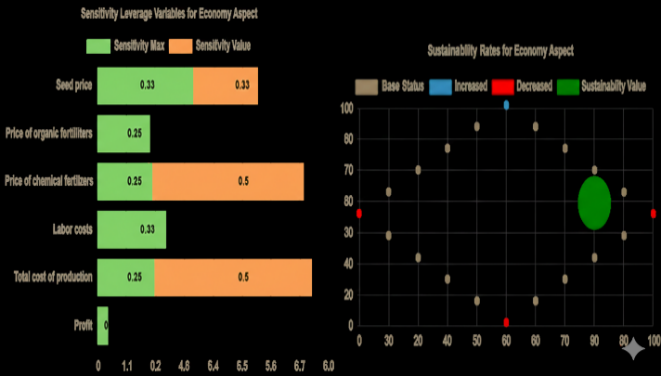
The economic sustainability index (69.50) reflects conditional stability that is highly sensitive to fluctuations in fertilizer, seed, and energy prices. This dependency exposes farmers to systemic risk, particularly under reduced subsidy regimes or global market disruptions. While innovations such as plastic-waste-to-fuel technology demonstrate strong potential to lower operational costs and emissions, their economic feasibility requires further validation through life-cycle costing and scalability analysis (Figure 4).
Importantly, the absence of explicit profitability and value-chain assessment represents a structural gap. Sustainable production must be evaluated not only by cost efficiency but also by net income, reinvestment capacity, and market access. Strengthening farmer cooperatives and developing premium markets for biosaline rice could significantly enhance economic resilience40,41).
1)The Fragility of "Sustainable" Economic Status and Input Cost Volatility
While the economic dimension scores "sustainable" (69.50), this status is precarious and heavily contingent on stable input costs. The analysis correctly identifies chemical fertilizer and seed prices as the primary economic drivers, revealing a critical vulnerability. The high sensitivity of these inputs means that any market fluctuation—driven by global commodity prices, supply chain disruptions, or reduction in subsidies—could rapidly erode farm profitability and push the economic status from "sustainable" to "low sustainability." The current assessment, while positive, masks a high-risk dependency on external factors. Therefore, long-term economic sustainability cannot be achieved through passive continuation of current practices but requires proactive strategies to de-risk farming operations from these volatile input costs.
2)The Untapped Potential of Cost-Benefit Analysis and Input Optimization
The discussion notes that organic fertilizer and labor costs are at maximum efficiency, but this conclusion warrants a deeper cost-benefit scrutiny. The assertion that these factors "can no longer be improved" may be premature without a detailed analysis of returns on investment. For instance, while the cash cost of organic fertilizer might be stable, what is the opportunity cost of the labor required for its application? A comprehensive cost-benefit analysis could explore if integrated nutrient management—optimizing the ratio of chemical to organic fertilizers—could reduce the overall fertilizer budget without compromising yield. Similarly, a deeper investigation into labor costs could assess whether mechanization or collective labor-sharing models could reallocate resources towards more productive activities, thereby improving the economic benefit per unit of labor cost.
3)Beyond Input Costs: The Critical Omission of Profitability and Value Chain Analysis
A significant limitation of the current economic discussion is its almost exclusive focus on production costs, with profit treated only as a linear outcome. A robust economic feasibility analysis must centrally address net farm income. The statement that "sustainable rice farming was required to generate promising profits" is not followed by any data on actual profitability, profit margins, or the farmers' capacity to reinvest. To truly assess economic sustainability, the analysis must integrate a value chain perspective. This involves examining not only the cost of seeds and fertilizers but also the farmers' access to fair markets, their bargaining power, price premiums for quality, and the potential for value-added activities. Without this, the discussion presents an incomplete picture that risks mistaking cost-efficient production for a truly viable and resilient livelihood.
4)Systemic Interventions vs. Stop-Gap Solutions: Evaluating the Plastic-to-Fuel Innovation
The introduction of the plastic-to-fuel machine is a commendable example of a systemic intervention that addresses both economic and environmental pressures. This innovation directly tackles the identified problem of high non-subsidized fuel costs, which are a production input indirectly linked to the sensitivity of overall costs. Its potential to lower operational expenses while mitigating environmental pollution represents a powerful synergy. However, its discussion as an economic solution requires a more critical evaluation of scalability, long-term feasibility, and true cost-benefit. Key questions remain: What is the production cost and energy balance of the fuel derived from plastic? How replicable is this model across different districts? A thorough analysis of this innovation's economic viability and potential to genuinely insulate farmers from energy price shocks would significantly strengthen the argument for its role in ensuring long-term economic sustainability.
3.4. Social-Institutional Sustainability Dimension: Demographic and Capacity Constraints
The social-institutional dimension scored the lowest (61.11), reflecting a critical vulnerability in human capital. The dominance of older farmers and minimal youth participation threaten intergenerational continuity. Limited access to digital information, training, and modern agricultural services further constrains adaptive capacity. Institutional strengthening through revitalized extension services, digital platforms, and youth-oriented agripreneurship programs is therefore imperative. Without strategic social interventions, gains achieved through environmental and technological innovations may not be sustained over time.
The social and institutional dimensions of rice farming in Tugu District, with a sustainability index of 61.11, represent the most vulnerable of the three pillars assessed. The analysis identifies two critical leverage factors demanding immediate intervention: the advanced age of the farmer population, averaging 45-60 years, and their depth of farming experience. This demographic crisis, with less than 1% of farmers under 35, is driven by the younger generation's perception of agriculture as an unprofitable career, compounded by challenges in land access and a skills gap in modern agricultural technology. Consequently, the sector's long-term viability was threatened by an impending generational transition, indicating that current institutional support, while providing basic access to facilities and capital, is insufficient to ensure social sustainability without targeted policies to attract and empower youth.
A critical challenge to the social sustainability of rice farming is the exodus of labor to the industrial and trade sectors, which shrinks the farming workforce and reduces cultivated land42). To reverse this trend and secure the sector's future, concerted efforts are needed to attract youth by rebranding agriculture as a modern, viable career. This can be achieved through strategic digitalization and mechanization, which not only enhances efficiency but also builds the farming experience of the next generation. Concurrently, environmental pressures like seawater intrusion and soil salinity threaten productivity. In response, the Semarang City Government has pioneered the "Biosaline Flashback" program, innovating with salt-tolerant rice varieties and land management solutions to reclaim coastal areas, enhance local welfare, and contribute to global food security amidst climate change.
The presented Table 4 outlines sensitivity leverage variables for the institutional-social aspect, focusing on nine key indicators that drive socio-institutional dynamics within an agricultural context. The data reveals a concerning pattern: all indicators exhibit medium to high sensitivity, with none operating below their maximum thresholds. Particularly noteworthy are age and farming experience, which show leverage ratios of 2.03 and 3.00, respectively, indicating that their actual sensitivity values significantly exceed their predefined maximums. This suggests that these demographic and experiential factors exert disproportionately strong influence on the socio-institutional system, potentially acting as critical pressure points or amplifiers within the agricultural community structure. The uniformity observed among the remaining seven indicators—each with a leverage ratio of exactly 1.00—implies a systemic alignment where multiple institutional factors operate precisely at their sensitivity limits, reflecting a balanced but potentially fragile state where any external change could disrupt the equilibrium. The broader implications of this sensitivity profile point to an institutional-social environment characterized by heightened vulnerability and constrained adaptive capacity. With an overall leverage ratio of 1.19 and all indicators clustered at or above their maximum sensitivity thresholds, the socio-institutional aspect appears to be operating at near-maximum stress levels across multiple dimensions simultaneously. This configuration suggests limited buffering capacity within the system, where factors like market access, capital availability, information flow, and group dynamics are all equally sensitive to change. The absence of low-risk indicators further underscores a systemic challenge: there are no apparent areas of institutional resilience or slack that could absorb shocks without propagating effects throughout the social network43). This sensitivity concentration—particularly around experience and age-related variables—highlights how deeply embedded human capital factors are within institutional performance, suggesting that interventions targeting knowledge transfer and intergenerational engagement might offer pathways toward building more robust and adaptable socio-institutional structures (Table 4).
The evolution of saline land management has progressed from 20th-century advancements in irrigation, drainage, and salt-tolerant crops to 21st-century innovations, including IoT, AI, and sophisticated biosaline agriculture. For local farmers in Semarang, global success stories provide a vital blueprint for action. The monumental water
Table 4: Sensitivity of driving factors on the socio-institutional aspect
| Indicator | Sensitivity Max | Sensitivity Value | Leverage Ratio | Risk Level | Status |
|---|---|---|---|---|---|
| Age | 0.33 | 0.67 | 2.03 | High Risk | Above Max |
| Education | 0.25 | 0.25 | 1 | Medium Risk | At Threshold |
| Farming experience | 0.2 | 0.6 | 3 | High Risk | Above Max |
| Access to production means | 0.33 | 0.33 | 1 | Medium Risk | At Threshold |
| Info sources frequency | 0.33 | 0.33 | 1 | Medium Risk | At Threshold |
| Farmer group meetings | 0.33 | 0.33 | 1 | Medium Risk | At Threshold |
| Number of members | 0.33 | 0.33 | 1 | Medium Risk | At Threshold |
| Market access | 0.33 | 0.33 | 1 | Medium Risk | At Threshold |
| Capital access | 0.33 | 0.33 | 1 | Medium Risk | At Threshold |

management of the Netherlands' Delta Works, Israel's transformative use of desalination and drip irrigation in the Negev Desert, Australia's integrated approach in the Murray-Darling Basin, and the UAE's biotechnology feats in Dubai all demonstrate that concerted technological application can turn infertile land productive.
While these high-tech solutions offer a future vision, immediate institutional improvements are required locally. Current institutional factors—including access to inputs, capital, and farmer group meetings—show uniform sensitivity scores, indicating no single dominant constraint but a system-wide need for enhancement. Prioritization should therefore focus on strengthening the foundational channels of knowledge and support44). This can be achieved by intensifying farmer group meetings and dramatically improving access to information through digital platforms, structured technical guidance, and consistent agricultural extension services, thereby building a more informed and collaborative farming community.
The sustainability index for this study, employing a standardized 0-100 scale consistent with methodologies like Rapfish, is categorized into four distinct levels to facilitate clear interpretation and action. A score of 75-100 denotes a highly sustainable system with minimal threats, 50-75 indicates sustainability with moderate risks, 25-50 reflects a vulnerable state, and 0-25 signals an unsustainable system at risk of collapse. This categorization is crucial for directly translating assessment results into targeted policy and management strategies (Figure 5).
A significant transformation is underway with the introduction of biosaline rice cultivation on previously unproductive saline land in Mangunharjo, starting in 2024. This innovation not only enhances local rice production and reduces dependency on external supply but also shortens the supply chain through government-facilitated direct-to-market schemes. As a model of successful collaboration among government, the private sector, and research institutions, the Tugu biosaline project demonstrates how marginalized lands can contribute to urban food stability. Its practices are now being considered for replication in other regions, such as Jepara and Karimunjawa, to strengthen resilient, agroecology-based supply chains.
3.5. Challenge and Limitation
While the adoption of biosaline rice varieties and associated technologies presents a promising pathway for sustainable agriculture, this study acknowledges several limitations that warrant consideration. The research focused primarily on a specific pilot area within Tugu District, and its findings may not be fully generalizable to other regions with different soil characteristics, water salinity levels, or socio-agricultural contexts. Furthermore, the rapid assessment methodology, while effective for an initial snapshot, may not capture the long-term agronomic performance of biosaline crops over multiple seasons or their resilience to increasingly variable climate conditions. Deeper, longitudinal studies are needed to fully understand yield stability, potential soil health changes, and the economic durability of this farming model.
Scaling the biosaline agriculture model faces significant practical and economic challenges45). The initial investment required for specialized irrigation systems, soil amendment technologies, and certified salt-tolerant seeds may be prohibitive for smallholder farmers without substantial financial support or access to credit. Additionally, the successful replication of this approach depends on the development of robust supply chains for these novel inputs and the establishment of guaranteed market channels that offer a price premium for biosaline rice. Without this supporting infrastructure, farmers may be hesitant to transition from traditional, lower-risk practices, regardless of the potential long-term benefits46).
Finally, the widespread adoption of these innovations encounters notable socio-economic barriers. The prevailing perception of agriculture as an unprofitable career, particularly among the youth, poses a fundamental threat to the labor force necessary for scaling any new agricultural practice. Furthermore, technical knowledge required for managing saline soils effectively—involving water management, nutrient balancing, and pest control in a stressed environment—necessitates comprehensive and continuous extension services. The current aging farmer demographic may face a steeper learning curve, and without effective, accessible training programs, the knowledge gap itself could become a critical barrier to the successful adoption and long-term sustainability of biosaline farming practices.
4. Conclusion
Based on the empirical data collected from the coastal geographical area of Tugu District, Semarang, this study concludes that the integrated model of biosaline rice cultivation represents a viable pathway toward sustainable agriculture, albeit with distinct challenges. The Multi-Aspect Sustainability Analysis yielded an overall index of 67.65, categorizing the system as "fairly sustainable," but revealed critical disparities among its pillars. This study demonstrates that biosaline rice cultivation integrated with green manufacturing principles constitutes a promising pathway for sustainable agriculture in flood- and salinity-prone coastal areas. The overall sustainability index of 67.65 confirms that rice farming in Tugu District is moderately sustainable, with strong environmental performance driven by salt-tolerant varieties and organic management practices.
However, sustainability remains fragile due to economic dependence on volatile external inputs and pronounced social-institutional weaknesses. Excessive chemical fertilizer use, limited profitability analysis, aging farmer demographics, and insufficient institutional support emerge as key barriers to long-term resilience. The environmental aspect scored highest (72.33), bolstered by the successful pilot of salt-tolerant Biosalin varieties, which have transformed previously unproductive land, with initial harvests yielding 3.8 tonnes per hectare. This innovation, coupled with organic practices that enhance soil water absorption to mitigate flood risk, demonstrates a successful synergy of agricultural and green manufacturing principles. However, this environmental promise is tempered by economic and social vulnerabilities. The economic aspect (69.50) remains precariously dependent on volatile input costs, particularly chemical fertilizers and seeds, while the social-institutional aspect (61.11) is the most fragile, threatened by an aging farmer demographic with an average age of 54 years and less than 1% under 35.
To transition from fairly sustainable to highly sustainable, this study recommends a dual strategy: (1) technical optimization, including integrated nutrient management, soil rehabilitation, and low-carbon energy adoption; and (2) institutional transformation, focusing on youth engagement, digitalized extension systems, and inclusive value-chain development. Future research should employ longitudinal designs and spatial analysis to assess long-term productivity, ecological impacts, and scalability of biosaline agriculture models.
The study identifies specific leverage factors that must be addressed to consolidate these gains and ensure long-term viability. In the environmental dimension, the excessive use of chemical fertilizers (averaging 860 kg/ha against a 700 kg/ha recommendation) and suboptimal soil tillage practices are the primary constraints, indicating a need for targeted extension programs on integrated nutrient management. Economically, the high sensitivity of fertilizer and seed prices to market fluctuations exposes farmers to significant risk, necessitating policy interventions such as input subsidies and the development of robust local seed systems. The most profound challenge lies in the socio-institutional sphere, where the advanced age of farmers and a lack of youth engagement form a critical barrier. This is compounded by uniformly moderate performance in institutional factors like group meetings and information access, pointing to a systemic need for revitalized, digitally-enabled extension services and career-building incentives for the next generation.
Ultimately, the biosaline agriculture model in Semarang presents a compelling but context-specific blueprint for coastal land rehabilitation. Its success hinges on transcending the pilot phase through strategic, multi-stakeholder efforts. Scaling this innovation requires overcoming substantial socio-economic barriers, including high initial investment costs for smallholders, the development of dedicated supply chains, and comprehensive knowledge transfer to bridge the technical skills gap in saline soil management. Therefore, future strategies must be dual-pronged: intensifying technical improvements in soil and input management while simultaneously launching aggressive institutional reforms aimed at youth engagement and financial inclusion. Only through such an integrated approach can the promising foundation laid by the Biosalin program evolve into a truly resilient and replicable model for sustainable rice production in vulnerable coastal ecosystems.
Overall, the findings provide empirical evidence that marginal coastal lands can be transformed into productive and resilient food systems, provided that technological innovation is matched by robust socio-economic and policy support.
Credit authorship contribution statement
Tri Martini: Research concept and design, Collection and/or assembly of data, Writing the article, Final approval of the article. Vina Eka Aristya: Collection and/or assembly of data, Writing the article, Critical revision of the article, and Final approval of the article. Amarulla Octavian: Research concept and design, Final approval of the article. Cuk Supriyadi Ali Nandar: Research concept and design, Final approval of the article. Turnad Lenggo Ginta: Data analysis and interpretation, Critical revision of the article. Forita Dyah Arianti: Collection and/or assembly of data, Writing the article. Sri Minarsih: Collection and/or assembly of data; Data analysis and interpretation. Pamungkas Buana Putra: Collection and/or assembly of data, Final approval of the article. Ni Wayan Mutia Dewi Artawati: Collection and/or assembly of data, Writing the article. Ratna Etie Puspita Dewi: Collection and/or assembly of data; Data analysis and interpretation.
Declaration of competing interests
All authors declare that they have no conflicts of interest.
Data availability
The data used in this study can be accessed by contacting the corresponding author upon request.
Acknowledgements
This work was supported by the Regional Research and Innovation Agency (BRIDA) of Semarang City and the National Research and Innovation Agency (BRIN).
References
- A. Wezel, M. Casagrande, F. Celette, J.F. Vian, A. Ferrer, and J. Peigné, “Agroecological practices for sustainable agriculture. A review,” Agron Sustain Dev, 34 (1) 1–20 (2014). doi:10.1007/s13593-013-0180-7.
- S. Yuan, B.A. Linquist, L.T. Wilson, K.G. Cassman, A.M. Stuart, V. Pede, B. Miro, K. Saito, N. Agustiani, V.E. Aristya, L.Y. Krisnadi, A.J. Zanon, A.B. Heinemann, G. Carracelas, N. Subash, P.S. Brahmanand, T. Li, S. Peng, and P. Grassini. “Sustainable intensification for a larger global rice bowl”, Nat Commun 12, 7163 (2021). https://doi.org/10.1038/s41467-021-27424-z. [DOI]
- N.K. Fukagawa, and L.H. Ziska, “Rice: importance for global nutrition,” J Nutr Sci Vitaminol (Tokyo), 65 (Supplement) S2–S3 (2019). doi:10.3177/jnsv.65.S2.
- D.C. Duran, L.M. Gogan, A. Artene, and V. Duran, “The components of sustainable development - a possible approach,” Procedia Economics and Finance, 26 806–811 (2015). doi:10.1016/S2212-5671(15)00849-7.
- B.S. Silvestre, and D.M. Ţîrcă, “Innovations for sustainable development: moving toward a sustainable future,” J Clean Prod, 208 325–332 (2019). doi:10.1016/J.JCLEPRO.2018.09.244.
- Q. Su, R.D. Kambale, J.-H. Tzeng, G.L. Amy, D.A. Ladner, and R. Karthikeyan, “The growing trend of saltwater intrusion and its impact on coastal agriculture: challenges and opportunities,” Science of The Total Environment, 966 178701 (2025). doi:10.1016/j.scitotenv.2025.178701.
- FAO, “World map of salt-affected soils launched at virtual conference,” Https://Www.Fao.Org/Newsroom/Detail/Salt-Affected-Soils-Map-Symposium/En, (2021).
- X. Huang, “Mini review citation: Huang X. organic pesticides: nurturing sustainable agriculture and safeguarding our environment,” J Agric Sci Bot, 7 (1) 187 (2023). doi:10.35841/2591-7366-7.4.187.
- A.A.G. Al-Shammary, L.S.S. Al-Shihmani, J. Fernández-Gálvez, and A. Caballero-Calvo, “Optimizing sustainable agriculture: a comprehensive review of agronomic practices and their impacts on soil attributes,” J Environ Manage, 364 121487 (2024). doi:10.1016/j.jenvman.2024.121487.
- J.L. Appelt, D.C.G. Rojas, P.H. Verburg, and J. Van Vliet, “Socioeconomic outcomes of agricultural land use change in Southeast Asia,” Ambio, 51 (n.d.). doi:10.1007/s13280.
- N. Csikós, and G. Tóth, “Concepts of agricultural marginal lands and their utilisation: a review,” Agric Syst, 204 103560 (2023). doi:10.1016/j.agsy.2022.103560.
- X. Cao, B. Sun, H. Chen, J. Zhou, X. Song, X. Liu, X. Deng, X. Li, Y. Zhao, J. Zhang, and J. Li, “Approaches and research progresses of marginal land productivity expansion and ecological benefit improvement in China,” Bulletin of Chinese Academy of Sciences, 36 (3) 336–348 (2021). doi:10.16418/j.issn.1000-3045.20201228002.
- R., Oelviani, W. Adiyoga, T. Suhendrata, I.G.M.Y. Bakti, H.A. Sutanto, D.A. Fahmi, C. Chanifah, R.K. Jatuningtyas, S. Samijan, A. Malik, D. Sahara, B. Utomo, M.E. Wulanjari, E. Winarni, Y. Yardha, and V.E. Aristya. “Effects of soil salinity on rice production and technical efficiency: Evidence from the northern coastal region of Central Java, Indonesia”, CSCEE 10, 101010 (2024). https://doi.org/10.1016/j.cscee.2024.101010. [DOI]
- P. Rejekiningrum, Y. Apriyana, Sutardi, W. Estiningtyas, H. Sosiawan, H.L. Susilawati, A. Hervani, and A.D. Alifia, “Optimising water management in drylands to increase crop productivity and anticipate climate change in Indonesia,” Sustainability, 14 (18) 11672 (2022). doi:10.3390/su141811672.
- S. Purwati, A. Yuliati, Kartikowati, M. Ikhsan, A. CN, L.H. Pawening, and Y. Rosiyanti, “Semarang Regency in Figures 2023,” Semarang, 2023.
- N. Heryani, B. Kartiwa, P. Rejekiningrum, A. Pramudia, and H. Sosiawan, “Rainwater harvesting and water-saving irrigation for enhancing land productivity in upland rice cultivation,” Jurnal Agronomi Indonesia (Indonesian Journal of Agronomy), 51 (3) 378–388 (2023). doi:10.24831/jai.v51i3.50325.
- R.L. Rajani, G.S. Heggde, R. Kumar, and D. Bangwal, “Demand management approaches in the services sector and influence on company performance,” International Journal of Productivity and Performance Management, 72 (10) 2808–2837 (2023). doi:10.1108/IJPPM-02-2022-0080.
- T. Martini, K. Triwidyastuti, H. Hanafi, J. Pramono, and S. Soeharsono, “Comparative Analysis of Eco-Friendly Agriculture and Marketing Innovation on Shallot Farming,” in: Proceedings of the International Symposium Southeast Asia Vegetable 2021 (SEAVEG 2021), Atlantis Press International BV, Dordrecht, 2023: pp. 64–73. doi:10.2991/978-94-6463-028-2_9.
- G. Rizzo, F. Agus, Z. Susanti, R. Buresh, R., K.G. Cassman, A. Dobermann, N. Agustiani, V.E. Aristya, S.F. Batubara, N. Istiqomah, T. Oberthür, J. Pasuquin, S. Samijan, C. Witt, and P. Grassini, “Potassium limits productivity in intensive cereal cropping systems in Southeast Asia”, Nat Food 5, 929–938 (2024). https://doi.org/10.1038/s43016-024-01065-z. [DOI]
- A. Ansari, A. Pranesti, M. Telaumbanua, T. Alam, Taryono, R.A. Wulandari, B.D.A. Nugroho, and Supriyanta, “Evaluating the effect of climate change on rice production in Indonesia using multimodelling approach,” Heliyon, 9 (9) e19639 (2023). doi:10.1016/j.heliyon.2023.e19639.
- B. Shahriari, A. Hassanpoor, A. Navehebrahim, and S. Jafarinia, “A systematic review of green human resource management,” Evergreen, 6 (2) 177–189 (2019). doi:10.5109/2328408.
- I. Ullah, F.M. Nuta, D. Levente, B. Yiyu, Z. Yihan, C. Yi, M.H. Shah, and R. Kumar, “Nexus between trade, industrialization, and marine pollution: a quantile regression approach,” Ecol Indic, 155 110992 (2023). doi:10.1016/J.ECOLIND.2023.110992.
- M.H. Al Falah, T.R. Soeprobowati, H. Hadiyanto, A. Rahim, B.M. Noor, and N. Permatasari, “Diatom stratigraphy as a flood record in the lower Tuntang River, Demak, Central Java,” Evergreen, 10 (1) 272–282 (2023). doi:10.5109/6781082.
- A. Sharma, A. Jain, P. Gupta, and V. Chowdary, “Machine learning applications for precision agriculture: a comprehensive review,” IEEE Access, 9 4843–4873 (2021). doi:10.1109/ACCESS.2020.3048415.
- M.J. Hoque, “Causes, mechanisms and outcomes of environmental degradation in Bangladesh: a study in Sylhet,” Evergreen, 9 (2) 310–325 (2022). doi:10.5109/4793670.
- T. Simarmata, N.N. Kamaluddin, D. Herdiyantoro, M.R. Setiawati, K. Adinata, and S. Stöber, “Enhancing resiliency and productivity of flood-prone coastal rice farming through integrated organic-biofertilizers and crop management for climate change adaptation,” BIO Web Conf, 92 01001 (2024). doi:10.1051/bioconf/20249201001.
- V.E. Aristya, Y. Trisyono, J. Mulyo, and T. Taryono, “Participatory varietal selection for promising rice lines,” Sustainability, 13 (12) 6856 (2021). doi:10.3390/su13126856.
- T.K. Thakur, S.L. Swamy, A. Thakur, A. Mishra, S. Bakshi, A. Kumar, M.M. Altaf, and R. Kumar, “Land cover changes and carbon dynamics in central India’s dry tropical forests: a 25-year assessment and nature-based eco-restoration approaches,” J Environ Manage, 351 119809 (2024). doi:10.1016/J.JENVMAN.2023.119809.
- M. Sari, P. Dewanti, and N.M.A.G.R. Astiti, “Application of sustainable agricultural technology to enhance crop productivity,” Agriculture Power Journal, 1 (1) 1–7 (2024). doi:10.70076/apj.v1i1.12.
- Y. Singh, and K. Solanki, “Recent advances in rice improvement- innovations and impacts on yield and sustainability: a review,” Agricultural Reviews, (Of) (2024). doi:10.18805/ag.R-2761.
- N. Kumari, A.K. Pandey, A.K. Singh, and A. Singh, “Sustainable agriculture: balancing productivity and environmental stewardship for future generations,” J Sci Res Rep, 30 (8) 629–639 (2024). doi:10.9734/jsrr/2024/v30i82284.
- H. Susanto, K.K. Hamdani, D. Histifarina, A. Nurawan, T. Martini, and W. Wahyudin, “Adaptation test of double-fold production technology (proliga) of shallots in the highlands of Majalengka,” Indonesian Journal of Agronomy, 50 (3) 299–306 (2022). doi:10.24831/jai.v50i3.42599.
- V. Nsengimana, J. de Dieu Nsenganeza, T. Hagenimana, and W. Dekoninck, “Impact of chemical fertilizers on diversity and abundance of soil-litter arthropod communities in coffee and banana plantations in southern Rwanda,” Current Research in Environmental Sustainability, 5 100215 (2023). doi:10.1016/j.crsust.2023.100215.
- N. Bisht, and P.S. Chauhan, “Excessive and Disproportionate Use of Chemicals Causes Soil Contamination and Nutritional Stress,” in: Soil Contamination - Threats and Sustainable Solutions, IntechOpen, 2021. doi:10.5772/intechopen 94593.
- J. Supit, Y.E.B. Kamagi, and L.T. Karamoy, “Utilization of compost and EM-4 on critical land for nutrient absorption, growth, and production of shallots (Allium ascalonicum l) in Minahasa district,” Cocos, 12 (3) (2020).
- P. Shrivastava, and R. Kumar, “Soil salinity: a serious environmental issue and plant growth promoting bacteria as one of the tools for its alleviation,” Saudi J Biol Sci, 22 (2) 123–131 (2015). doi:10.1016/j.sjbs.2014.12.001.
- H. Qing, R. Kumar, and A. Kumar, “Climate change and human migration: perspectives for environmentally sustainable societies,” J Geochem Explor, 256 107352 (2024). doi:10.1016/J.GEXPLO.2023.107352.
- V.E. Aristya, W.A. Nugroho, Samijan, S. Minarsih, and Y. Hindarwati, “Strategies for increasing rice productivity in lowland rainfed fields environment-friendly systems,” IOP Conf Ser Earth Environ Sci, 1446 (1) 012039 (2025). doi:10.1088/1755-1315/1446/1/012039.
- Y. Sukayat, I. Setiawan, U. Suharfaputra, and G. Kurnia, “Determining factors for farmers to engage in sustainable agricultural practices: a case from Indonesia,” Sustainability, 15 (13) 10548 (2023). doi:10.3390/su151310548.
- S. Syafrudin, M.A. Budihardjo, N. Yuliastuti, and B.S. Ramadan, “Assessment of greenhouse gas emissions from integrated solid waste management in Semarang City, Central Java, Indonesia,” Evergreen, 8 (1) 23–35 (2021). doi:10.5109/4372257.
- T. Martini, A. Octavian, T. Mumpuni, H. Abimanyu, H. Susanto, Elly Kristiani Purwendah, T. Rahman, H.L Susilawati, M.A.M. Oktaufik, and F.M. Erny, “Circular economy for sustainable management of plastic waste to produce liquid fuel and the environmental impact of the whole life cycle (case study),” Evergreen, 11 (3) 2447–2457 (2024). doi:10.5109/7236887..
- A. Mutolib, C. Nuraini, and Unang, “Level of interest and satisfaction of farmers on rice farming partnerships in Pamarican district, Ciamis Regency,” in: 2023: p. 110013. doi:10.1063/5.0118171.
- A.T. Nugraha, G. Prayitno, A.W. Hasyim, and F. Roziqin, “Social capital, collective action, and the development of agritourism for sustainable agriculture in rural Indonesia,” Evergreen, 8 (1) 1–12 (2021). doi:10.5109/4372255.
- T.M. Basuki, H.Y.S.H. Nugroho, Y. Indrajaya, I.B. Pramono, N.P. Nugroho, A.B. Supangat, D.R. Indrawati, E. Savitri, N. Wahyuningrum, Purwanto, S.A. Cahyono, P.B. Putra, R.N. Adi, A.W. Nugroho, D. Auliyani, A. Wuryanta, H.D. Riyanto, B. Harjadi, C. Yudilastyantoro, L. Hanindityasari, F.M.H. Nada, and D.P. Simarmata, “Improvement of integrated watershed management in Indonesia for mitigation and adaptation to climate change: a review,” Sustainability, 14 (16) 9997 (2022). doi:10.3390/su14169997.
- P. Sidik, and D. Sunarsi. 2021. Quantitative Research Methods. South Tangerang: Pascal Books.
- S. Sugiyono. 2009. Educational Research Methods of Quantitative, Qualitative, and R&D Approaches. Bandung: Alfabeta.