
Abstract
This study evaluates the use of Indonesian natural zeolite as a sustainable warm-mix additive for Thin Layer Asphalt Concrete incorporating Pure Asbuton B-50/30. Unlike most Warm Mix Asphalt (WMA) studies that rely on commercial synthetic additives and petroleum binders, this study investigates locally sourced clinoptilolite zeolite as a mineral foaming additive for Asbuton asphalt mixtures. The optimum asphalt content was determined as 5.95% using the Marshall mix design method, while natural zeolite was incorporated at 1.5% of the total mixture weight. The addition of natural zeolite enabled the mixture to be produced at 145°C, lower than the conventional Asbuton mixing temperature of 165-170°C specified in the 2025 Indonesian Highway Specifications. The zeolite modified mixture achieved a Marshall stability of 1,179.56 kg and a Marshall Quotient of 410.99 kg/mm, indicating adequate structural performance under reduced temperature production. The improved workability is attributed to the release of crystalline water from the zeolite framework, which generates a temporary foaming effect that lowers binder viscosity and enhances aggregate coating. A production stage emission assessment showed that the normalized CO₂ reduction was approximately 4.88 kg CO₂ per ton of asphalt mixture. Under a theoretical national scale overlay scenario, this corresponds to an upper bound reduction potential of approximately 2.04 billion kg CO₂ compared with conventional hot mix asphalt production. These findings demonstrate that regional natural zeolite can serve as a technically feasible and environmentally beneficial alternative to commercial synthetic WMA additives for Asbuton pavement applications.
Keywords: CO₂ emissions, natural zeolite, Pure Asbuton B-50/30, Thin Layer Asphalt Concrete, warm mix asphalt
Outline
1. Introduction
Buton Rock Asphalt (Asbuton) is a natural rock asphalt originating from Buton Island in Southeast Sulawesi, with deposits spread across various locations throughout the island. The total deposits of Asbuton on Buton Island, Indonesia, are estimated at around 677 million tons1-3). However, the asphalt in Asbuton has a low penetration rate, indicating that the asphalt is hard and cannot be used directly as a binder in asphalt mixtures4). For its use, a softener (modifier) is required. In addition, the asphalt content in Asbuton is strongly bound to its mineral components, making the separation process challenging and thus reducing its demand3,5). One method to separate pure bitumen from Asbuton minerals is through an extraction process using organic solvents6,7).
Besides extraction, Asbuton separation can also be achieved through a semi-extraction process. This involves isolating the bitumen from Asbuton minerals and then reducing some of the mineral content, leaving fewer minerals in the Asbuton compared to its original state7,8). Despite this, both Pure Asphalt from Granular Asbuton Extraction B-50/30 and semi extracted Asbuton have some limitations when compared to oil based asphalt. One significant limitation is the higher mixing and compaction temperatures required for Asbuton mixtures, as reported in previous studies2,3). This issue is particularly evident in the heating temperatures needed for combining aggregate and asphalt in the Asphalt Mixing Plant (AMP). According to the 2025 Highways Specifications, Asbuton and semi extracted Asbuton mixtures require a heating range of 170°C-176°C or even higher whereas oil based asphalt mixtures can be processed at lower temperatures, typically between 155°C and 162°C9-11).
Several research studies have developed Warm Mix Asphalt (WMA) technology with additives capable of lowering mixing and compaction temperatures without sacrificing mix performance11,12). Commercial additives such as Aspha-Min®, Asphaltan B®, Sasobit®, Advera®, WAM Foam®, and Evotherm® have been widely reported to be able to improve mix workability at lower production temperatures13-15). Among these additives, synthetic zeolites, especially sodium aluminosilicate, are widely used because of their ability to store around 18-21% of crystallization water that can be released during heating, thus producing a foaming effect that reduces asphalt binder viscosity and simplifies the mixing process16,17). Liu et al. reported that the addition of synthetic zeolites to warm asphalt mixes can reduce viscosity and improve mixability18). However, most WMA studies are still dominated by commercial petroleum-based asphalt binders and synthetic additives, including synthetic zeolites, which have cost economic limitations due to relatively high production and procurement costs.
Natural zeolite is a potential alternative because it has a porous aluminosilicate structure that can accommodate cations such as Na⁺ and Ca²⁺ as well as water molecules within its framework19). In addition to acting as a filler, natural zeolite can also act as a WMA additive by releasing water during heating, thereby helping to form a foaming effect, and reducing production temperature requirements20,21). The use of zeolite can improve energy efficiency by reducing heat requirements during mixing, which is consistent with current sustainability-oriented research on environmentally friendly transportation infrastructure22-24). Several studies have shown that Bayat natural zeolite is able to reduce mixing and compaction temperatures to around 30 °C21,23). Zou et al. reported that natural zeolite can improve the workability of the mixture and enable production processes at lower temperatures due to the release of physically bound water during heating13). Liu et al. also showed that zeolite modified asphalt mixtures are still able to maintain Marshall stability at lower mixing temperatures25). From an environmental aspect, the reduction in production temperature has been associated with a reduction in fuel consumption and CO₂ emissions during the asphalt production process.
Although the effectiveness of zeolite in WMA systems has been widely reported, most previous studies have focused on petroleum asphalt binders and commercial or synthetic additives18). Studies integrating locally sourced natural zeolite with Pure Asbuton B-50/30 in warm mix asphalt systems remain limited26,27). Moreover, the relationship between Marshall mixture performance, reduced production temperature, fuel consumption, and production stage CO₂ emission reduction has not been sufficiently explained in an integrated framework for Asbuton mixtures.
This study aims to evaluate Indonesian clinoptilolite natural zeolite as a mineral foaming additive for Warm Mix Asphalt incorporating Pure Asbuton B-50/30. The evaluation includes the characterization of volumetric and mechanical mixture performance using Marshall parameters, assessment of the potential reduction in mixing and compaction temperature, and estimation of production stage fuel consumption and CO₂ emissions. The novelty of this study lies in integrating Indonesian Pure Asbuton B-50/30 with locally sourced natural clinoptilolite zeolite and linking laboratory scale Marshall performance with a production stage CO₂ emission assessment for a national scale pavement maintenance scenario.
This study contributes to the Green Asia Strategy by promoting the use of regional natural asphalt and locally available zeolite minerals in a lower temperature asphalt production system. The proposed approach supports material localization, reduces dependence on commercial synthetic WMA additives, and provides a practical pathway for production stage CO₂ mitigation in pavement maintenance.
2. Material And Methods
2.1. Materials
The materials used in this study consisted of Pure Asbuton B-50/30, natural clinoptilolite zeolite, and crushed aggregates. Pure Asbuton B-50/30 was obtained from a local supplier, PT Cipta Wahana Persada, Surabaya, Indonesia. Natural clinoptilolite zeolite was supplied by PT Ecopal, West Java, Indonesia. Crushed aggregates were obtained from PT Bumindo Sakti, Mojokerto, Indonesia. The selection of these materials was intended to support the use of locally available pavement resources for lower temperature asphalt production.
2.2. Sample Preparation
Pure Asbuton B-50/30 was obtained from the extraction results according to the results of previous research28). Zeolite is dried in an oven at 105°C for 24 hours before use and sieved until it passes sieve No. 200 (0.075 mm)29). The coarse and fine aggregate fractions used are crushed stone, for the coarse fraction retained by sieve No. 4 (4.76 mm) with a maximum size: (9.50 mm). While the fine fraction passes sieve No. 4. Filler (Filler Material): Material that passes sieve No. 200 (0.075 mm).
2.3. Characterization
Evaluation of the physical properties of Pure Asbuton B-50/30 was carried out based on ASTM and SNI standards, including penetration (ASTM D5/SNI 2441) which represents the level of hardness, kinematic viscosity (ASTM D2170/SNI 06-6441) which is used as a reference for mixing and compaction temperature, softening point (ASTM D36/SNI 2434) which indicates thermal sensitivity, ductility (ASTM D113/SNI 2432) which describes the ability to elongate before breaking, solubility (ASTM D2042/SNI 06-2440) which reflects the purity of the binder, and specific gravity (ASTM D70/SNI 2442) which indicates the density of bitumen. Zeolite was characterized using X-ray diffraction (XRD) to identify their chemical structure. XRD analysis was conducted to identify the crystalline phases of natural zeolite. XRF analysis was performed using a Malvern Panalytical X-ray fluorescence spectrometer to determine the elemental and oxide composition30).
2.4. Mix Design and Preparation
Figure 1 presents a schematic of the experimental workflow that summarizes the stages of material preparation, mix design, specimen preparation, and Marshall testing. The asphalt mix design was developed based on the 2025 Highway Specifications with reference to the Marshall procedure according to SNI 06-2489 and ASTM D1559. The mix consists of coarse aggregate, fine aggregate, filler, Pure Asbuton B-50/30 as a binder, and natural zeolite as an additive31-33).
The asphalt content range was determined by estimating the middle asphalt content based on aggregate gradation and binder absorption requirements, then rounded to the nearest 0.5% interval. Based on these calculations, the middle asphalt content or PB was obtained at 5.7%. At a total mixture weight of 1200 g, Marshall specimens were prepared at five variations of asphalt content, namely 4.7%, 5.2%, 5.7%, 6.2%, and 6.7%. Each variation of asphalt content was made in three replicate specimens to obtain representative volumetric and mechanical data31,32). The optimum asphalt content is determined through an analysis of the relationship between asphalt content and Marshall parameters, including density, stability, flow, voids in the mixture or VIM, voids in mineral aggregates or VMA, voids filled with asphalt or VFA, and Marshall Quotient or MQ33). Based on this evaluation, the optimum asphalt content was obtained at 5.95%.
2.5. Warm-Mix Procedure with Natural Zeolite
Natural zeolite is first mixed dry with hot aggregate for 10-12 minutes until it reaches a temperature of 130°C. The natural zeolite used is 18 grams or 1.5% of the total mixture weight of 1200 grams for each mixture variation. For example, at a medium asphalt content of 5.7%, 68.4 grams of asphalt, 1131.6 grams of aggregate, and 18 grams of natural zeolite are used. The amount of zeolite is in accordance with the recommendations for use in Warm Mix Asphalt (WMA) mixtures based on SNI 1737:2011 and other WMA guidelines. After that, Pure Asbuton B-50/30 is added, and all ingredients are stirred for 10 minutes. The mixing and compaction process is carried out at a temperature of 135-145°C, which is lower than the conventional mixing temperature of Pure Asbuton B-50/30, which is around 165-170°C according to the 2025 Highway Specifications.
2.6. Performance Evaluation
The determination of the optimum asphalt content was carried out using 15 Marshall specimens, covering five variations of asphalt content with three replications for each variation. Based on these results, the optimum asphalt content was set at 5.95%, then used in the preparation of three additional specimens with variations of natural zeolite of 0%, 1%, and 1.5% of the total mixture weight. The mixture evaluation included density or Gmb, stability, flow, VIM, VMA, VFA, and Marshall Quotient or MQ, which was carried out referring to SNI 2489:2018, ASTM D6927, and related ASTM/SNI standards31,32). These parameters represent the volumetric and mechanical characteristics of the mixture, while the analytical discussion is presented separately in Section 4.
2.7. CO₂ Emission Assessment
The energy assessment was conducted using a quantitative approach to compare diesel consumption and CO₂ emissions between conventional asphalt production and warm mix based on Pure Asbuton B-50/30 with natural zeolite34,35). Primary production data, including fuel consumption, mixing temperature, and production capacity, were obtained from PT. Bumi Karya Utama, while data on the efficiency of temperature reduction by natural zeolite was obtained from PT. Ecopal. The asphalt requirement estimation was calculated based on secondary data on the area of national, provincial, and district roads in 2023, considering road dimensions and layer thickness. CO₂ emissions were calculated using a diesel emission factor of 2.6 kg CO₂/L36,37), with fuel consumption of 10 L/ton for the conventional mix and 8.125 L/ton for the warm mix of Pure Asbuton B-50/30 and zeolite. The analysis system boundary was limited to the production stage, excluding transportation and field applications, so the results represent a comparison of energy requirements and emission reduction potential from the application of warm mix technology of Asbuton and zeolite. Therefore, the results should not be interpreted as a full life-cycle assessment, but rather as a production-stage comparative emission estimate.

3. Results and Discussion
3.1. Characterization of Natural Zeolite
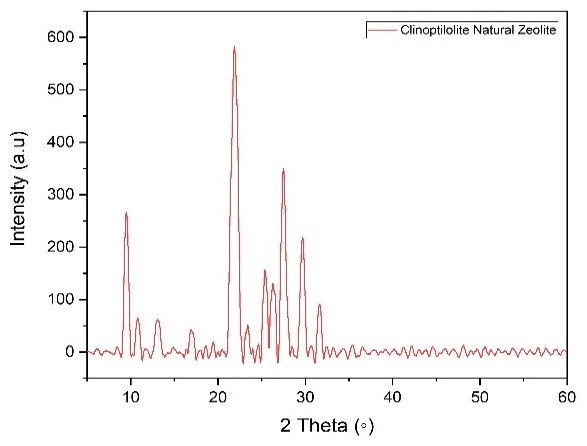
Figure 2 shows the results of XRD analysis of natural zeolite clinoptilolite from West Java, Indonesia. Based on the difactogram, the main peaks are seen at 2θ values of 10.16°, 11.5°, 13.06°, 21.98°, 22.68°, 23.74°, 28.36°, and 30.32°,44,65,66 which is characterization of natural zeolite clinoptilolite38).
The XRF characterization results in Table 1 show that the clinoptilolite zeolite used is dominated by SiO₂ at 70.0% and Al₂O₃ at 7.7%, which confirms its characteristics as a silica-rich aluminosilicate zeolite with good thermal stability. The content of alkali and alkaline earth oxides, especially K₂O (7.77%) and CaO (6.76%), acts as a balancing cation in the zeolite framework and contributes
to the ability to release crystalline water upon heating. In addition, the presence of Fe₂O₃ at 5.57% indicates the presence of a minor phase common in Indonesian natural zeolites. This release of bound water from the zeolite structure produces a temporary foaming effect on the asphalt binder, which reduces viscosity and allows mixing and compaction at lower temperatures, thereby reducing heating energy requirements and CO₂ emissions during warm asphalt production39,40).
3.2. Binder Performance
The pertalite-based extraction of Asbuton yielded a bitumen fraction whose properties closely match the performance criteria expected for pavement materials. Its
Table 1: XRF analysis of natural zeolite
| Compound | Conc (%) | Compound | Conc (%) |
|---|---|---|---|
| Al | 6.4 | Al2O3 | 7.7 |
| Si | 55 | SiO2 | 70 |
| P | 0.94 | P2O5 | 1.1 |
| K | 13.9 | K2O | 7.77 |
| Ca | 11.2 | CaO | 6.76 |
| Ti | 0.64 | TiO2 | 0.43 |
| V | 0.01 | V2O5 | 0 |
| Mn | 0.18 | MnO | 0.09 |
| Fe | 9.97 | Fe2O3 | 5.57 |
| Cu | 0.22 | CuO | 0.098 |
| Zn | 0.04 | ZnO | 0.009 |
| Rb | 0.07 | Rb2O | 0.026 |
| Sr | 0.869 | SrO | 0.36 |
| Zr | 0.11 | ZrO2 | 0.052 |
| Ba | 0.3 | BaO | 0.08 |
| Re | 0.1 | Re2O7 | 0.04 |
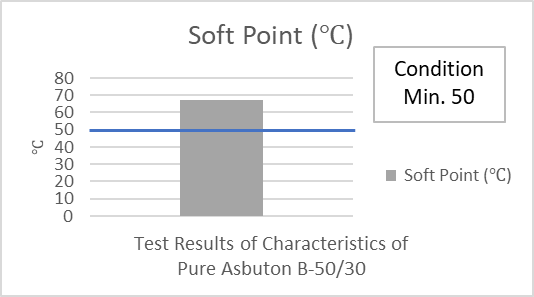
penetration value reflects a suitable level of hardness for use at elevated temperatures, while the kinematic viscosity at 135 °C indicates adequate fluidity to ensure proper aggregate coating during mixing. The softening point demonstrates strong resistance to deformation, and the ductility at 25 °C shows that the material can endure minor strains without cracking. In addition, the specific gravity above 1.0 confirms a density consistent with conventional bitumen, supporting accurate volumetric considerations in mixture design. Taken together, these results demonstrate that the extracted Pure Bitumen Asbuton B-50/30 satisfies the required specifications for road-paving applications. The complete test results are presented in Figure 3.
3.3. Gradation Compliance
After the preparation and characterization of the materials, the optimization of the asphalt mixture composition was conducted using the Thin Layer Asphalt Concrete gradation specified in the applicable standards. A total aggregate mass of 1200 g was blended through an iterative trial-and-adjust method until the resulting gradation curve aligned with the specified upper and lower Thin Layer Asphalt Concrete limits. As illustrated in Figure 4, the cumulative passing curve of the designed blend lies consistently within the allowable envelope and closely follows the ideal gradation line, indicating a well-graded aggregate structure capable of providing adequate interlock, appropriate void distribution, and good workability during mixing and compaction. Following the establishment of a compliant aggregate blend, the mixture design proceeded with determining the optimal asphalt




content. An initial Optimum Asphalt Content of 5.7% was calculated based on the gradation and volumetric requirements, and this value was subsequently verified through laboratory testing at five asphalt content levels spaced at 0.5% intervals. Evaluation of density, air voids, VMA, VFA, and Marshall parameters confirmed the final Optimum Asphalt Content as the binder content that ensures sufficient aggregate coating, a balanced void structure, and an optimal combination of stability and durability for the Thin Layer Asphalt Concrete mixture23,28,31).
3.4. Optimum Asphalt Content
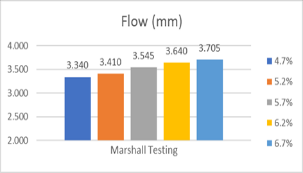
Figure 5 presents the detailed behavior of the mixture across different asphalt contents based on the Marshall and volumetric parameters. The density curve shows an increase toward the optimum asphalt content, indicating improved aggregate packing and efficient binder distribution, before leveling off at higher binder levels. Stability follows a similar trend, rising as the binder begins to enhance aggregate interlock, then decreasing once excessive asphalt reduces structural resistance. Flow values increase steadily with higher asphalt content, reflecting greater mixture flexibility but also signaling the onset of plastic deformation when the binder becomes excessive.
The volumetric results also align with expected asphalt mixture behavior. Voids in the Mix (VIM) decreases as more binder fills the internal voids, emphasizing the need to maintain the voids within specification to avoid bleeding or insufficient durability. Void in Mineral Aggregate (VMA) shows a slight upward adjustment at higher asphalt contents, ensuring that the aggregate structure retains adequate space to hold the binder. Meanwhile, Voids Filled with Asphalt (VFA) increases proportionally with asphalt content, illustrating the proportion of aggregate voids occupied by the binder and identifying the threshold at which binder saturation becomes excessive. The Marshall Quotient decreases at higher asphalt levels, indicating reduced mixture stiffness and greater susceptibility to deformation23,31).
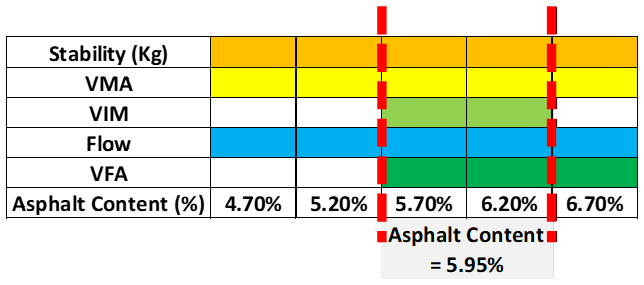
Figure 6 integrates the key Marshall and volumetric parameters to refine the determination of the Optimum Asphalt Content. The stability, Void in Mineral Aggregate (VMA), and flow curves all remain within the permissible limits for Thin Layer Asphalt Concrete mixtures across the tested binder contents, confirming that the structural and deformation related properties of the mix behave satisfactorily throughout the range. In contrast, the Voids in the Mix (VIM) and Voids Filled with Asphalt (VFA) parameters exhibit stricter compliance boundaries, meeting specification requirements only between asphalt contents of 5.7% and 6.2%. This constraint is critical, as VIM ensures adequate air voids for long-term durability, while Voids Filled with Asphalt (VFA) controls the proportion of aggregate voids filled with binder to prevent excessive plasticity or premature bleeding.
By aligning these performance indicators with the overall mixture behavior observed previously such as the peak density and stability trends shown in Figure 6 the acceptable range for asphalt content is narrowed to 5.7–6.2%. The midpoint of this range, 5.95%, is adopted as the Optimum Asphalt Content, representing the binder level that provides the best balance between strength, durability, and volumetric stability in the Thin Layer Asphalt Concrete mixture.
With the Optimum Asphalt Content established, the mixture design proceeds to the modification stage by incorporating Pure Asbuton B-50/30 and natural zeolite. The addition of natural zeolite aims to enhance mixture performance particularly workability, moisture resistance, and reduced mixing temperature thereby improving the overall functionality of the asphalt mixture for surface-layer pavement applications.




3.5. Warm Mix Performance
After determining the optimum asphalt content of 5.95%, natural zeolite was incorporated into the mixture using the dry addition method. A fixed zeolite dosage of 1.5% by total mixture weight, equivalent to 18 g per 1,200 g batch, was added directly to the heated aggregate at approximately 130°C and mixed for 10-12 min to ensure uniform distribution. Pure Asbuton B-50/30 was then
added, and the mixture was blended prior to Marshall specimen preparation.
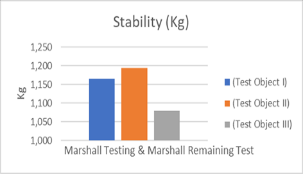
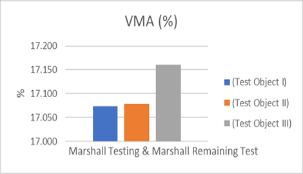
Marshall testing was performed on the zeolite-modified mixture containing 5.95% binder and 1.5% natural zeolite at a reduced production temperature of 145°C. The mixture achieved a Marshall stability of 1,179.56 kg, VIM of 4.25%, VMA of 17.08%, flow of 2.87 mm, VFA of 75.09%, and MQ of 410.99 kg/mm. These values indicate that the zeolite modified mixture satisfied the Thin Layer Asphalt Concrete specification requirements and retained adequate structural performance despite the lower production temperature.
The improved workability can be attributed to the release of crystalline water from the zeolite framework during heating. This release generates a temporary foaming effect in the binder, reducing its effective viscosity and improving aggregate coating. As a result, Pure Asbuton B-50/30, which normally requires a production temperature of approximately 165-170°C, could be processed at 145°C while maintaining satisfactory Marshall and volumetric performance. These findings confirm the technical feasibility of using natural zeolite as a mineral warm mix additive for Asbuton asphalt mixtures23).
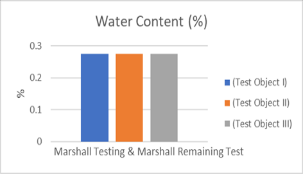
Figure 7 shows the Marshall characteristics of the mixture incorporating 1.5% natural zeolite, indicating that the mixture falls within the specification range of the33). This compliance supports the study's hypothesis that the addition of natural zeolite used to reduce the mixing temperature in warm-mix asphalt does not compromise the mechanical integrity of the mixture. Stability, flow, and volumetric parameters (VIM, VMA, VFA) confirmed that the addition of zeolite at lower mixing temperatures still produced a structurally adequate mixture, indicating that the warm-mix approach is technically feasible for Asbuton based asphalt.
3.6. CO₂ Emission Reduction
In this study, heating energy calculations were performed using production fuel requirement data from PT. Bumi Karya Utama. The heating energy calculation data is explained as follows:
•Asphalt Production in 1 day = 200 ton
•Production time in 1 day = 8 hours
•Fuel production in 1 ton = 10 liter
•Mixing Temperature in AMP = 155 °C
And here are other supporting data obtained from PT. Ecopal related to the use of natural zeolite can reduce the temperature and production time as follows:
•Warm Asphalt Mixing Temperature = 135 °C
•Production time in 1 day = 5 hours
The results of research in the Laboratory related to the use of Pure Asbuton B-50/30 production and the addition of natural zeolite are as follows:
•Mixing Temperature for Pure Asbuton B-50/30 = 165 °C
•Mixing Temperature for Pure Asbuton B-50/30 + Natural Zeolite = 145 °C
Based on previous research, asphalt production requires significant amounts of industrial diesel fuel28). To produce 1 ton of conventional asphalt, around 10 liters of diesel is needed. However, the production of Pure Asbuton B-50/30 combined with Natural Zeolite requires less diesel, namely around 8.125 liters per ton. The use of this combination of Asbuton and Natural Zeolite not only reduces diesel consumption but also has the potential to reduce gas emissions, thereby providing better environmental benefits compared to conventional asphalt production. In this research, gas emissions resulting from asphalt production are calculated with the assumption that 1 liter of industrial diesel can produce 2.6 kg of CO2 gas36,37). In general, roads are categorized into three types, namely: National Roads (Primary Collector 1), Provincial Roads (Primary Collector 2 & 3), and Regency/City Roads (Primary Collector 4) with each criterion shown in Table 2.
With a total road length of 550,735 km or the equivalent of 550,735,000 meters, improvement efforts are still needed, both in the form of overlays and routine maintenance, depending on the results of road condition surveys. This research aims to estimate CO2 gas emissions produced during the asphalt production process needed for roads of this length in Indonesia. The improvements analyzed in this research are assumed to be road maintenance in the form of overlays according to the road class. Some related data is presented in Table 3, while the calculation of CO2 gas emission requirements is presented in Table 4.
The analysis in Tables 3 and 4 shows that overlay repairs along 550,735 km of roads require approximately 418 million tons of asphalt, resulting in CO₂ emissions of 10.8 billion kg when using conventional asphalt. In contrast, the application of Pure Asbuton B-50/30 with 1.5% natural zeolite reduces emissions to 8.8 billion kg CO₂, achieving a decrease of about 2 billion kg. This environmental benefit aligns with the mechanical performance results, where mixtures containing 5.95% binder and 1.5% zeolite mixed at 145 °C satisfied all Thin Layer Asphalt Concrete specifications, including stability, VIM, VMA, and MQ requirements. The improved workability at reduced temperatures is attributed to the transient foaming effect generated by the release of crystalline water from the zeolite, which lowers binder viscosity and enables effective aggregate coating. Consequently, Pure Asbuton





B-50/30 normally requiring 165 - 170 °C can be processed efficiently at 145 °C, demonstrating the synergistic advantage of the Asbuton zeolite system.
Overall, the national scale CO₂ emission reduction estimated in this study should be understood as a theoretical maximum scenario. The calculation assumes
Table 2: Length of Roads by Province and Level of Government Authority in 202341)
| Road | Length (Km) |
|---|---|
| National Road (Primary Collector 1) | 47,817 |
| Provincial Road (Primary Collector 2 & 3) | 55,430 |
| Regency / City Road (Collector 4) | 447,488 |
| Total Road Length | 550,735 |
Table 3: Total asphalt mixture production in 2023
| Road | Length (m) | Wide (m) | Overlay Thick (m) | Asphalt Specific Gravity (Ton/m3) | Total (In Tons) |
|---|---|---|---|---|---|
| National Road | 47,817,000 | 14 | 0.07 | 2.3 | 107,779,518 |
| Provincial Road | 55,430,000 | 7 | 0.06 | 2.3 | 53,545,380 |
| Regency / City Road | 447,488,000 | 5 | 0.05 | 2.3 | 257,305,600 |
| Grand Total (In Tons) | 418,630,498 | ||||
Table 4: Total CO2 Gas Emissions
| Production | Total (In Tons) | 1 liter of fuel (2.6 Kg CO2) | 1 ton production (liter) | Total CO2 Gas Emissions |
|---|---|---|---|---|
| Conventional Asphalt | 418,630,498 | 2.6 | 10 | 10,884,392,948 |
| Pure Asbuton B-50/30 + Natural Zeolite | 418,630,498 | 2.6 | 8.125 | 8,843,569,270 |
that the entire Indonesian road network (approximately 550,735 km) undergoes overlay maintenance in 2023, with an overlay thickness ranging from 0.05 to 0.07 m. In practical implementation, overlay activities are conducted progressively in accordance with annual maintenance schedules, budget availability, and pavement condition, rather than being applied simultaneously across the whole network. Accordingly, the reported CO₂ reduction represents an upper bound environmental potential, highlighting the maximum benefit achievable through large scale adoption of natural zeolite warm mix Asbuton technology, rather than an estimate of actual annual emission reduction.
To improve scientific comparability and universal applicability, the CO₂ emission reduction can also be expressed on a normalized basis per ton of asphalt mixture. Based on the assumption that 1 liter of diesel fuel produces 2.6 kg of CO₂, conventional asphalt mixture production generates approximately 26 kg CO₂ per ton of asphalt mixture (10 liters of fuel per ton). In contrast, the production of Pure Asbuton B-50/30 combined with natural zeolite requires only 8.125 liters of fuel per ton, corresponding to 21.125 kg CO₂ per ton. Therefore, the application of the Asbuton natural zeolite system results in an estimated CO₂ emission reduction of about 4.88 kg CO₂ per ton of asphalt mixture, demonstrating the environmental advantage of the proposed warm mix technology.
4. Conclusion
This study demonstrates that Indonesian natural clinoptilolite zeolite can be used as a mineral-based warm-mix additive for Thin Layer Asphalt Concrete incorporating Pure Asbuton B-50/30. The incorporation of 1.5% natural zeolite by total mixture weight enabled the mixture to be produced at 145°C, approximately 20°C lower than the conventional production temperature of Pure Asbuton B-50/30. At an optimum asphalt content of 5.95%, the zeolite-modified mixture satisfied the Marshall and volumetric specification requirements, achieving a Marshall stability of 1,179.56 kg, VIM of 4.25%, VMA of 17.08%, flow of 2.87 mm, VFA of 75.09%, and MQ of 410.99 kg/mm. The improved workability at reduced temperature is attributed to the release of crystalline water from the zeolite framework, which generates a temporary foaming effect and enhances aggregate coating. From an environmental perspective, the production stage assessment showed that the Asbuton natural zeolite warm mix system can reduce CO₂ emissions by approximately 4.88 kg CO₂ per ton of asphalt mixture compared with conventional hot mix production. Under a theoretical national scale overlay scenario, this reduction corresponds to an upper bound potential of approximately 2.04 billion kg CO₂. However, this national scale value should be interpreted as a theoretical maximum, not as an actual annual emission reduction. Overall, the findings indicate that locally sourced natural zeolite can support lower temperature Asbuton based asphalt production while maintaining adequate mixture performance and reducing production stage CO₂ emissions. This approach supports sustainable pavement maintenance through the use of regional materials, reduced dependence on commercial synthetic WMA additives, and improved environmental performance. Because the emission assessment was limited to the production stage, future studies should extend the analysis to a full life cycle assessment, including material transportation, field compaction, maintenance, and end of life processes. Future research should also investigate microstructural interactions, moisture susceptibility, long term field performance, and the effects of alternative zeolite dosages and activation methods to broaden the applicability of the Asbuton natural zeolite warm mix system.
Acknowledgements
This research was supported by contract No: 2657/PKS/ITS/2025. The authors thank the Civil Engineering Department, Transportation Laboratory, PT. Cipta Wahana Persada, PT. Bumi Karya Utama, PT. Ecopal, and PT. Bumindo Sakti.
References
- H. A. Rondón-Quintana, J. C. Ruge-Cárdenas, and C. A. Zafra-Mejía, “Natural asphalts in pavements: Review,” Sustainability, vol. 15 (3), Art. no. 2098 (2023). doi:10.3390/su15032098.
- L. Sentosa, B. S. Subagio, H. Rahman, and R. A. Yamin, “Stiffness modulus of warm mix asphalt (WMA) using Asbuton and synthetic zeolite additives,” Int. J. GEOMATE, vol. 19 (75), pp. 107–114 (2020). doi:10.21660/2020.75.00140.
- L. Sentosa, B. S. Subagio, H. Rahman, and R. A. Yamin, “Warm mix asphalt mixture using modified Asbuton semi extraction modify and synthetic zeolite additive,” MATEC Web Conf., vol. 276, Art. no. 03003 (2019). doi:10.1051/matecconf/201927603003.
- H. Li, M. Jia, X. Zhang, Z. Wang, Y. Liu, J. Yang, B. Yang, Y. Sun, H. Wang, and H. Ma, “Laboratory investigation on fumes generated by different modified asphalt binders,” Transp. Res. Part D: Transp. Environ., vol. 121, Art. no. 103828 (2023). doi:10.1016/j.trd.2023.103828.
- Y. M. Pusparizkita, W. W. Schmahl, M. Ambarita, H. N. Kholid, A. Y. Sadewa, R. Ismail, J. Jamari, and A. P. Bayuseno, “Mineralizing CO₂ and producing polymorphic calcium carbonates from bitumen-rock asphalt manufacturing solid residues,” Cleaner Eng. Technol., vol. 12, Art. no. 100602 (2023). doi:10.1016/j.clet.2023.100602.
- H. H. Utami, S. Yani, and Z. Sabara, “The effect of solvent n-hexane extraction on bitumen extraction from Buton asphalt as a raw material of non-conventional natural oil,” J. Sci. Technol. Environ., vol. 9 (1), pp. 35–43 (2023). doi:10.29303/jstl.v9i1.415.
- M. Halimi, I. B. Mochtar, and A. Altway, “A breakthrough in asphalt technology—Cheaper bitumen extracted from ‘Asbuton’, the rock asphalt of Buton Island, Indonesia,” Int. J. Educ. Res., vol. 2 (8), pp. 347–358 (2014).
- Y. Zhang, Y. Zhou, X. Hu, J. Wan, W. Gan, Y. Jing, J. Liu, and Z. Chen, “Research on durability and long-term moisture stability improvement of asphalt mixture based on Buton rock asphalt,” Sustainability, vol. 15 (17), Art. no. 12708 (2023). doi:10.3390/su151712708.
- A. V. R. Sihombing, B. S. Subagio, E. S. Hariyadi, and A. Yamin, “Chemical, morphological, and high temperature rheological behaviour of Bioasbuton® as an alternative binder for asphalt concrete in Indonesia,” J. King Saud Univ. Eng. Sci., vol. 33 (5), pp. 308–317 (2021). doi:10.1016/j.jksues.2020.07.006.
- M. Shaheen, O. E. Mewafy, and W. Bekheet, “Effect of steel slag and Aspha-min zeolite on moisture susceptibility and stiffness of asphalt concrete mixes,” Alex. Eng. J., vol. 101, pp. 234–244 (2024). doi:10.1016/j.aej.2024.05.086.
- A. I. Al-Hadidy, R. Alzeebaree, J. A. Abdal, and A. Niş, “Mechanical performance and statistical analysis of natural and synthetic zeolite-warm mix asphalt as a function of compaction efforts,” J. Build. Eng., vol. 75, Art. no. 106985 (2023). doi:10.1016/j.jobe.2023.106985.
- A. Milad, A. M. Babalghaith, A. M. Al-Sabaeei, A. Dulaimi, A. Ali, S. S. Reddy, M. Bilema, and N. I. M. Yusoff, “A comparative review of hot and warm mix asphalt technologies from environmental and economic perspectives: Towards a sustainable asphalt pavement,” Int. J. Environ. Res. Public Health, vol. 19 (22), Art. no. 14863 (2022). doi:10.3390/ijerph192214863.
- F. Zou, Z. Leng, R. Cao, G. Li, Y. Zhang, and A. Sreeram, “Performance of zeolite synthesized from sewage sludge ash as a warm mix asphalt additive,” Resour. Conserv. Recycl., vol. 181, Art. no. 106254 (2022). doi:10.1016/j.resconrec.2022.106254.
- A. M. Rashed and A. I. Al-Hadidy, “Mechanical and durability properties of warm asphalt mixture involving synthetic zeolite,” J. Univ. Duhok, vol. 26 (1), pp. 150–164 (2023). doi:10.26682/sjuod.2023.26.1.15.
- W. M. Hasan, R. A. Yousif, S. Hesami, S. A. Tayh, A. F. Jasim, and H. H. Ibrahim, “Evaluation of mechanical properties of warm-mix asphalt mixtures prepared with Sasobit and zeolite additives,” J. Eng. Technol. Sci., vol. 56 (6), pp. 716–726 (2024). doi:10.5614/j.eng.technol.sci.2024.56.6.4.
- L. Bichajło, W. Gardziejczyk, P. Gierasimiuk, K. Kołodziej, K. Kowalski, S. Malinowski, T. Siwowski, and M. Wasilewska, “Effect of the addition of zeolites on the resistance to permanent deformations of mastic asphalt bridge pavement,” Materials, vol. 18 (18), Art. no. 4325 (2025). doi:10.3390/ma18184325.
- P. M. S. Raihan, R. V. Diaz, and L. Wan, “Warm mix asphalt: Natural additives and sustainable technologies for reducing environmental pollution,” World J. Eng. Technol., vol. 13 (4), pp. 764–790 (2025). doi:10.4236/wjet.2025.134049.
- N. Liu, L. Liu, M. Li, and L. Sun, “A comprehensive review of warm-mix asphalt mixtures: Mix design, construction temperatures determination, performance and life-cycle assessment,” Road Mater. Pavement Des., vol. 25 (7), pp. 1381–1425 (2024). doi:10.1080/14680629.2023.2268194.
- A. Woszuk and W. Franus, “A review of the application of zeolite materials in warm mix asphalt technologies,” Appl. Sci., vol. 7 (3), Art. no. 293 (2017). doi:10.3390/app7030293.
- M. Wasilewska, R. Pacholak, P. Gierasimiuk, W. Gardziejczyk, A. Woszuk, L. Bichajło, and T. Siwowski, “The effect of a zeolite addition to modified bitumen on the properties of stone matrix asphalt Lärmarmer mixtures produced as warm mix asphalt,” Materials, vol. 17 (23), Art. no. 5848 (2024). doi:10.3390/ma17235848.
- A. I. Al-Hadidy and S. A. Khalid, “Influence of long-term aging on the engineering properties of WMA mixtures containing petroleum wax and natural zeolite,” Int. J. Pavement Res. Technol., vol. 15 (3), pp. 706–718 (2022). doi:10.1007/s42947-021-00047-9.
- M. Sukhija, N. Saboo, and A. Pani, “Economic and environmental aspects of warm mix asphalt mixtures: A comparative analysis,” Transp. Res. Part D: Transp. Environ., vol. 109, Art. no. 103355 (2022). doi:10.1016/j.trd.2022.103355.
- A. Afshin and A. Behnood, “Sustainability of asphalt pavements: The role of life cycle assessment (LCA) and emerging technologies,” Cleaner Mater., vol. 18, Art. no. 100346 (2025). doi:10.1016/j.clema.2025.100346.
- C. Oreto, F. Russo, G. Dell'Acqua, and R. Veropalumbo, “A comparative environmental life cycle assessment of road asphalt pavement solutions made up of artificial aggregates,” Sci. Total Environ., vol. 927, Art. no. 171716 (2024). doi:10.1016/j.scitotenv.2024.171716.
- N. Liu, L. Liu, M. Li, and L. Sun, “Effects of zeolite on rheological properties of asphalt materials and asphalt-filler interaction ability,” Constr. Build. Mater., vol. 382, Art. no. 131300 (2023). doi:10.1016/j.conbuildmat.2023.131300.
- Israil, M. Tumpu, Hamkah, and N. D. AlMakassari, “Extraction bitumen Buton rock asphalt as solid phase in asphalt emulsion mixed: Stability, flow, and Marshall quotient,” Int. J. GEOMATE, vol. 28 (125), pp. 11–18 (2025). doi:10.21660/2025.125.4357.
- Y. Feng, L. Camarcat, P. Koliou, F. Adan, P. Michalaki, N. Formosa, G. Zacharopoulos, P. Angeloudis, and M. Quddus, “Innovative interventions for transforming road capacity, safety and emissions on England's strategic road network,” Res. Transp. Bus. Manag., vol. 61, Art. no. 101398 (2025). doi:10.1016/j.rtbm.2025.101398.
- A. D. A. Rasyid, E. Ahyudanari, C. A. Prastyanto, Susianto, and V. Baroroh, “Enhancing energy efficiency: Exploring natural zeolite addition to pure Asbuton B 50/30 mixture—Insights from SEM-EDX and FTIR chemical characterization,” J. Adv. Res. Micro Nano Eng., vol. 36 (1), pp. 66–80 (2025). doi:10.37934/armne.36.1.6680.
- S. Zhi, H. Tao, Z. Zihao, H. Jiaheng, W. Xinxin, and X. Shijie, “Study on the humidification mechanism of asphalt mixtures by modified zeolite,” Front. Mater., vol. 11, Art. no. 1461129 (2024). doi:10.3389/fmats.2024.1461129.
- T. D. T. Oyedotun, “X-ray fluorescence (XRF) in the investigation of the composition of earth materials: A review and an overview,” Geol. Ecol. Landsc., vol. 2 (2), pp. 148–154 (2018). doi:10.1080/24749508.2018.1452459.
- Ministry of Public Works, Directorate General of Highways, General Specifications 2025 for Road and Bridge Construction Works (Circular Letter No. 07/SE/Db/2025), Ministry of Public Works, Republic of Indonesia (2025).
- W. Li, W. Cao, X. Ren, S. Lou, S. Liu, and J. Zhang, “Impacts of aggregate gradation on the volumetric parameters and rutting performance of asphalt concrete mixtures,” Materials, vol. 15 (14), Art. no. 4866 (2022). doi:10.3390/ma15144866.
- I. P. C. Wibawa, I. N. A. Thanaya, and I. M. A. Ariawan, “The influence of aggregate gradation properties on the characteristics of cold mix asphalt emulsion,” J. Infrastruct. Plan. Eng., vol. 4 (1), pp. 23–38 (2025). doi:10.22225/jipe.4.1.2025.23-38.
- A. T. Calabi-Floody, G. A. Valdés-Vidal, E. Sanchez-Alonso, and L. A. Mardones-Parra, “Evaluation of gas emissions, energy consumption and production costs of warm mix asphalt (WMA) involving natural zeolite and reclaimed asphalt pavement (RAP),” Sustainability, vol. 12 (16), Art. no. 6410 (2020). doi:10.3390/su12166410.
- J. Santos, S. Bressi, V. Cerezo, D. Lo Presti, and M. Dauvergne, “Life cycle assessment of low temperature asphalt mixtures for road pavement surfaces: A comparative analysis,” Resour. Conserv. Recycl., vol. 138, pp. 283–297 (2018). doi:10.1016/j.resconrec.2018.07.012.
- Intergovernmental Panel on Climate Change (IPCC), 2013 Supplement to the 2006 IPCC Guidelines for National Greenhouse Gas Inventories: Wetlands—Methodological Guidance on Lands with Wet and Drained Soils, and Constructed Wetlands for Wastewater Treatment, T. Hiraishi, T. Krug, K. Tanabe, N. Srivastava, B. Jamsranjav, M. Fukuda, and T. G. Troxler, Eds., IPCC, Switzerland (2014).
- U.S. Environmental Protection Agency, Emission Factors for Greenhouse Gas Inventories, Climate Leadership Program, U.S. Environmental Protection Agency (2024). Available: https://www.epa.gov/climateleadership/ghg-emission-factors-hub.
- Fadliah, C. Palit, R. Pratiwi, R. Aryanto, and T. W. Putri, “Analysis the effect of activated natural zeolites for Fe metal adsorption,” Walisongo J. Chem., vol. 6 (2), pp. 143–148 (2023). doi:10.21580/wjc.v6i2.17291.
- K. Stocker, M. Ellersdorfer, M. Lehner, and J. G. Raith, “Characterization and utilization of natural zeolites in technical applications,” BHM Berg Hüttenmänn. Monatsh., vol. 162 (4), pp. 142–147 (2017). doi:10.1007/s00501-017-0596-5.
- A. M. Salih, R. R. Abdulrahman, H. H. S. Hussein, S. A. Aivas, K. Q. Yaqub, and A. D. Latif, “Characterization of natural zeolite and evaluation of its adsorption capacity,” Br. J. Interdiscip. Res., vol. 2 (4), pp. 31–47 (2025). doi:10.31039/bjir.v2i4.26.
- Statistics Indonesia (BPS), Road Length by Province and Level of Government Authority (km), Statistics Indonesia, Indonesia (2023). Available: https://www.bps.go.id.