
Abstract
Concrete durability is a critical concern due to prolonged exposure to aggressive environments. The use of crumb rubber (CR) derived from waste tires as a partial replacement for fine aggregate provides a sustainable solution for waste management; however, its influence on durability requires careful evaluation. This study investigates the combined effect of crumb rubber (10–30%) and polyvinyl alcohol (PVA) fibers (1–2%) on the acid resistance of concrete. Compressive strength, loss in compressive strength after acid exposure, weight loss, and change in specimen length were evaluated. Results show that compressive strength decreased with increasing CR content, ranging from 51.45 MPa for the optimum mix (10% CR and 1.5% PVA) to 35.17 MPa for mixes containing 30% CR. After sulfuric acid exposure, the optimum mix exhibited a strength reduction of approximately 10.65%. Weight loss and dimensional change increased with higher CR contents due to increased porosity and weaker interfacial bonding. The inclusion of PVA fibers improved crack resistance and partially mitigated degradation. Overall, moderate CR and PVA contents provide a balance between mechanical performance and acid resistance.
Keywords: acid attack, concrete, Crumb rubber, durability properties, PVA fiber
Outline
1. Introduction
Concrete's versatility in a variety of applications makes it one of the most widely used building materials worldwide. Concrete life span and longevity is considered of the best in the field of construction materials1,2). Concrete is a composite material which contains materials derived from natural resources such as cement from limestone3,4), coarse aggregates (CA) from basalt rock5), fine aggregates (FA) from river sand6). Due to constant excavation of these resources, there is a need to find alternatives for these materials to continue concrete construction in a better way with reduced carbon footprint7). Several supplementary cementitious and waste-derived materials have been investigated to reduce cement consumption and improve the sustainability of concrete. High-volume fly ash has been successfully incorporated into engineered cementitious composites while maintaining desirable fresh and mechanical properties8). The combined utilization of waste glass powder and waste glass sand was reported to enhance the mechanical and durability performance of concrete9). Silica fume has been shown to improve strength and microstructural characteristics owing to its pozzolanic and filler effects10). The combined use of marble dust powder, silica fume, and rice husk ash improved mechanical performance while reducing the embodied carbon of concrete11). Similarly, the synergistic incorporation of waste glass powder and nano-TiO₂ enhanced the mechanical and durability properties of concrete12). Furthermore, waste glass sand has been demonstrated as a sustainable partial replacement for conventional fine aggregate, with an optimum replacement level providing improved strength and durability characteristics13). In recent times there has been scarcity of river sand and this has led to explore different options available to replace river sand as fine aggregates, construction and demolition wastes and waste glass has shown good positive contributions14,15).
Rubber waste generated worldwide is primarily derived from used tires. Landfilling or burning this waste poses serious environmental concerns; therefore, researchers have explored the use of crumb rubber (CR) as a partial replacement for fine aggregate16–19). Workability, deflecting capacity, behavior in cracking, strength in impact, and sound absorbing properties were all enhanced by the addition of rubber aggregates to produce environmentally friendly concrete20–23). With a density that was between 3 to 14 percent lower than the control mixtures, concrete that had been prepared with rubber aggregates was lightweight24,25). Although crumb rubber negatively affects compressive strength, water absorption, and workability, it has been shown to improve dynamic resistance and durability26,27). Rashid et al. analyzed the impact of CR concrete in medium and low strength concrete and found that workability decreases as CR volume increases28). Sofi investigated the use of crumb rubber and noted reduction in CS but also suggested use of fibers can contribute in enhancing the overall strength of the concrete29,30). Recent studies have also focused on the durability performance of rubberized concrete under aggressive environments31–33). Researchers have reported that although the incorporation of crumb rubber may increase porosity and reduce compressive strength, it can enhance energy absorption capacity and resistance to crack propagation, which may contribute to improved long-term durability behavior34). Furthermore, the inclusion of polymeric fibers such as polyvinyl alcohol (PVA) has been shown to significantly improve crack-bridging capacity, toughness, and resistance to micro-crack development in cementitious composites35). These characteristics are particularly beneficial when concrete is exposed to chemically aggressive environments such as acid attack, where crack propagation and matrix deterioration play a critical role in durability loss. Recent investigations have also highlighted that the combined use of rubber particles and PVA fibers may provide a synergistic effect by compensating for the strength reduction caused by rubber while improving crack control and structural integrity of the concrete matrix36).
The primary objective of this study is to evaluate the effect of CR and polyvinyl alcohol (PVA) fibers on the acid resistance of concrete. Specifically, the study aims to assess changes in compressive strength, weight loss, loss in compressive strength, and dimensional stability of concrete mixtures containing varying proportions of CR and PVA fibers when exposed to a sulfuric acid environment. It is hypothesized that increasing CR content may reduce mechanical strength and dimensional stability due to its low stiffness and weak interfacial bonding with the cement matrix, while the incorporation of PVA fibers can partially mitigate these effects by improving crack control and resistance to acid-induced degradation.
2. Experimental Program
2.1. Materials
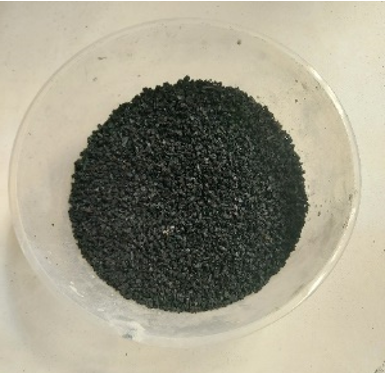
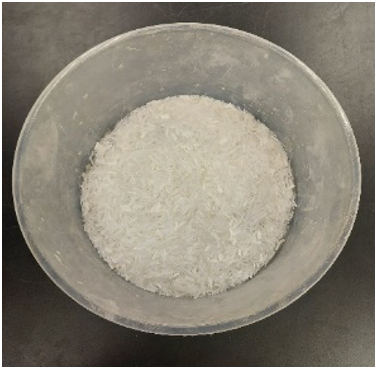
Table 1: Characteristics of PC
| Sl. no | Physical characteristics | Observed values |
|---|---|---|
| 1 | Consistency of PC (%) | 34 |
| 2 | Specific gravity | 3.13 |
| 3 | IST (minutes) | 96 |
| 4 | FST (minutes) | 282 |
| 5 | Size of particles (microns) | < 90 |
Table 2: Properties of FA and CA
| Sl. no | Parameters | FA | CA |
|---|---|---|---|
| 1 | Specific Gravity | 2.61 | 2.88 |
| 2 | Fineness Modulus | 2.62 | 5.82 |
| 3 | Silt (%) | 5.13 | - |
| 4 | Water Absorption (%) | 2.62 | 0.17 |
| 5 | Size of particles (mm) | < 4.75 | < 20 |
Portland cement (PC) is utilized for this study conforming to the ASTM C 150 standards. Table 1 shows the properties of PC. Sand passing through 4.75mm sieve is used as FA. Crushed basalt is used as CA with nominal size 20mm. Table 2 displays essential properties of FA and CA. Crumb rubber is varied from 10 to 30% also Polyvinyl alcohol (PVA) fibres are also added with percentage varying from 1 to 2%.
Figure 1 (a) and (b) shows CR and PVA fibres used in this experimental study. Additionally, water reducer based on modified polycarboxylate was employed as a superplasticizer. Normal drinking water is used for concrete mixing and curing process in this study.
2.2. Mix design and proportions
A concrete of compressive strength (CS) of 45 MPa was designed. Mix designations with the amount of crumb rubber and PVA fibers is shown in Table 3. A total of 10 mixtures has been designed with different percentages of crumb rubber and PVA fibers as shown in Table 3 along with normal mix without crumb rubber and PVA fibers.
3. Methodology
Ten combinations were made in total, cast, and given a 28-day period to cure in normal water. Four experimental tests were conducted for each mix, which included a Compressive strength (CS) test, an acid attack resistance (weight loss) test, a loss in CS test, and a change in prism
Table 3: Material proportions (kg/m3)
| Mix ID | Ingredients (%) | Ingredients (kg/m3) | |||||
|---|---|---|---|---|---|---|---|
| PVA | CR | PC | CA | Sand | CR | Water | |
| M0 | 0 | 0 | 495 | 1210 | 550 | 0 | 175 |
| M1 | 1 | 10 | 495 | 1210 | 513.80 | 36.20 | 175 |
| M2 | 1 | 20 | 495 | 1210 | 477.61 | 72.39 | 175 |
| M3 | 1 | 30 | 495 | 1210 | 441.41 | 108.59 | 175 |
| M4 | 1.5 | 10 | 495 | 1210 | 513.80 | 36.20 | 175 |
| M5 | 1.5 | 20 | 495 | 1210 | 477.61 | 72.39 | 175 |
| M6 | 1.5 | 30 | 495 | 1210 | 441.41 | 108.59 | 175 |
| M7 | 2 | 10 | 495 | 1210 | 513.80 | 36.20 | 175 |
| M8 | 2 | 20 | 495 | 1210 | 477.61 | 72.39 | 175 |
| M9 | 2 | 30 | 495 | 1210 | 441.41 | 108.59 | 175 |
length test. To determine the average outcomes, three molds were prepared for each test. As required by BS 1881: Part 116:1983, a CS test was conducted. After preparing and casting, cubes measuring 100 mm were placed in the curing tank for a total period of 28 days.
The cubes were taken out of the tanks, allowed to air dry, and then put through a compressive test using the CTM machine when the curing time was over Figure 2 (a) shows the setup of CS in CTM for the normal samples without crumb rubber and PVA fibres. In accordance with ASTM C642, three 100 mm cubes per mix were prepared for the acid attack test in order to produce normal weight concrete. Samples were demolded after a day and cured for 28 days. Before being submerged in an acidic solution, samples were weighed to determine their initial weight. The samples were then carefully submerged for 28 days in a solution of sulfuric acid (H2SO4) at a rate of 10 percent. After completion of the acid immersion period, the specimens were removed from the sulfuric acid solution, gently rinsed with clean water to remove residual acid, and allowed to dry under ambient laboratory conditions (temperature 25 ± 2 °C). The specimens were air-dried for a period of 48 hours until a constant mass was achieved before recording the final weight and conducting subsequent testing.
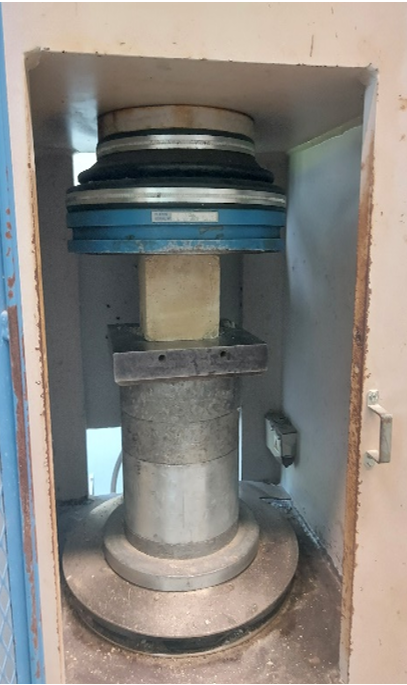
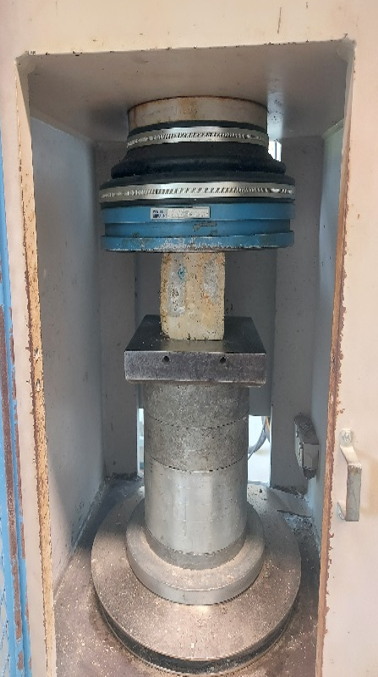
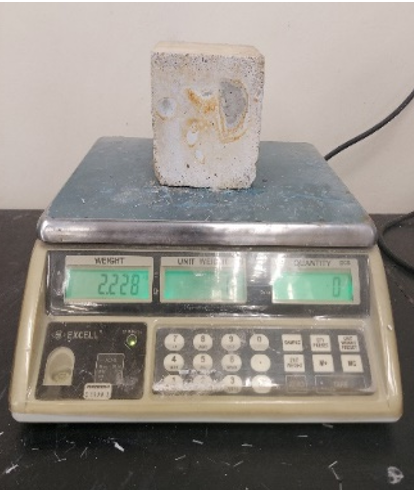
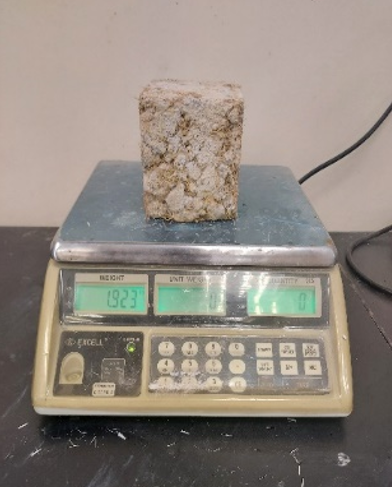
Figure 3 (a) shows the loss of weight of normal concrete and Figure 3 (b) shows specimen loss of weight after immersion in acidic solution. The specimen is than tested for loss of compressive strength after acid attack as shown in Figure 2 (b).
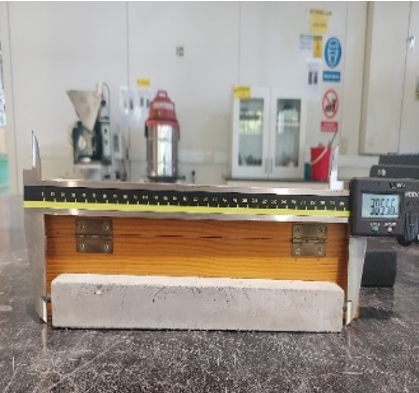
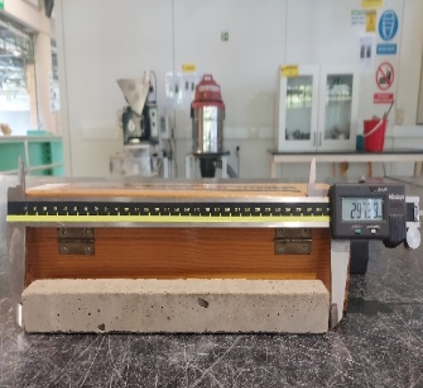
A prism of size 285mm X 25mm X25mm is casted to measure change in length after its exposure to acid solution, difference in change in length is measured using digital vernier caliper. Figure 4 (a) and (b) shows the change in length before and after immersion in acidic solution respectively.
4. Results and Discussions
4.1. Compressive strength
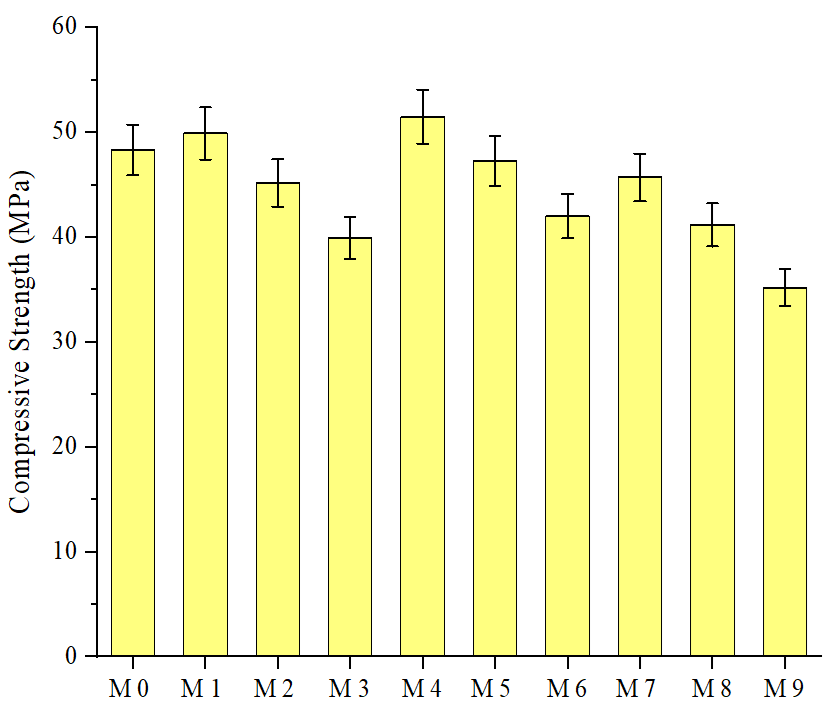
The CS test was performed on all mixes, and it was observed that Mix M4 exhibited the highest CS which has crumb rubber and PVA fiber percentage of 10% and 1.5% respectively has the highest CS of about 51.45 MPa and least about 35.17 MPa is observed for M9 mix which has 30% of CR. This clearly states that as the amount of CR rises, the CS decreases, this is due to the smooth surface of the rubber particles which doesn’t bond well with cement paste and also due to pores created by rubber due to water repellent property of CR. The results are in line with findings which shows a negative effect of CS due to crumb rubber37,38). Figure 5 shows CS results.
4.2. Loss of Compressive Strength
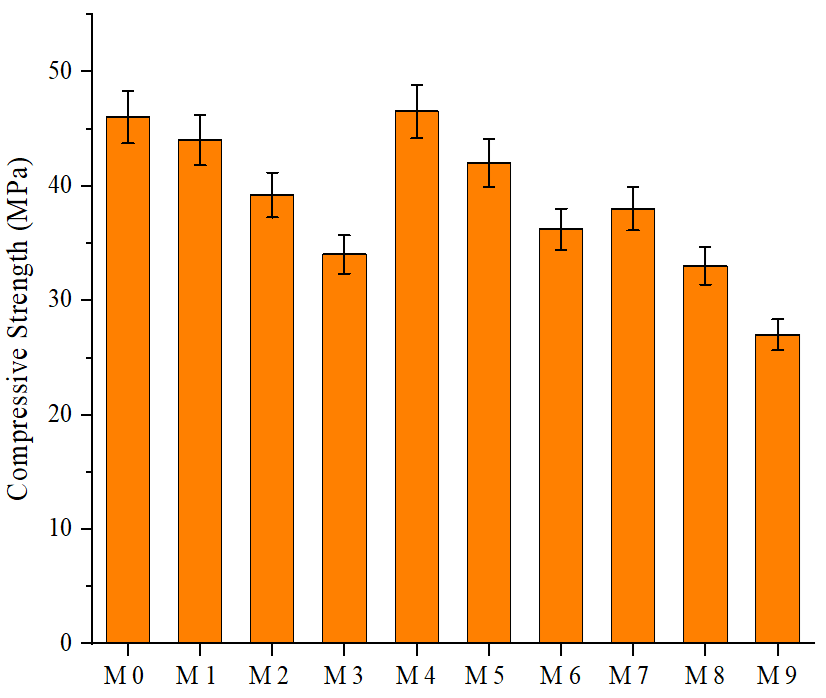
After acid attack test the cubes are tested for CS to measure the loss incurred in CS due to acid attack on concrete, the results are shown in Figure 6. It is observed there is reduction of strength by 10.65% of M4 mix compared to specimens without acid attack and also it can be seen there is decrease in all the mixes due to degradation of concrete which has undergone due to concrete’s contact with acid solution. This may be due to the inclusion of rubber which is the weak link between aggregate and paste. The acid solution tends to seep into the concrete which has more quantity of rubber which ultimately reduces the strength of the concrete. Similar trend is observed where it is noticed strength reduction due to acidic exposure to concrete39).
4.3. Weight loss
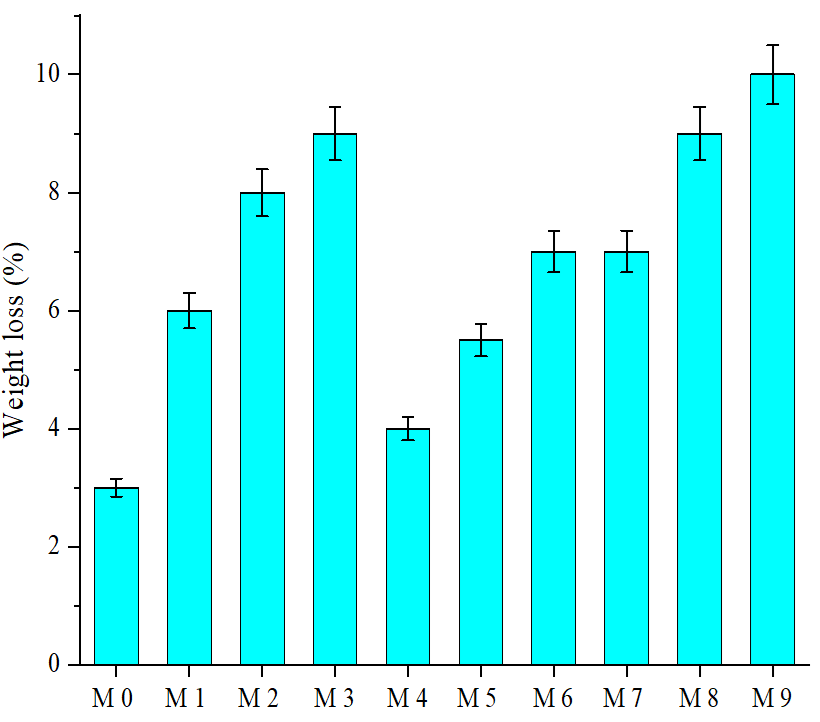
Figure 7 illustrates the variation in weight loss of concrete specimens subjected to sulfuric acid exposure. A clear increase in weight loss is observed with increasing crumb rubber (CR) content. This behavior can be attributed to the weak interfacial transition zone (ITZ) between the rubber particles and the cement matrix, which facilitates acid ingress. Unlike natural sand, crumb rubber is hydrophobic and does not chemically bond with cement paste, leading to increased porosity and microvoids around the rubber particles. Under acidic conditions, sulfuric acid reacts with calcium hydroxide and calcium-based hydration products, resulting in leaching and surface softening of the matrix. The presence of rubber further accelerates this process by providing preferential pathways for acid penetration. In addition, prolonged acid exposure may cause surface softening and partial degradation of rubber particles, contributing to mass loss. The incorporation of PVA fibers improves crack-bridging capacity and limits surface disintegration; however, higher CR contents still exhibit greater weight loss due to increased pore connectivity. Similar results have been observed in studies pertaining to PVA fibers40).
4.4. Change in length
The increased change in length observed in mixes containing crumb rubber can be attributed to the low stiffness and elastic nature of rubber particles compared to natural sand. Crumb rubber exhibits significantly lower modulus and does not provide effective restraint against dimensional changes when the cement matrix undergoes degradation. Under acidic exposure, the dissolution of calcium-based hydration products weakens the surrounding paste, further reducing confinement around rubber particles. This results in greater micro-deformation and volumetric instability. In addition, the poor resistance of rubber–cement interfaces to acidic environments promotes microcrack formation and expansion, which contributes to higher measured length changes at elevated crumb rubber contents. The inclusion of PVA fibers partially limits dimensional changes by bridging microcracks; however, at higher crumb rubber levels, the combined effect of reduced stiffness and increased matrix degradation dominates the overall deformation response. An increase in change in length with higher crumb rubber content has also been reported in similar studies41). Figure 8 shows results of change in length.
A quantitative comparison among the different mix designs clearly highlights the influence of crumb rubber (CR) and PVA fibers on durability performance. Compared to the control mix (M0), the optimum mix M4 (10% CR and 1.5% PVA) achieved a compressive strength of 51.45 MPa, whereas mixes containing 30% CR exhibited a reduction to approximately 35.17 MPa, corresponding to a decrease of about 32%. After sulfuric acid exposure, M4 showed a compressive strength loss of approximately 10.65%, while mixes with higher CR contents experienced greater degradation. Similar dosage-dependent trends were observed for weight loss and change in length, both of which increased progressively with increasing CR content due to higher porosity and weaker interfacial bonding. The error bars presented in Figures 5–8 represent the standard deviation
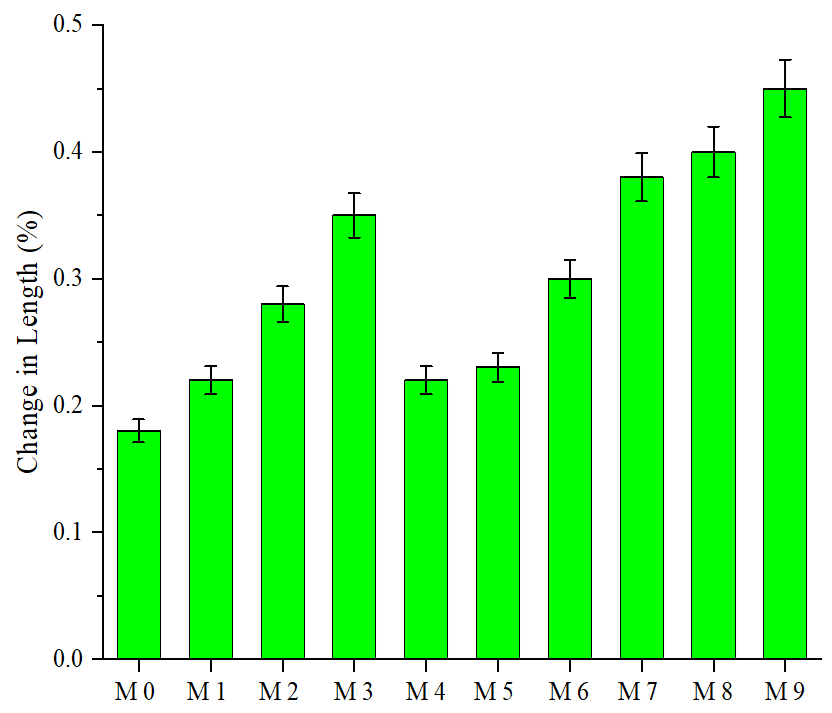
of three replicate specimens and indicate relatively low experimental scatter. Importantly, the differences between mix designs are substantially larger than the associated variability, confirming the reliability and consistency of the observed trends. The inclusion of PVA fibers further contributed to reduced result dispersion by improving crack control and limiting acid-induced deterioration.
5. Conclusions
This study elaborates evaluating rubberized concrete with fluctuating amounts of PVA fiber to determine its durability characteristics. According to the scientific data, the following key findings can be drawn:
a)Optimum compressive strength is observed for the mix 4 which contains 10% CR and 1.5% PVA fiber.
b)Due to acid exposure reduction in compressive strength is noted for all the mixes containing CR and PVA fiber
c)Maximum weight loss is observed in samples containing 30% CR.
d)Minimum change in length is observed for M0 and maximum is noted for 30% and 2% PVA fibers.
In practical terms, the results of this study indicate that concrete incorporating moderate amounts of crumb rubber (around 10%) and PVA fibers (approximately 1.5%) can be considered for non-structural and durability-critical applications where resistance to acidic environments is required, such as industrial flooring, drainage components, and secondary infrastructure elements. The use of crumb rubber also contributes to sustainable construction by reducing waste tire disposal and the demand for natural fine aggregates. However, the findings are limited to laboratory-scale testing under controlled sulfuric acid exposure and a fixed curing period. Furthermore, although experimental variability was addressed through standard deviation and error bars obtained from three replicate specimens, advanced statistical significance analysis was not performed and is acknowledged as a limitation of the present study. The absence of long-term field exposure data and advanced statistical validation represents a limitation of the present study. Future research should focus on extended durability assessments, varying acid concentrations, and field-scale validation to support broader structural applications.
Acknowledgments
With cost center 015LC0-461, the authors acknowledge the financial assistance from Universiti Teknologi PETRONAS under the YUTP Malaysia grant.
References
- B. Xia, T. Ding, and J. Xiao, “Life cycle assessment of concrete structures with reuse and recycling strategies: A novel framework and case study,” Waste Management, 105, pp. 268-278 (2020). https://doi.org/10.1016/j.wasman.2020.02.015. [DOI]
- R. Kumar, M. Verma, and N. Dev, “Analysis of PCE-based Superplasticiser for the Different Types of Cement using Marsh Cone Test,” Evergreen, 11 (2), pp. 665-672 (2024). https://doi.org/10.5109/7183337. [DOI]
- S. Gupta, B.N. Mohapatra, and M. Bansal, “A review on development of Portland limestone cement: A step towards low carbon economy for Indian cement industry,” Current Research in Green and Sustainable Chemistry, 3, 100019 (2020). https://doi.org/10.1016/j.crgsc.2020.100019. [DOI]
- S. Ram, A. Dengri, and R. Kumar, “Assessment of Compressive Strength in Ordinary Portland Cement Concrete: A Study of Curing Methods and Duration,” Evergreen, 11 (2), pp. 640-651 (2024). https://doi.org/10.5109/7183321. [DOI]
- B.A. Harish, B.M. Hanumesh, N. Venkata Ramana, and K. Gnaneswar, “Assessment of mechanical properties of recycled coarse aggregate concrete incorporating basalt and polypropylene fiber,” Mater. Today Proc. (2023). https://doi.org/10.1016/j.matpr.2023.06.196. [DOI]
- S. Singh, Suraj Kumar Singh, R. Kumar, A. Shrama, S. Kanga, “Finding Alternative to River Sand in Building Construction,” Evergreen, 9 (4), pp. 973–992 (2022). https://doi.org/10.5109/6625713. [DOI]
- Sunita Kumari, Saurabh Jaglan, Arti Chouksey, Rinku Walia, Aman Ahlawat, Atul Garg, Manvendra Verma, “Carbon Footprint Analysis of Cement Production in India,” Evergreen, 11 (4), pp. 2881–2889 (2024). https://doi.org/10.5109/7326930. [DOI]
- I. Abdulkadir, B.S. Mohammed, M.S. Liew, M.M.A. Wahab, “Modelling and multi-objective optimization of the fresh and mechanical properties of self-compacting high volume fly ash ECC (HVFA-ECC) using response surface methodology (RSM),” Case Studies in Construction Materials 14 (2021) e00525. https://doi.org/10.1016/j.cscm.2021.e00525. [DOI]
- A. Baikerikar, S. Mudalgi, V.V. Ram, “Utilization of waste glass powder and waste glass sand in the production of Eco-Friendly concrete,” Constr. Build. Mater. 377 (2023) 131078. https://doi.org/10.1016/j.conbuildmat.2023.131078. [DOI]
- H.M. Hamada, F. Abed, H.Y. Binti Katman, A.M. Humada, M.S. Al Jawahery, A. Majdi, S.T. Yousif, and B.S. Thomas, “Effect of silica fume on the properties of sustainable cement concrete,” J. Mater. Res. Technol., 24, pp. 8887-8908 (2023). https://doi.org/10.1016/j.jmrt.2023.05.147. [DOI]
- N. Bheel, G. Nadeem, A.H. Almaliki, Y.K. Al-Sakkaf, Y.A. Dodo, O. Benjeddou, “Effect of low carbon marble dust powder, silica fume, and rice husk ash as tertiary cementitious material on the mechanical properties and embodied carbon of concrete,” Sustain. Chem. Pharm. 41 (2024) 101734. https://doi.org/10.1016/j.scp.2024.101734. [DOI]
- A.V. Baikerikar, V. Ganachari, V.C. Khed, N. Bheel, A.S. Alraeeini, H. Almujibah, “Synergistic effects of nano titanium dioxide and waste glass powder on the mechanical and durability properties of concrete,” Sci. Rep. 14 (2024) 27573. https://doi.org/10.1038/s41598-024-79263-9. [DOI]
- A.V. Baikerikar, N. Navalgatti, V.V. Ram, T.D. Doshi, “Modelling and Optimization of Waste Glass Sand in the Production of Sustainable Concrete Using Response Surface Methodology,” Iranian Journal of Science and Technology, Transactions of Civil Engineering (2025). https://doi.org/10.1007/s40996-025-01996-y. [DOI]
- H. Wu, R. Hu, D. Yang, Z. Ma, “Micro-macro characterizations of mortar containing construction waste fines as replacement of cement and sand: A comparative study,” Constr. Build. Mater. 383 (2023) 131328. https://doi.org/10.1016/j.conbuildmat.2023.131328. [DOI]
- D. Shekhar, J. Godihal, “Exploring the Mechanical and Microstructural Characteristics of Recycled Concrete Hollow Blocks: Transforming Waste into Valuable Resources,” Evergreen, 10 (4), pp. 2195–2206 (2023). https://doi.org/10.5109/7160894. [DOI]
- B.S. Mohammed, L.Y. Yen, S. Haruna, M.L. Seng Huat, I. Abdulkadir, A. Al-Fakih, M.S. Liew, N.A.W. Abdullah Zawawi, “Effect of Elevated Temperature on the Compressive Strength and Durability Properties of Crumb Rubber Engineered Cementitious Composite,” Materials 13 (2020) 3516. https://doi.org/10.3390/ma13163516. [DOI]
- M. Adamu, B.S. Mohammed, N. Shafiq, M. Shahir Liew, “Effect of crumb rubber and nano silica on the fatigue performance of roller compacted concrete pavement,” Cogent Eng. 5 (2018) 1436027. https://doi.org/10.1080/23311916.2018.1436027. [DOI]
- B.S. Mohammed, L.W. Xian, S. Haruna, M.S. Liew, I. Abdulkadir, and N.A.W.A. Zawawi, “Deformation Properties of Rubberized Engineered Cementitious Composites Using Response Surface Methodology,” Iranian Journal of Science and Technology, Transactions of Civil Engineering, 45, pp. 729–740 (2021). https://doi.org/10.1007/s40996-020-00444-3. [DOI]
- B.S. Mohammed and M. Adamu, “Mechanical performance of roller compacted concrete pavement containing crumb rubber and nano silica,” Constr. Build. Mater., 159, pp. 234–251 (2018). https://doi.org/10.1016/j.conbuildmat.2017.10.098. [DOI]
- V.C. Khed, S.H.V. Mahalakshmi, and B.E. Achara, “Optimization of Manufactured-Sand (M-Sand) and Silica Fume Built-In Self-Compacting Rubber Create,” Iranian Journal of Science and Technology, Transactions of Civil Engineering, 46, pp. 2217–2233 (2022). https://doi.org/10.1007/s40996-022-00821-0. [DOI]
- B.S. Mohammed, V.C. Khed, and M.F. Nuruddin, “Rubbercrete mixture optimization using response surface methodology,” J. Clean. Prod., 171, pp. 1605–1621 (2018). https://doi.org/10.1016/j.jclepro.2017.10.102. [DOI]
- I. Abdulkadir, B.S. Mohammed, M.O.A. Ali, M.S. Liew, “Effects of Graphene Oxide and Crumb Rubber on the Fresh Properties of Self-Compacting Engineered Cementitious Composite Using Response Surface Methodology,” Materials 15 (2022) 2519. https://doi.org/10.3390/ma15072519. [DOI]
- V.C. Khed, B.S. Mohammed, M.F. Nuruddin, “Effects of different crumb rubber sizes on the flowability and compressive strength of hybrid fibre reinforced ECC,” IOP Conf. Ser. Earth Environ. Sci. 140 (2018) 012137. https://doi.org/10.1088/1755-1315/140/1/012137. [DOI]
- A. Benazzouk, O. Douzane, T. Langlet, K. Mezreb, J.M. Roucoult, and M. Quéneudec, “Physico-mechanical properties and water absorption of cement composite containing shredded rubber wastes,” Cem. Concr. Compos., 29, pp. 732–740 (2007). https://doi.org/10.1016/j.cemconcomp.2007.07.001. [DOI]
- B.S. Thomas and R.C. Gupta, “A comprehensive review on the applications of waste tire rubber in cement concrete,” Renewable and Sustainable Energy Reviews, 54, pp. 1323–1333 (2016). https://doi.org/10.1016/j.rser.2015.10.092. [DOI]
- E. Khalil, M. Abd-Elmohsen, and A.M. Anwar, “Impact Resistance of Rubberized Self-Compacting Concrete,” Water Science, 29, pp. 45–53 (2015). https://doi.org/10.1016/j.wsj.2014.12.002. [DOI]
- K. Bisht and P.V. Ramana, “Evaluation of mechanical and durability properties of crumb rubber concrete,” Constr. Build. Mater., 155, pp. 811–817 (2017). https://doi.org/10.1016/j.conbuildmat.2017.08.131. [DOI]
- K. Rashid, A. Yazdanbakhsh, and M.U. Rehman, “Sustainable selection of the concrete incorporating recycled tire aggregate to be used as medium to low strength material,” J. Clean. Prod., 224, pp. 396–410 (2019). https://doi.org/10.1016/j.jclepro.2019.03.197. [DOI]
- A. Sofi, “Effect of waste tyre rubber on mechanical and durability properties of concrete – A review,” Ain Shams Engineering Journal, 9, pp. 2691–2700 (2018).
- N. Bheel, A.V. Baikerikar, B.S. Mohammed, “Using Optimization Techniques on Mechanical Characteristics and Sustainability Assessment of Rubberized Concrete Blended with PVA Fiber Through Response Surface Methodology,” Int. J. Concr. Struct. Mater. 19 (2025) 8. https://doi.org/10.1186/s40069-024-00740-6. [DOI]
- K. Moolchandani, A. Sharma, D. Kishan, “Enhancing Concrete Performance with Crumb Rubber and Waste Materials: A Study on Mechanical and Durability Properties,” Buildings 14 (2024) 161. https://doi.org/10.3390/buildings14010161. [DOI]
- Y. Li, J. Chai, R. Wang, Y. Zhou, X. Tong, “A Review of the Durability-Related Features of Waste Tyre Rubber as a Partial Substitute for Natural Aggregate in Concrete,” Buildings 12 (2022) 1975. https://doi.org/10.3390/buildings12111975. [DOI]
- D. Flores Medina, M. Carolina Hernández Martínez, N. Flores Medina, F. Hernández-Olivares, “Durability of rubberized concrete with recycled steel fibers from tyre recycling in aggresive enviroments,” Constr. Build. Mater. 400 (2023) 132619. https://doi.org/10.1016/j.conbuildmat.2023.132619. [DOI]
- K. Moolchandani, A. Sharma, “State-of-the-art review on the influence of crumb rubber on the strength, durability, and morphological properties of concrete,” Science and Engineering of Composite Materials 32 (2025). https://doi.org/10.1515/secm-2025-0060. [DOI]
- P. Zhang, P. Zhang, J. Wu, Y. Zhang, J. Guo, “Mechanical Properties of Polyvinyl Alcohol Fiber-Reinforced Cementitious Composites after High-Temperature Exposure,” Gels 8 (2022) 662. https://doi.org/10.3390/gels8100662. [DOI]
- N. Zaki, A. Khalil, M. Said, and M. Makhlouf, “Flexural behavior of reinforced concrete beams containing hybrid fiber and recycled tire rubber,” Indian Journal of Engineering, 22, pp. 1–13 (2025). https://doi.org/10.54905/disssi.v22i57.e5ije1694. [DOI]
- Z. Zhang, H. Ma, and S. Qian, “Investigation on Properties of ECC Incorporating Crumb Rubber of Different Sizes,” Journal of Advanced Concrete Technology, 13, pp. 241–251 (2015). https://doi.org/10.3151/jact.13.241. [DOI]
- L. Sabapathy, B.S. Mohammed, A. Al-Fakih, M.M.A. Wahab, M.S. Liew, Y.H.M. Amran, “Acid and Sulphate Attacks on a Rubberized Engineered Cementitious Composite Containing Graphene Oxide,” Materials 13 (2020) 3125. https://doi.org/10.3390/ma13143125. [DOI]
- S. Tiwari and P. Gangwar, “Evaluate the effect of acid attack on rubberised concrete using crumb tyre rubber and replacement of cement by alccofine,” Mater. Today Proc., 47, pp. 3778–3782 (2021). https://doi.org/10.1016/j.matpr.2021.03.006. [DOI]
- J. Wang, Q. Dai, R. Si, and S. Guo, “Investigation of properties and performances of Polyvinyl Alcohol (PVA) fiber-reinforced rubber concrete,” Constr. Build. Mater., 193, pp. 631–642 (2018). https://doi.org/10.1016/j.conbuildmat.2018.11.002. [DOI]
- I. Abdulkadir, B.S. Mohammed, E.L. Woen, W.L. Sing, A.M. Al-Yacouby, “Optimizing sulfate and acid resistance in rubberized engineered cementitious composite with graphene oxide-pretreated crumb rubber: A response surface methodology approach,” Developments in the Built Environment 18 (2024) 100405. https://doi.org/10.1016/j.dibe.2024.100405. [DOI]